
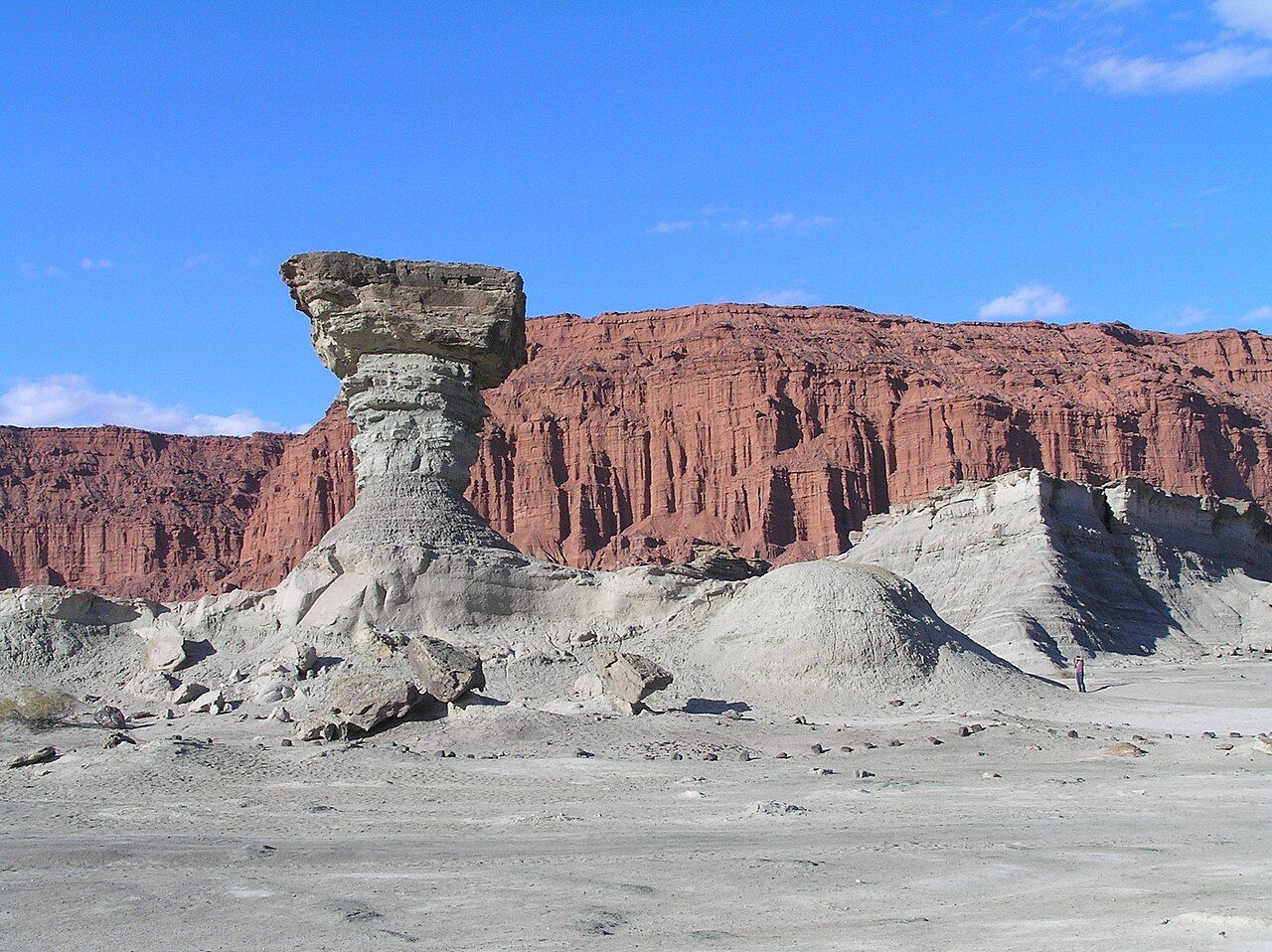
Ischigualasto Provincial Park lies in the northeast of San Juan province, in western Argentina, in a dry basin between ranges of the Andean foothills. Its local name, Valle de la Luna, means Valley of the Moon, and the grey clay hills, strange rock towers and silent plains earn it. In 2000 it was added to the World Heritage list together with Talampaya National Park next door, for the record of Triassic life the two parks hold.
The rocks here are some of the most important in the world for understanding how dinosaurs began. They were laid down roughly 230 million years ago, in the Late Triassic, when dinosaurs were small, rare and only one group among many reptiles.
A window on the first dinosaurs
The Ischigualasto Formation has given science some of the oldest known dinosaurs. Herrerasaurus, a fast, two-legged meat-eater a few metres long, was named in the 1960s after the local man who first noticed its bones. Eoraptor, a small, lightly built dinosaur about the size of a large dog, was described in 1993 and became famous as a picture of what early dinosaurs looked like.
When these animals lived, the continents were joined in a single landmass called Pangaea. What is now Argentina lay in a warm region with strong seasons of rain and drought. Volcanic ash falls, preserved as thin pale bands in the rock, have let geologists date the layers with unusual precision, which is one reason the park matters so much to scientists studying the first dinosaurs.
Most of the animals here were not dinosaurs at all. Pig-sized plant-eaters with beaks called rhynchosaurs were common. Big crocodile-line predators, early relatives of mammals called cynodonts, and others all lived together on a seasonal river plain. In that world, dinosaurs were still a minor part of the scene. The rocks show what came before the giants of the Wall of Bones or the Cretaceous of Montana.
The vehicle circuit
Visitors see the park on a guided circuit. Cars drive in a convoy with a park guide, stopping at a series of famous formations along a loop of dirt road. Rules, departure times and the length of the circuit can change with weather and road conditions, so check at the entrance before you set out.
The usual stops include a painted valley of coloured clays, a flat field scattered with perfectly round stone balls, and towers of rock shaped by wind. The best known is El Hongo, the Mushroom, a column of pale rock capped by a harder slab.
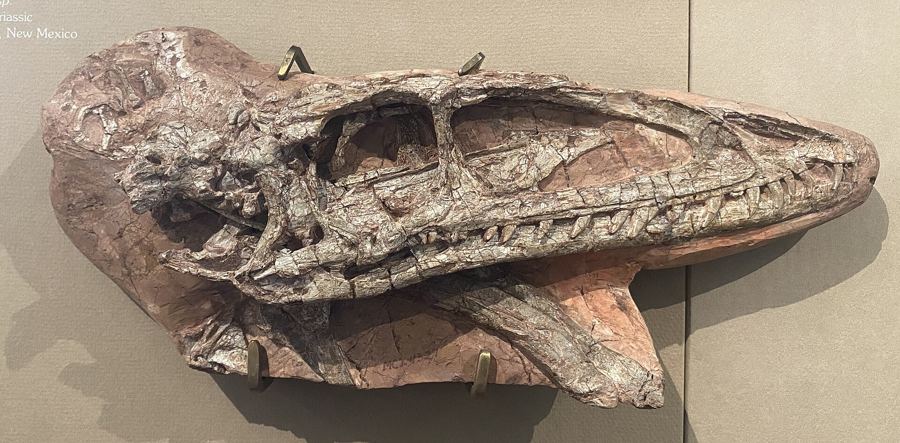 Another trek · SouthwestGhost Ranch and the Coelophysis quarry
Along the way your guide will point out the different layers and explain how they record a changing climate. The red cliffs on the horizon are younger rock, and the grey and green clays at your feet are where many of the dinosaurs were found. The comparison with Petrified Forest in Arizona, another Triassic landscape, is a good one: same age, different continent, similar story.
The visitor centre and museum
Near the entrance is a visitor centre with a small museum and a working area where fossils are prepared. It shows real bones and full-size models of the park's best-known animals, and it is the best place to make sense of what you see on the circuit. Allow time before or after the drive.
Some evening visits run on nights around the full moon, when the grey hills really do look lunar. These depend on season and conditions; ask locally.
Talampaya next door
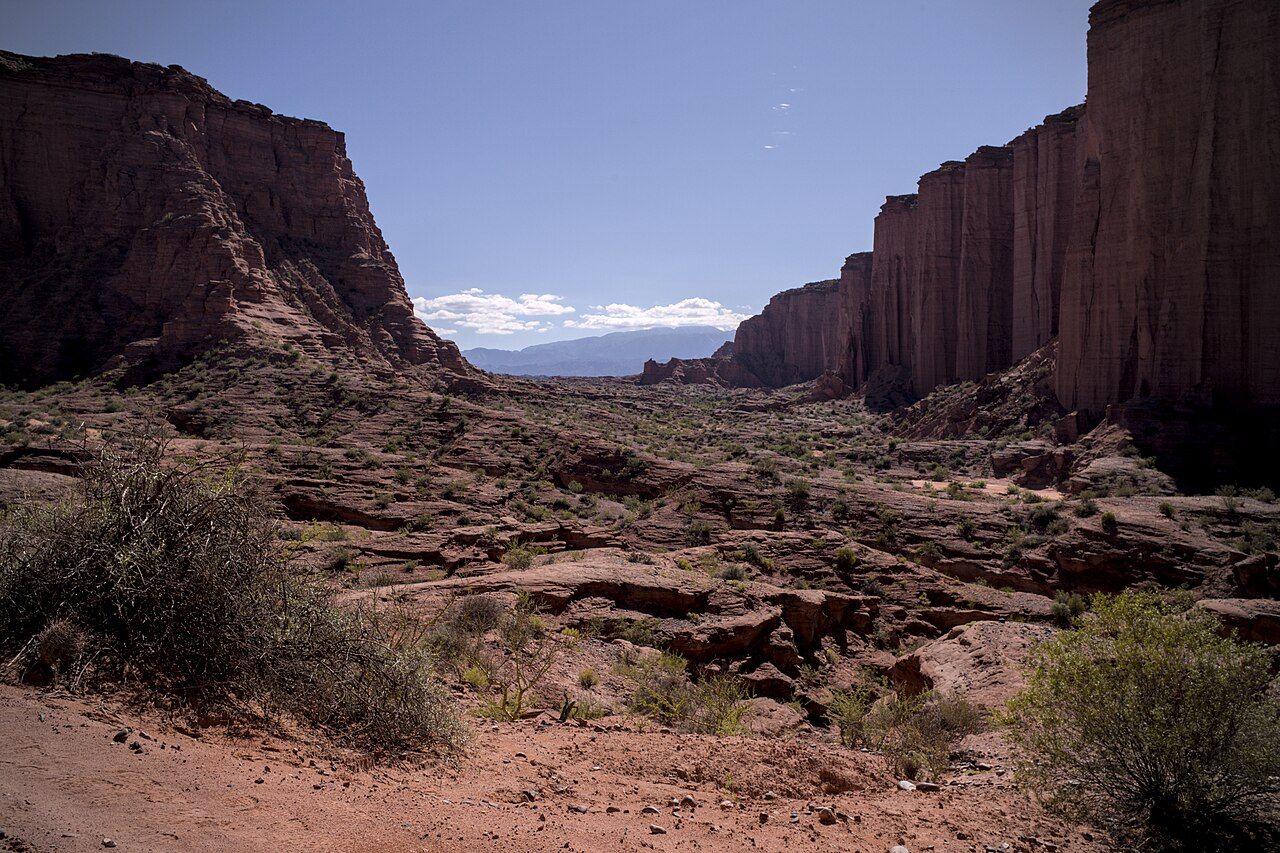
Across the provincial border in La Rioja lies Talampaya National Park. Where Ischigualasto is grey and pale, Talampaya is deep red. Its canyon walls rise straight from a dry riverbed, carved by water and wind into columns and cathedral-like shapes. The rocks are also Triassic, and the park holds fossils, petroglyphs and ancient rock art.
Visits to Talampaya are also organised; most run in park vehicles along the canyon. Check current arrangements before you go. The two parks together make a long but rewarding day, or better, two days.
Heat, wind and distances
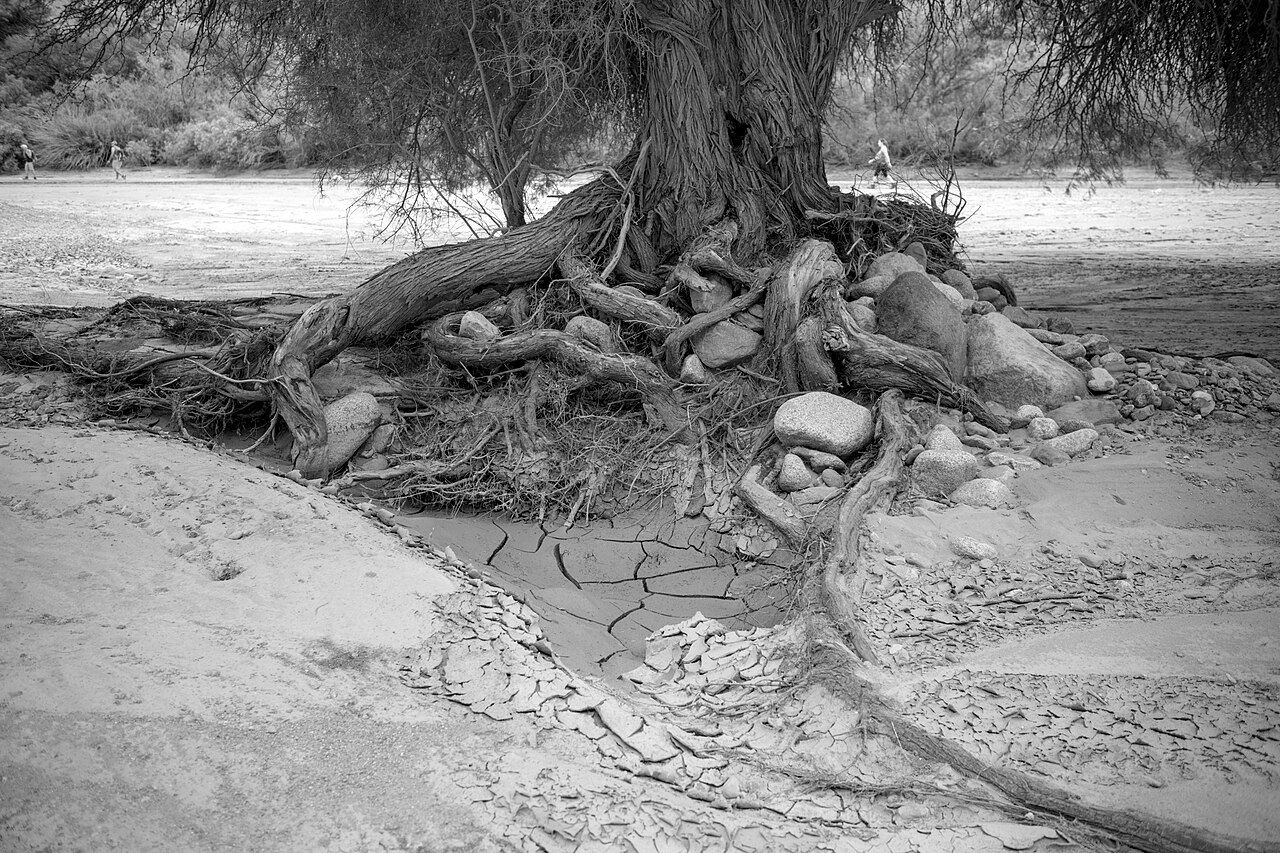
This is high, dry country. Summers are hot, with sudden storms that can flood roads. Winters are cool, with cold nights. A strong, dry wind called the zonda can blow hard. Autumn and spring are usually the most comfortable.
- Getting there: the nearest towns are small, and the drive from the city of San Juan takes several hours. Fill your tank before you leave.
- On the circuit: carry water, a hat and sun protection; there is little shade.
- Rules: no walking off on your own, and no collecting of anything.
Base yourself in one of the small towns nearby, such as San Agustín de Valle Fértil on the San Juan side or Villa Unión on the La Rioja side, and start the circuit early. Morning light is soft on the grey hills, and the heat builds quickly by midday.
Why it matters
Fossil parks around the world tell the story of the dinosaurs at their peak. Ischigualasto tells the story of the beginning, when dinosaurs were small, quick animals in a world run by other reptiles. Stand on the grey clay, look at the bones in the visitor centre, and you are looking at the start of a story that ends in Hell Creek 165 million years later.
Fossil collecting is forbidden in both parks, and the rules elsewhere are covered in finding fossils without breaking the rules. Come for the view, the silence and the sense of time, and leave every stone where it lies.
The photographs on this trek were shared under open licences; their photographers are named in Who shot the bones.