
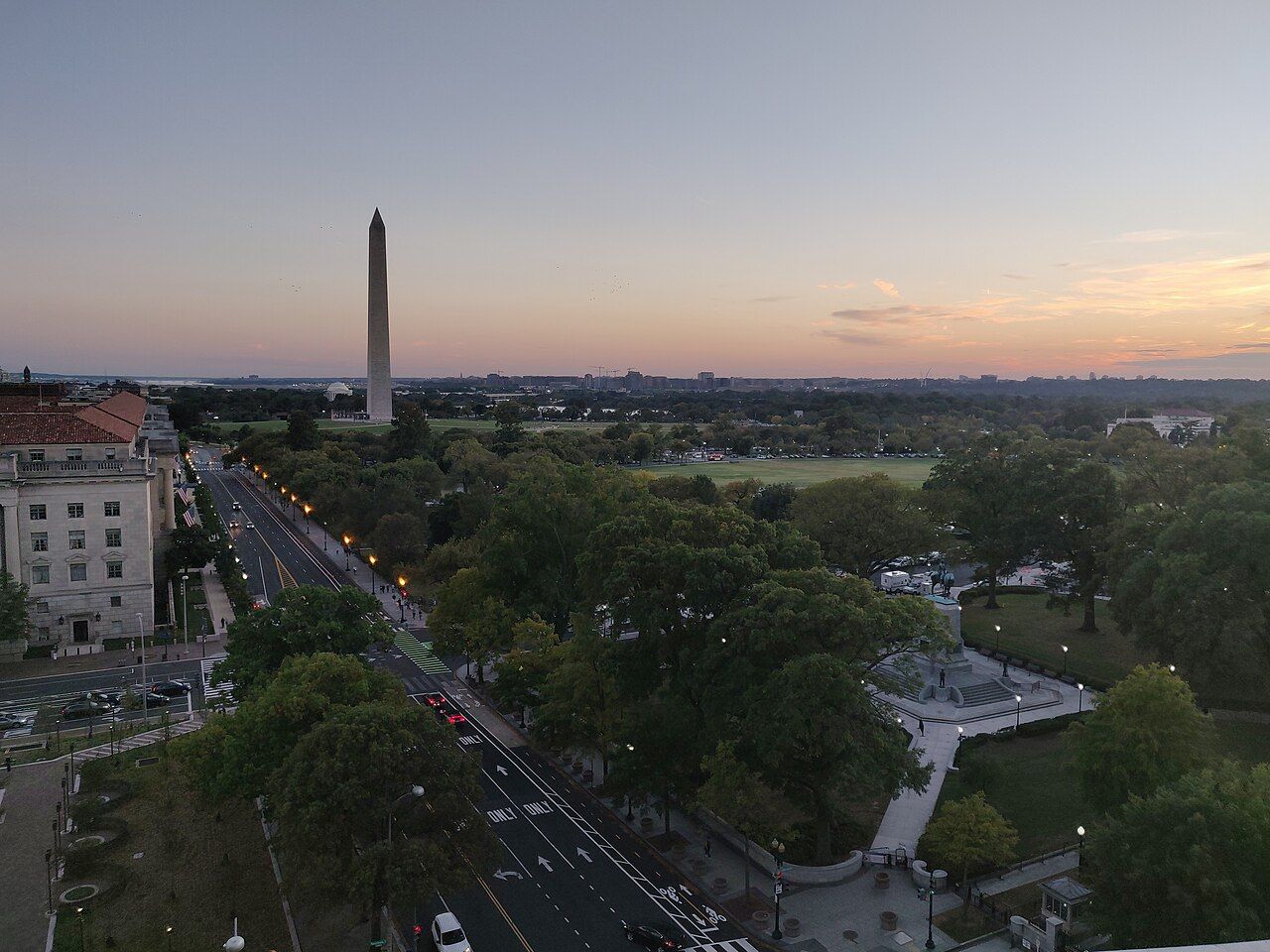
On the north side of the National Mall in Washington, D.C., the National Museum of Natural History holds one of the largest natural history collections on Earth. Its fossil hall, known as Deep Time, closed in 2014 for a five-year rebuilding and reopened in 2019. The result is a single long journey through the history of life, from the first simple cells in the sea to the forests, mammals and people of today, with dinosaurs in the middle and entry that costs nothing.
That free door matters. You can come for an hour, leave for lunch on the Mall and come back for a second look in the afternoon. You can let a seven-year-old spend twenty minutes in front of one skeleton without feeling you are wasting a ticket. For a family on a first trip into dinosaur country, it is one of the best places in North America to learn what you are looking at before you head west.
A hall built around time
Most older fossil halls were arranged like a catalogue, one group of animals per room. Deep Time is arranged as a story. The specimens stand in the world they lived in, grouped by time and by setting, so that a sea reptile, a fern and a fish that lived together appear together. Panels keep asking the same simple question: what was the planet like then, and how do we know?
The hall covers billions of years, but most visitors slow down in three places. The first is the ancient sea, where early animals with shells, spines and strange body plans fill the cases. The second is the age of dinosaurs, where the big skeletons stand. The third is the age of mammals, with giant ground sloths, mammoths and the animals that lived through the last ice age.
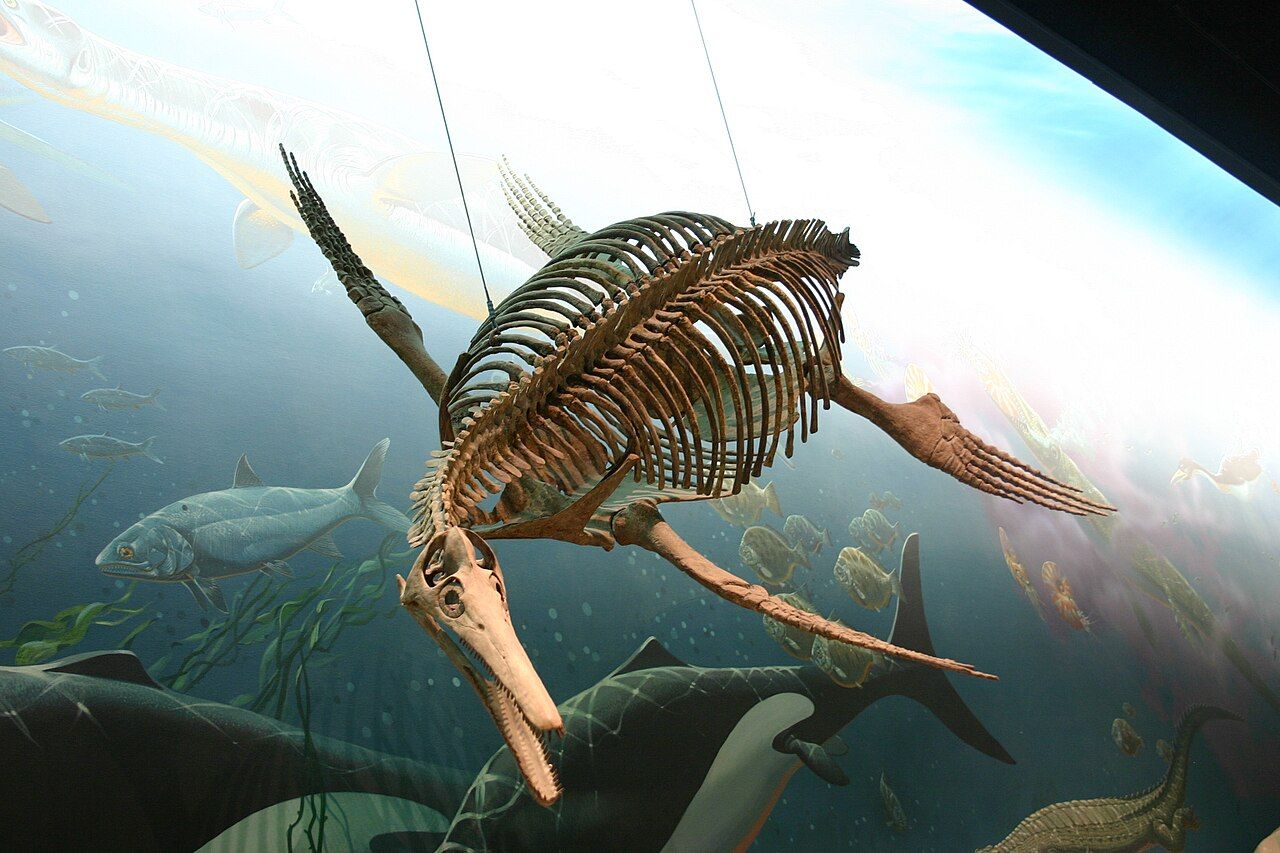
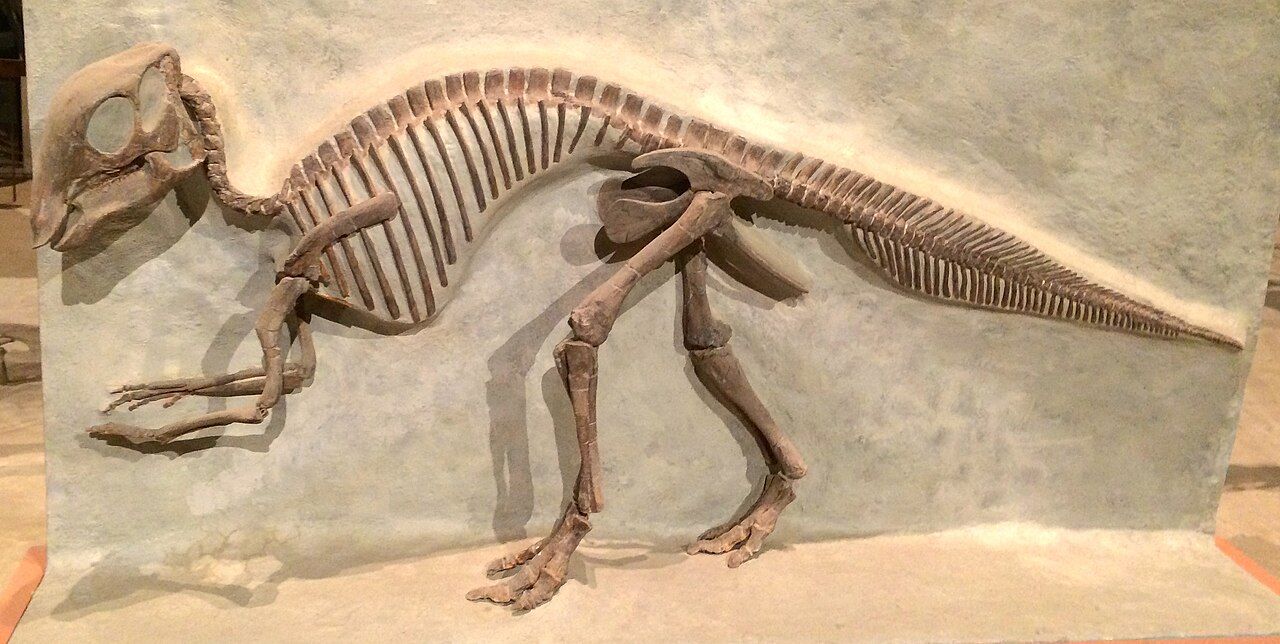
Look up as well as across. Marine reptiles and flying reptiles hang overhead, and some of the best small fossils sit at child height. The older photograph at the top of this page shows a young duck-billed dinosaur in relief, as it was displayed before the rebuild. Many such specimens returned in new settings, so a second visit years later can feel like a different hall.
The Nation's T. rex
The star of the hall is a Tyrannosaurus rex found in 1988 in eastern Montana, near Fort Peck Reservoir, on federal land. The skeleton was dug out by a team from the museum in Bozeman, and in 2014 it travelled to Washington on long-term loan from the federal government. That is why it is called the Nation's T. rex: it belongs to the public.
It lived in the same world you can visit at the Hell Creek badlands, near the very end of the Cretaceous, about 66 to 68 million years ago. In the new hall it is mounted in a dramatic pose, bent over a Triceratops and pulling at its head. The scene is not invented for show. Bite marks on real Triceratops bones show that tyrannosaurs fed on them.
That is why it is called the Nation's T. rex: it belongs to the public.
Spend a few minutes at the feet. Count the toes, look at how the ankle bones lock together, and compare the tiny arms with the enormous skull. Then walk around to see the skeleton from the side. A good game for younger children is to find three things the T. rex has in common with a chicken. The answer is in the feet, the hips and the hollow bones.
Watching scientists at work
Fossils do not arrive at a museum clean. They come out of the ground wrapped in plaster jackets, still inside rock, and someone has to remove that rock grain by grain. In the FossiLab, a glass-walled workroom inside the hall, staff and trained volunteers do exactly that while you watch. You may see fine needles, small air-powered tools, microscopes and trays of bone fragments.
The lab is the best answer to the question children always ask: how did the skeleton get here? It also shows how slow the work is. A single block can take months. If the lab is staffed when you pass, stop. If it is quiet, read the labels on the work in progress and come back later.
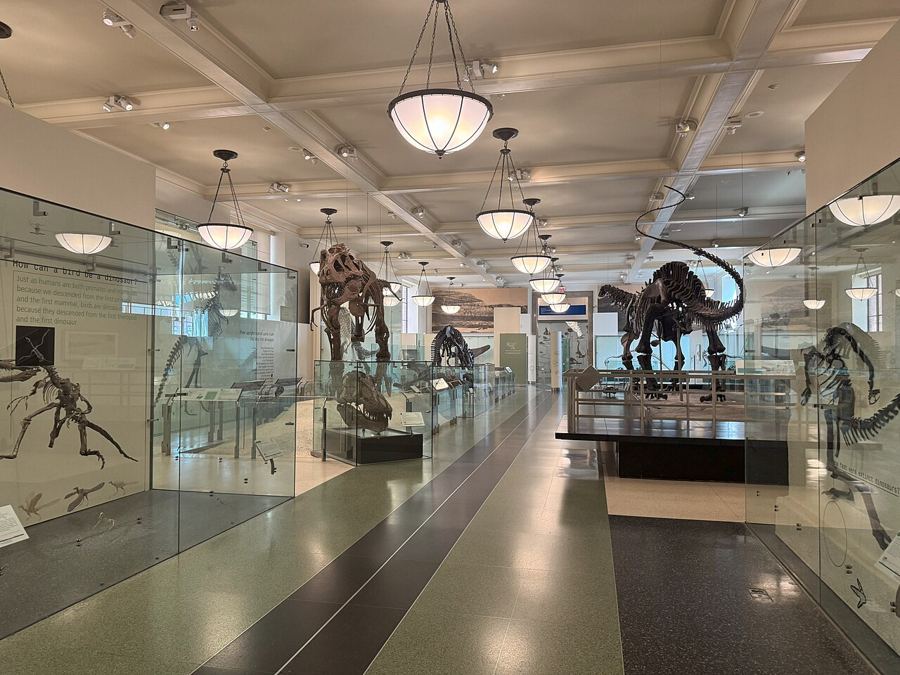 Another trek · Fossil hallsThe fourth-floor fossil halls in New York
This is also a good moment to talk about where fossils come from and who may collect them. The Nation's T. rex came off public land and went to a public museum, which is the rule for vertebrate fossils on US federal land. The guide to finding fossils without breaking the rules explains why.
Ancient climates and the world today
Deep Time does something many fossil halls avoid. It ties the past to the present. Throughout the hall, panels describe how the climate changed: warm periods with no ice at the poles, cold periods with ice sheets reaching deep into North America, and sudden shifts tied to volcanoes, ocean currents and the chemistry of the air.
The story ends with people. The final section asks what our own species is doing to the planet's climate and living things, and how the fossil record helps scientists measure that change. It is presented calmly and with evidence, and it gives older children a reason to see fossils as records rather than trophies. Ask them which extinct world they would most like to visit, and why it would be hard to live there.
Planning a visit
Entry to the museum is free, and it opens most days of the year. Hours, security procedures and any timed-entry arrangements can change, so check before you go. Expect a bag check at the door. Weekday mornings are calmest. Spring school-trip season and summer weekends are busiest.
- Getting there: the Smithsonian and Federal Triangle Metro stations are a short walk away, and parking near the Mall is limited.
- Time: allow at least two hours for the fossil hall alone, more if children want to draw or read every panel.
- Food: there is food inside the museum, and the Mall is open for picnics on good days.
- Elsewhere in the building: the gems, the ocean hall and the mammals are worth a second visit if energy holds.
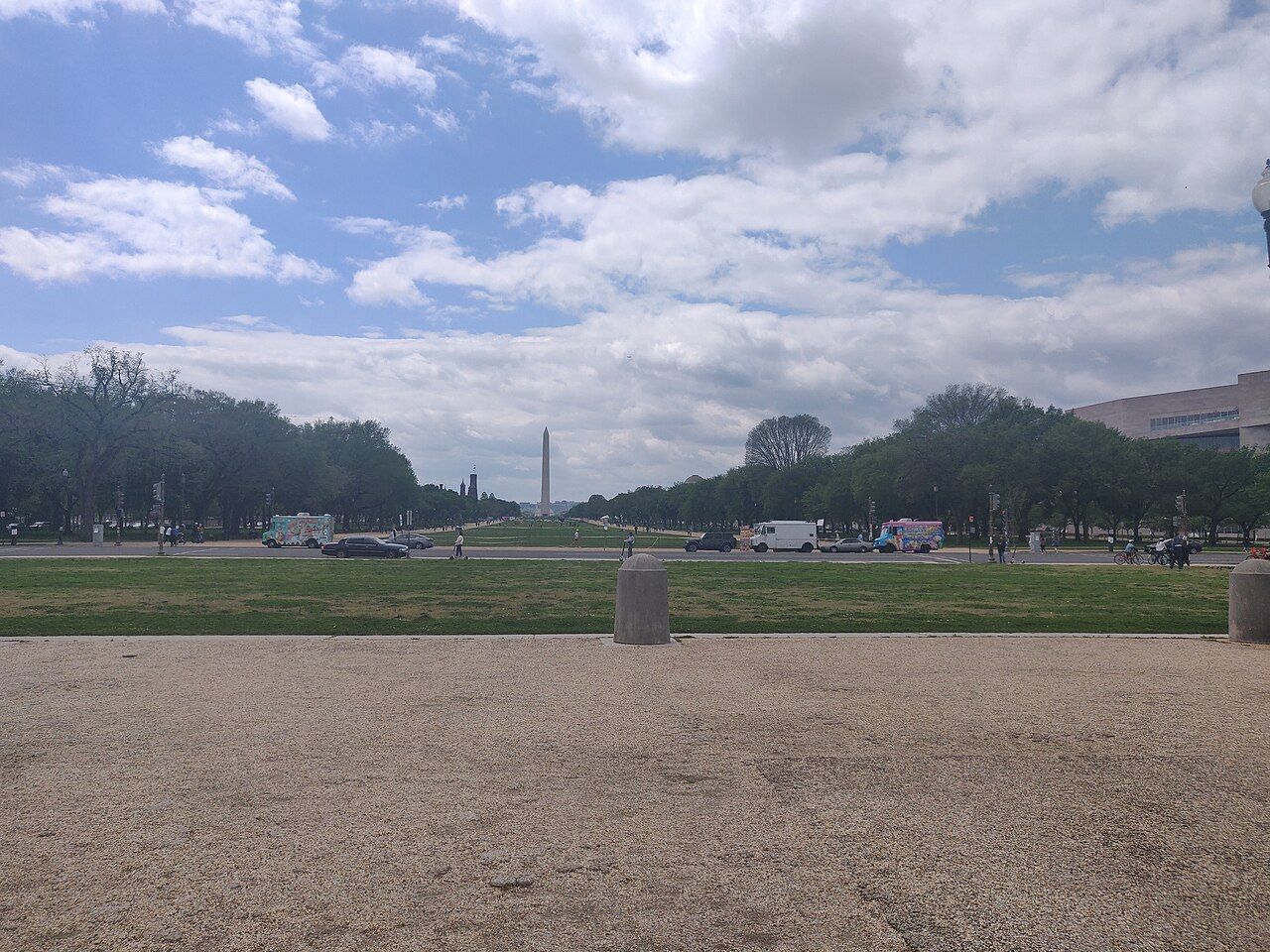
Pair the hall with a walk on the Mall. Distances look short on a map and feel long in summer heat, so carry water and plan one museum per half day with young children. If your trip carries on to the great halls in Chicago, the guide to Sue at the Field Museum makes a natural next stop.
Deep Time works best as a beginning. It gives you the timeline, the names and the questions. Then the field sites out west give you the rocks, the weather and the scale. Come back after a summer in the badlands and the hall will read differently.
The photographs on this trek were shared under open licences; their photographers are named in Who shot the bones.