
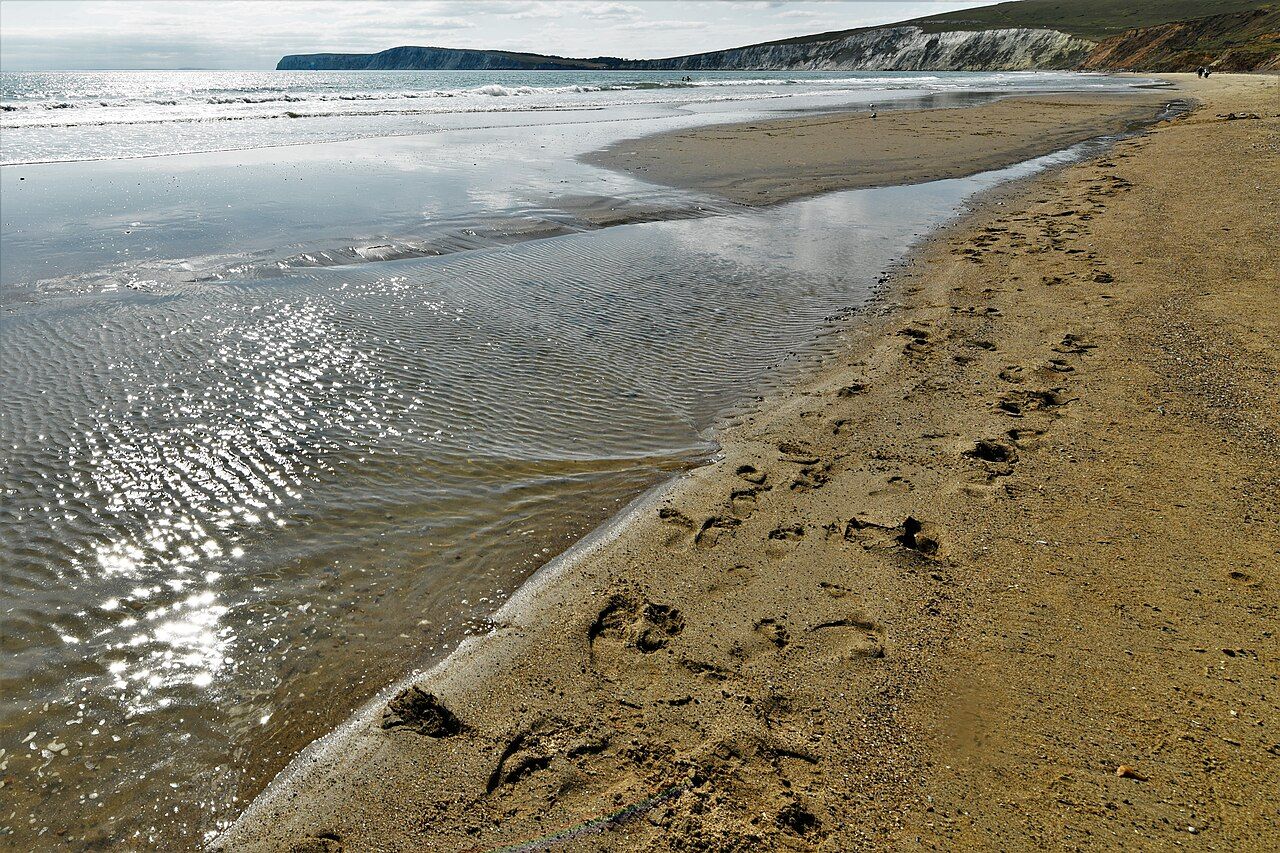
The Isle of Wight sits just off the south coast of England, and its southwest shore is one of the richest places in Europe for dinosaur fossils. The rocks here are younger than those of the mainland coast to the west. They were laid down about 125 to 130 million years ago, in the Early Cretaceous, on a broad river plain with seasonal floods, wildfires and wide, muddy channels.
The sea erodes these soft cliffs fast. Every winter storm brings down more of them, and bones, teeth and pieces of fossil wood end up on the beach. Few places in Britain give a casual visitor such a good chance of seeing dinosaur traces in the wild.
The rocks and what lived here
The dinosaur rocks of the island belong to the Wealden Group, made of red and grey mudstones with bands of sandstone. They record a landscape with conifers, ferns and cycad-like plants, and a cast of animals that included the large plant-eater Iguanodon and its relatives, armoured dinosaurs, long-necked sauropods and several meat-eaters.
The island has given science several new species. Neovenator, a large predator, was found here, and in 2021 scientists named two new relatives of Spinosaurus from bones collected along the southwest coast. Pterosaurs, crocodiles, turtles and small mammals turn up too. Much of this was first found by members of the public walking the beach.
Compton Bay and the footprints
Compton Bay is a long sandy beach under crumbling red and yellow cliffs, with the white chalk of the island's western downs at one end. At its southern end, near Hanover Point, ledges of hard sandstone run out into the sea. At low tide you can find large three-toed footprint casts here, the natural fillings of tracks left by heavy dinosaurs walking through mud.
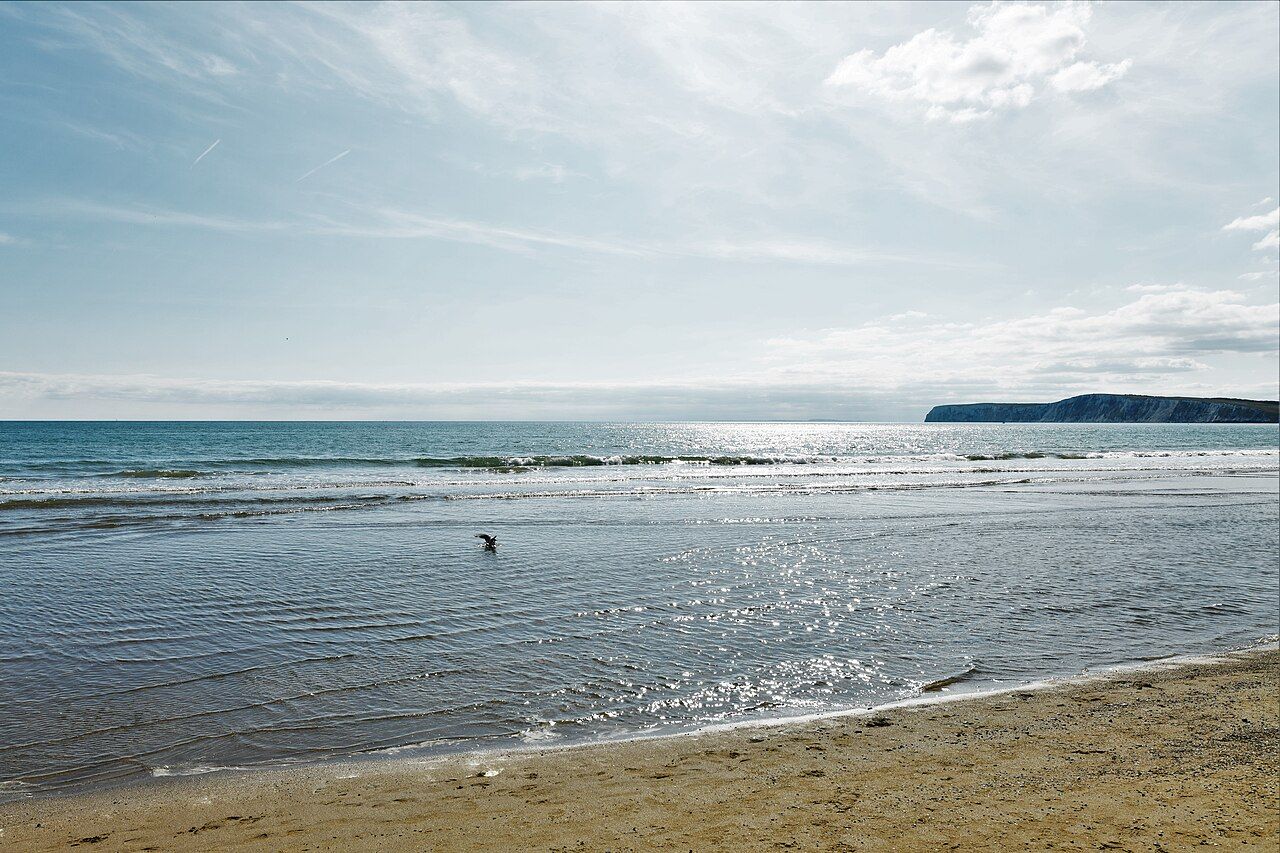
The casts look like knobbly, rounded lumps at first. Look for three thick toes splayed from a broad heel. Many are thought to have been made by Iguanodon-like animals. Once you see one you often start to see others, some in rows. Nearby, at very low tides, the ledges also hold fragments of fossil logs from an ancient forest.
 Another trek · Northern RockiesDinosaur Ridge and the Morrison tracks
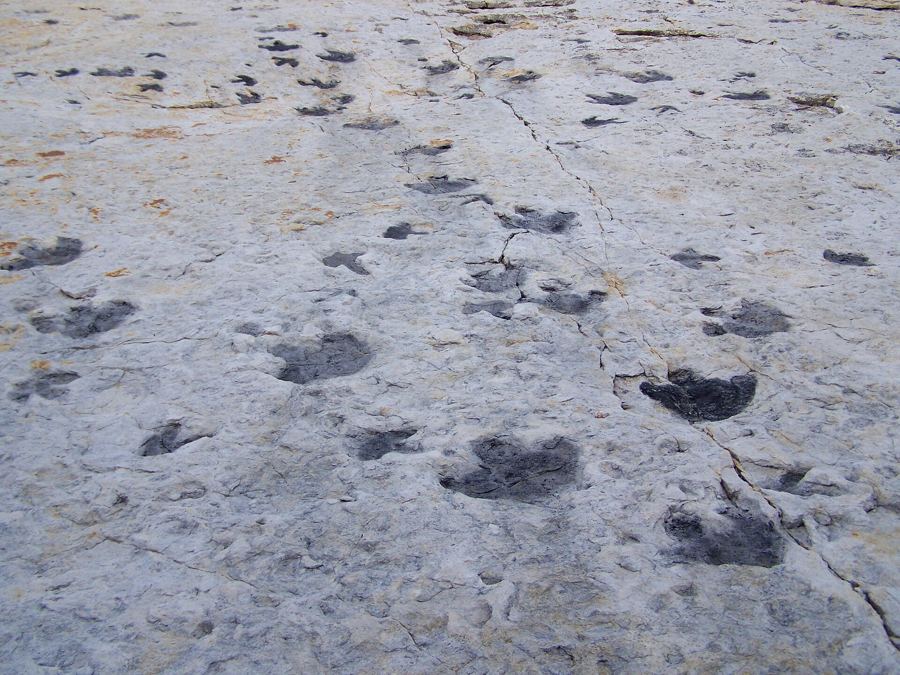
The footprints are protected. Photograph them, measure them with your feet, and leave them exactly where they are. If you want to compare them with other tracksites, the trackway at Lark Quarry in Queensland and the riverbed tracks at Dinosaur Valley in Texas make a good contrast.
Brighstone and Iguanodon country
East of Compton, the coast around Brook and Brighstone is lined with low, crumbling cliffs cut by small ravines called chines. This stretch is where many of the island's best skeletons have come from. Bones here are usually dark brown or black, heavy for their size and often broken into chunks. Teeth are small and shiny.
Learn to tell bone from rock before you start. Fossil bone often shows a fine spongy texture on broken surfaces, like a honeycomb, and it can feel heavier than an ordinary pebble of the same size. Pieces of fossil wood look similar but show growth rings or a grain. If you are not sure, keep a photograph and ask at the museum.
The best time to look is after winter storms, on a falling tide, along the strandline and among pebbles at the foot of the beach. Stay away from the cliff base: the mud and sand here slip often, and the chines can be unstable. A coast road runs along the top of the cliffs with small car parks, so you can walk short sections without long hikes.
The island's dinosaur museum
On the east side of the island, the seaside town of Sandown has a dinosaur museum in a building shaped to suggest a giant pterosaur. It holds many of the island's finds, has a working area where fossils are prepared, and its staff help identify what visitors bring in. Guided fossil walks are often offered in season. Opening times and walks change, so check before you go.
The museum is also where an important find should go. If you pick up a bone or tooth that looks significant, take a photo of where you found it, note the spot, and show it to the staff. Many species described from the island started that way. The wider rules are set out in finding fossils without breaking the rules.
Tides, cliffs and safety
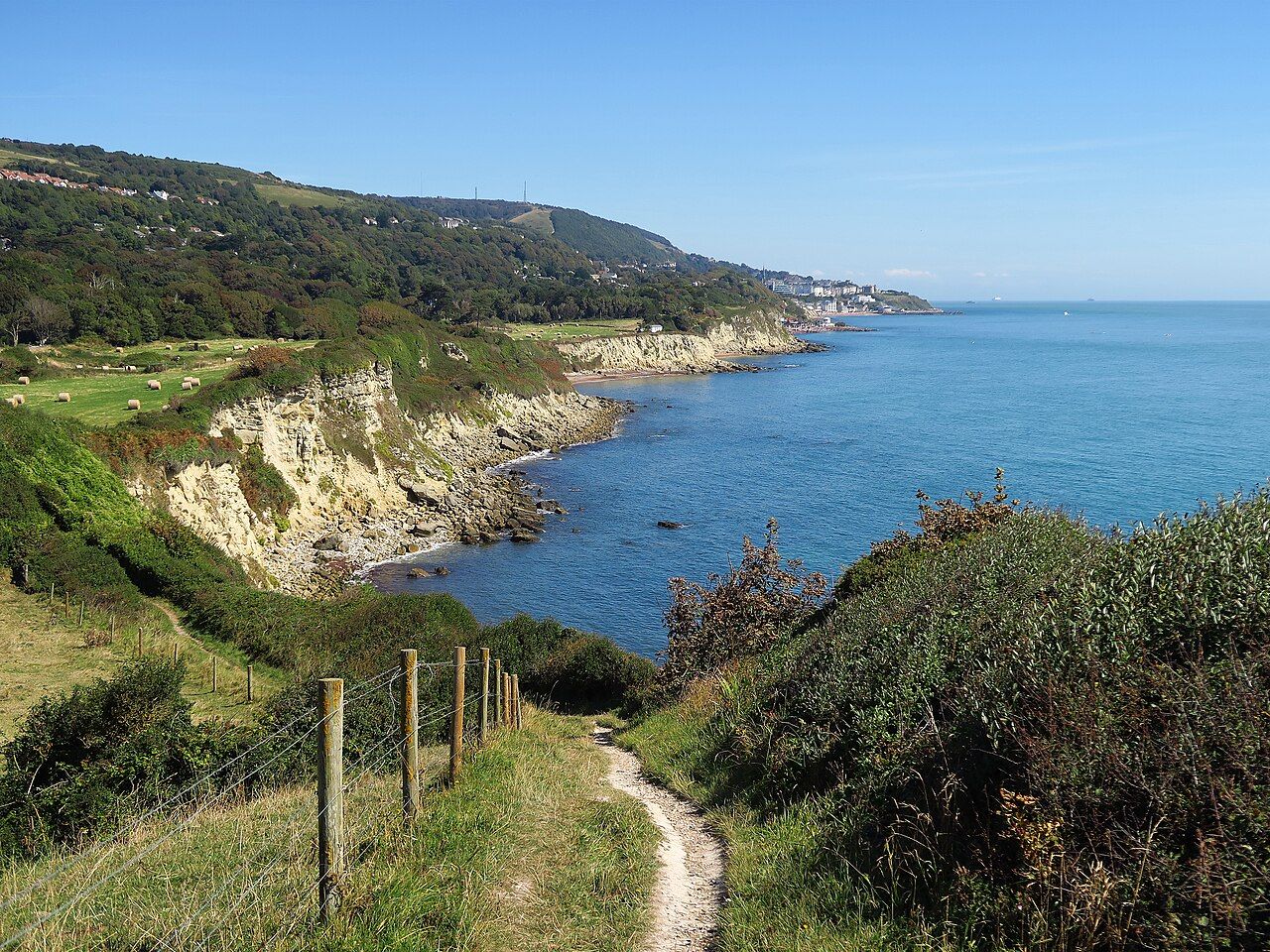
The same erosion that reveals fossils makes this coast risky. Rockfalls and mudslides happen without warning, especially after rain. Rising tides can cut off sections of beach below the cliffs.
- Check tide times and plan to be walking back well before the tide turns.
- Keep away from the cliff base and never climb to reach a fossil.
- Do not hammer the cliffs or ledges, and do not dig.
- Wear boots with good grip; the sandstone ledges are slippery with weed.
Planning a visit
Car and passenger ferries cross to the island from Southampton, Portsmouth and Lymington, and some crossings are quick. A car makes it easier to reach the southwest coast, though island buses also run along it in season. Spring and early autumn bring fewer crowds, and winter brings the best fossils for those who come prepared for wind and rain.
Pair the island with the mainland. A few days on England's Jurassic Coast give you ammonites and marine reptiles; a few days here give you dinosaurs and their footprints. Together they cover a long stretch of the age of reptiles in a small corner of England.
The photographs on this trek were shared under open licences; their photographers are named in Who shot the bones.