
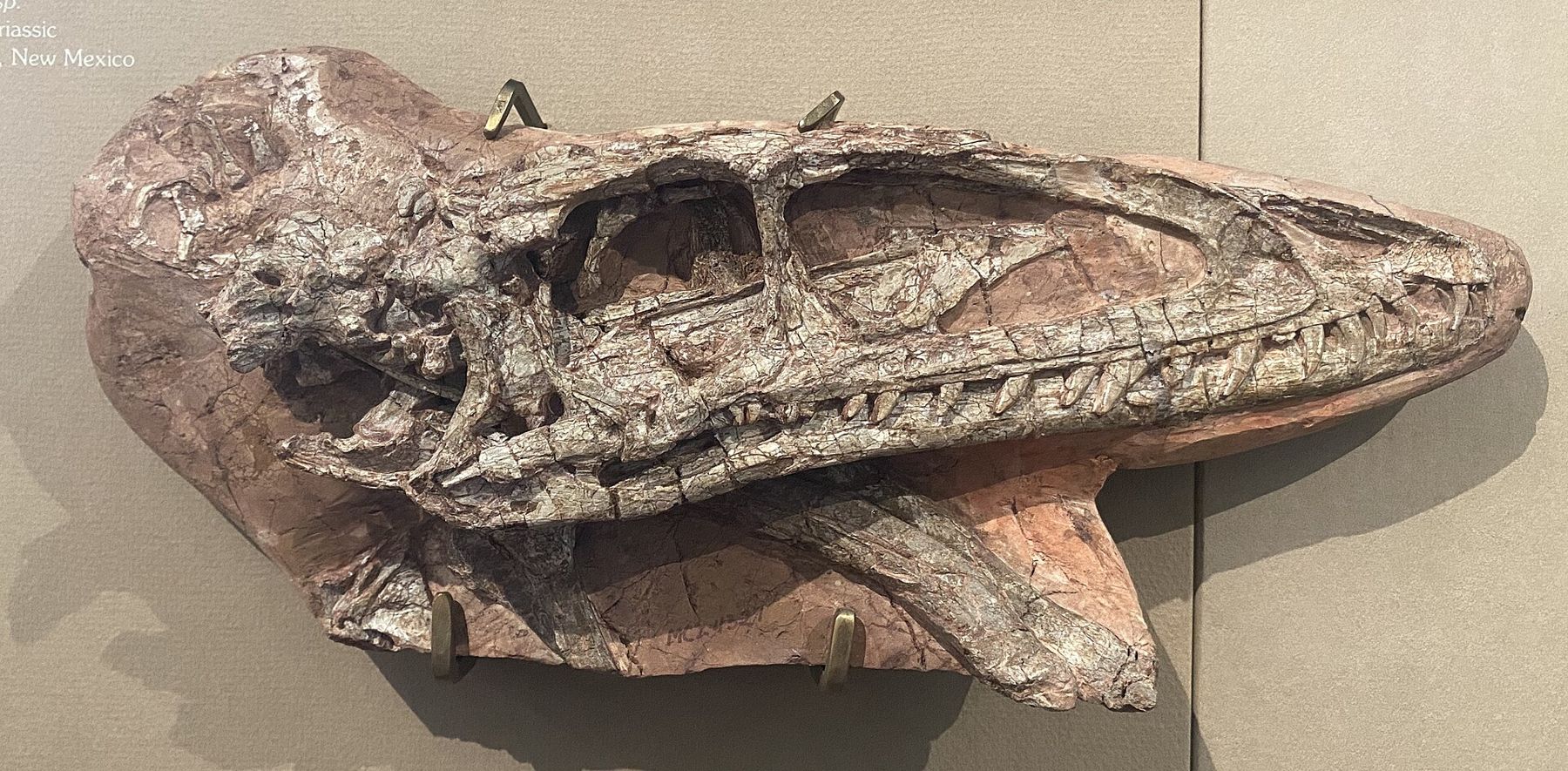
In the high desert of northern New Mexico, north of the village of Abiquiu, red and yellow cliffs rise above the Chama River valley. This is Ghost Ranch, a place of painted rock and wide sky that drew the artist Georgia O'Keeffe for decades. It is also one of the most important Triassic fossil sites in the world. In 1947 a field crew found a bed packed with skeletons of the small, early dinosaur Coelophysis, and the quarry has shaped ideas about the first dinosaurs ever since.
Today Ghost Ranch is run as an education and retreat center that welcomes day visitors, with trails, small museums and a landscape that rewards an early start.
The 1947 bonebed
The discovery came from a team from the American Museum of Natural History in New York, led by Edwin H. Colbert. A member of the crew, George Whitaker, spotted fragments of bone, and as the team dug, they found that the layer held not one skeleton but many, piled and tangled together. Hundreds of individuals have since been identified, from small juveniles to adults.
Blocks of rock packed with skeletons were cut out and sent to museums across the United States and beyond, so pieces of the Ghost Ranch quarry are now on display far from New Mexico. The finds gave scientists a rare chance to study one early dinosaur species in great detail, at many ages. In 1981 New Mexico made Coelophysis its state fossil.
Why so many animals died together is still debated. One long-standing idea is that a group was caught by a flood, or drawn to shrinking water in a dry season, then buried quickly by sediment. Whatever the cause, fast burial preserved fine details, from delicate skulls to whole skeletons lying in their final curved poses.
Meet Coelophysis
Coelophysis was a slender, fast, two-legged meat-eater, up to about three meters long, much of that tail, and light for its size, with hollow bones, a long neck and a narrow head lined with small, sharp teeth. It probably hunted small animals, using its grasping hands and quick jaws.
The name was coined in the late nineteenth century by the paleontologist Edward Drinker Cope, based on scrappy bones found earlier in New Mexico; the rich Ghost Ranch material came much later. For years scientists debated which skeletons truly belonged to the species. The Ghost Ranch skeletons are now treated as the standard for Coelophysis, and the quarry is the reference point for anyone who studies it.
For a time, a few Ghost Ranch skeletons with small bones inside their rib cages were taken as signs of cannibalism. Later study showed that most of those bones belonged to small crocodile relatives, or lay beneath the skeletons rather than inside them, a good example of science correcting itself.
Triassic life in the Chama valley
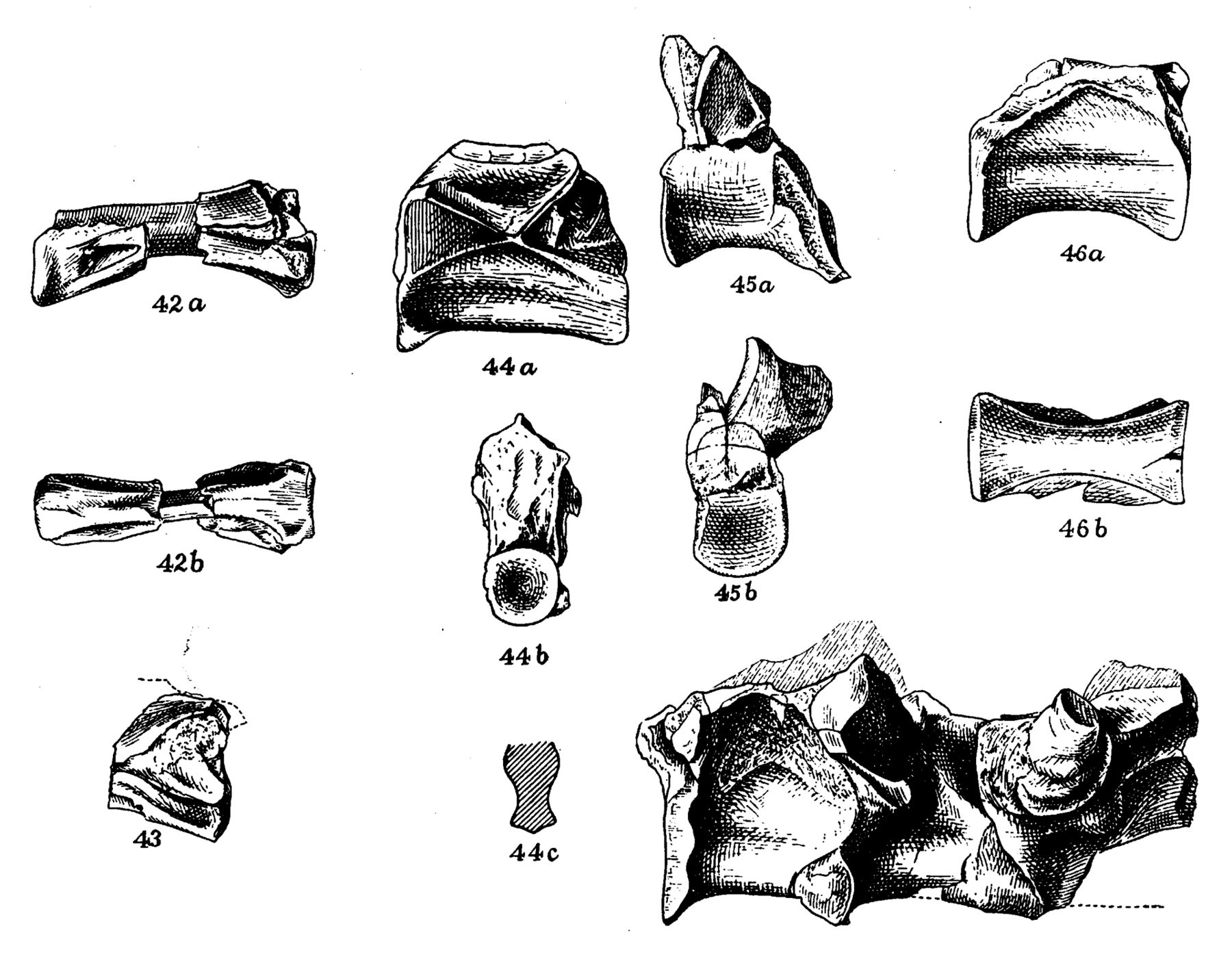
The rocks at Ghost Ranch record the Late Triassic, more than 200 million years ago, when dinosaurs were still a small part of the animal world. The red mudstones and sandstones of the Chinle Formation were laid down by rivers on a warm floodplain. Sharing that world were large crocodile-like phytosaurs, armored plant-eaters called aetosaurs, and big flat-headed amphibians.
One of the oddest animals from the quarry is Effigia, described in 2006. It walked on two legs and had a toothless beak, so at first glance it looks like a dinosaur, yet it belongs on the crocodile side of the reptile family tree. 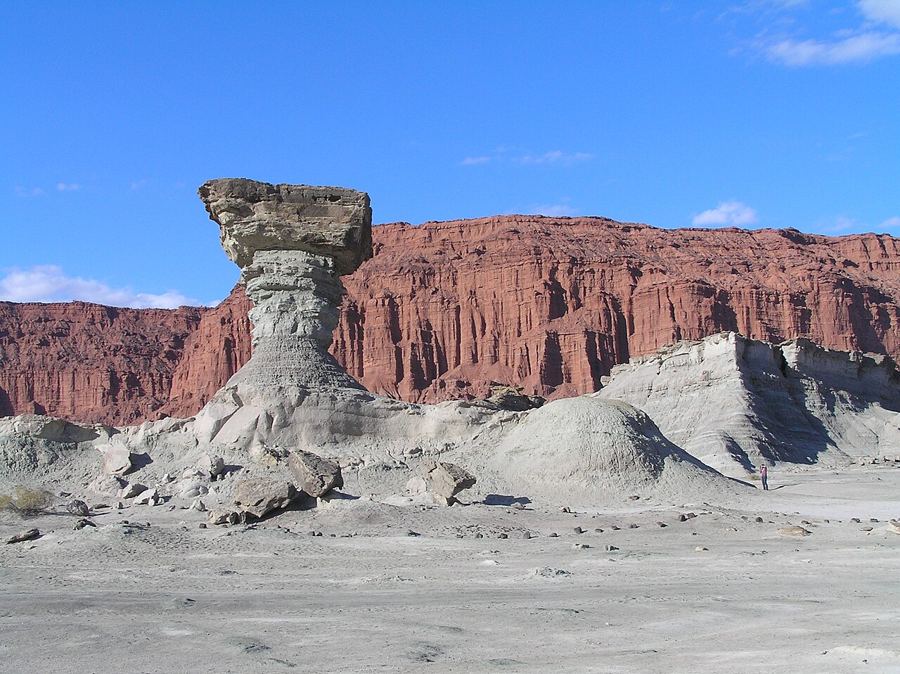 Another trek · AbroadIschigualasto, the Valley of the Moon Its name honors Georgia O'Keeffe. The same rocks run west into Arizona, where Petrified Forest National Park preserves trees and animals from the same period.
The landscape O'Keeffe painted
Georgia O'Keeffe first came to Ghost Ranch in the 1930s and later owned a house there, painting the cliffs, the hills and the flat-topped mountain called Cerro Pedernal again and again. Her home in the village of Abiquiu is preserved and can be seen on guided tours, for which booking ahead is wise. Check current arrangements before you go.
The colors she painted are the colors of the rocks. Deep red Chinle mudstone sits low. Above it come pale yellow and white cliffs of the Jurassic Entrada Sandstone, then gypsum and younger sandstones higher on the mesas. Walking at Ghost Ranch is a lesson in reading time in stripes.
Visiting Ghost Ranch
Ghost Ranch lies on US Highway 84 north of Abiquiu, roughly an hour and a half north of Santa Fe by road. Day visitors check in at the welcome center, where a day-use fee usually applies. There are small museums on site, one devoted to paleontology, where you can see Coelophysis material and learn about the quarry, and one on the archaeology of the region. Opening days vary, so check before you go.
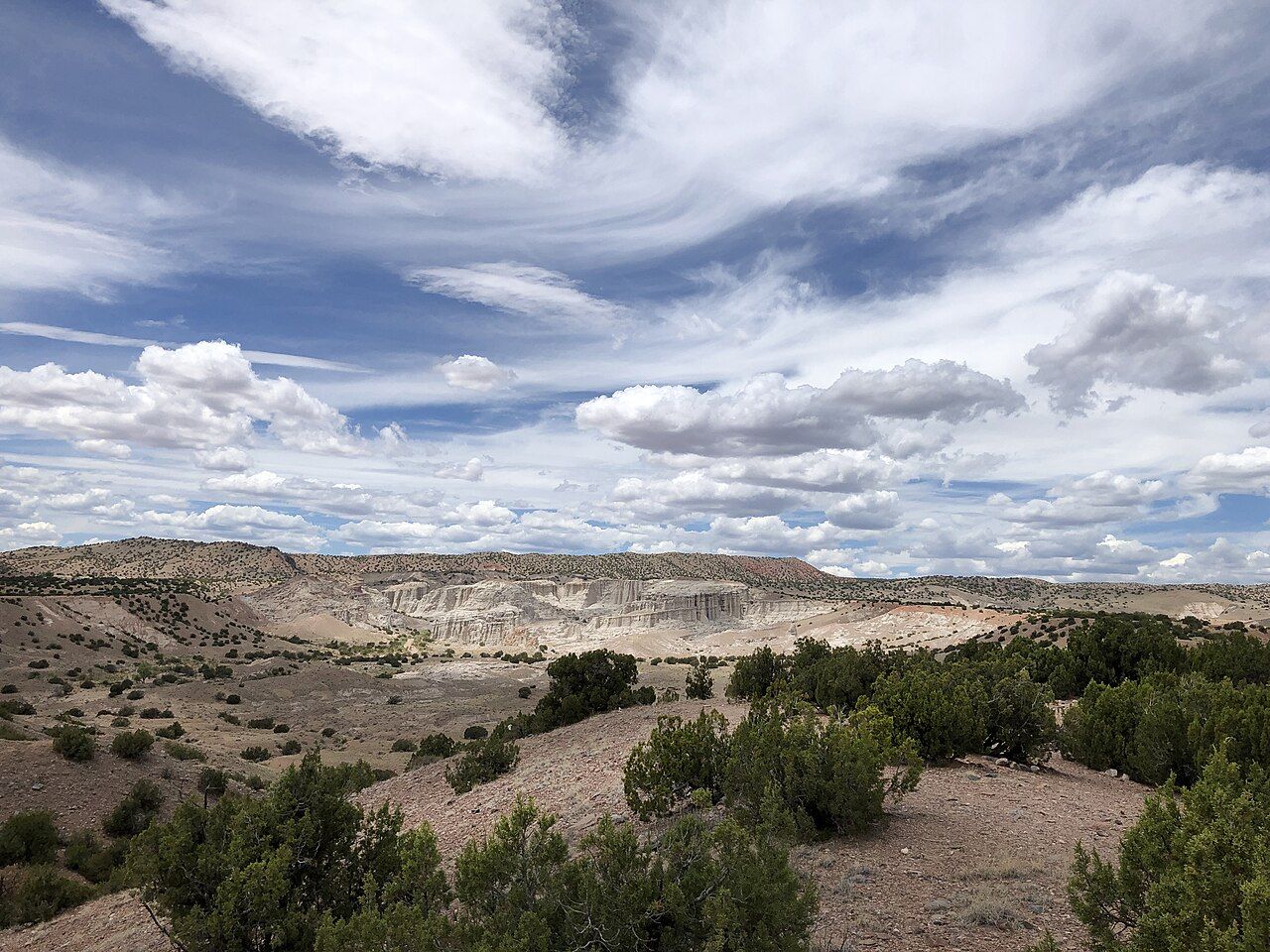
The country around the ranch is worth a slow drive. Abiquiu Lake, a reservoir on the Chama River nearby, reflects the red and white cliffs in calm weather, and pale formations near the village of Abiquiu show how varied the rock colors of the region can be. Many roads here cross private or tribal land, so stay on public routes and respect posted signs.
Several hiking trails start near the main buildings. Some climb toward the red cliffs and mesa tops; others are gentler walks across the valley floor. Carry water, wear a hat, and expect strong sun at this altitude; summer afternoons often bring thunderstorms. Fossil sites on the ranch are protected for research, so follow posted guidance about where you may walk.
Before you go, read up on the rules for finding fossils. Much of the land around Abiquiu is public or tribal, each with its own rules, and none of them allow you to take dinosaur bone home.
The photographs on this trek were shared under open licences; their photographers are named in Who shot the bones.