
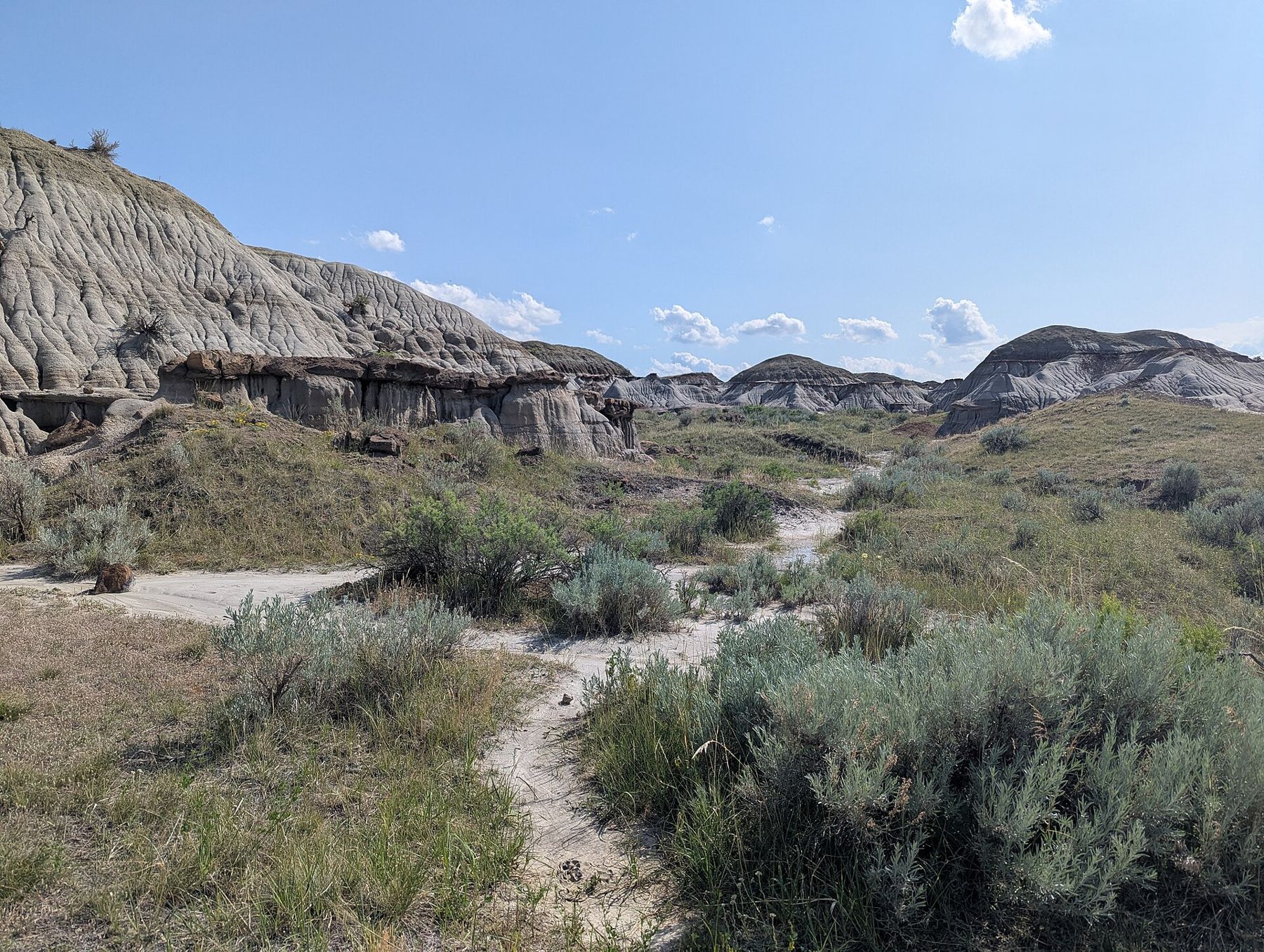
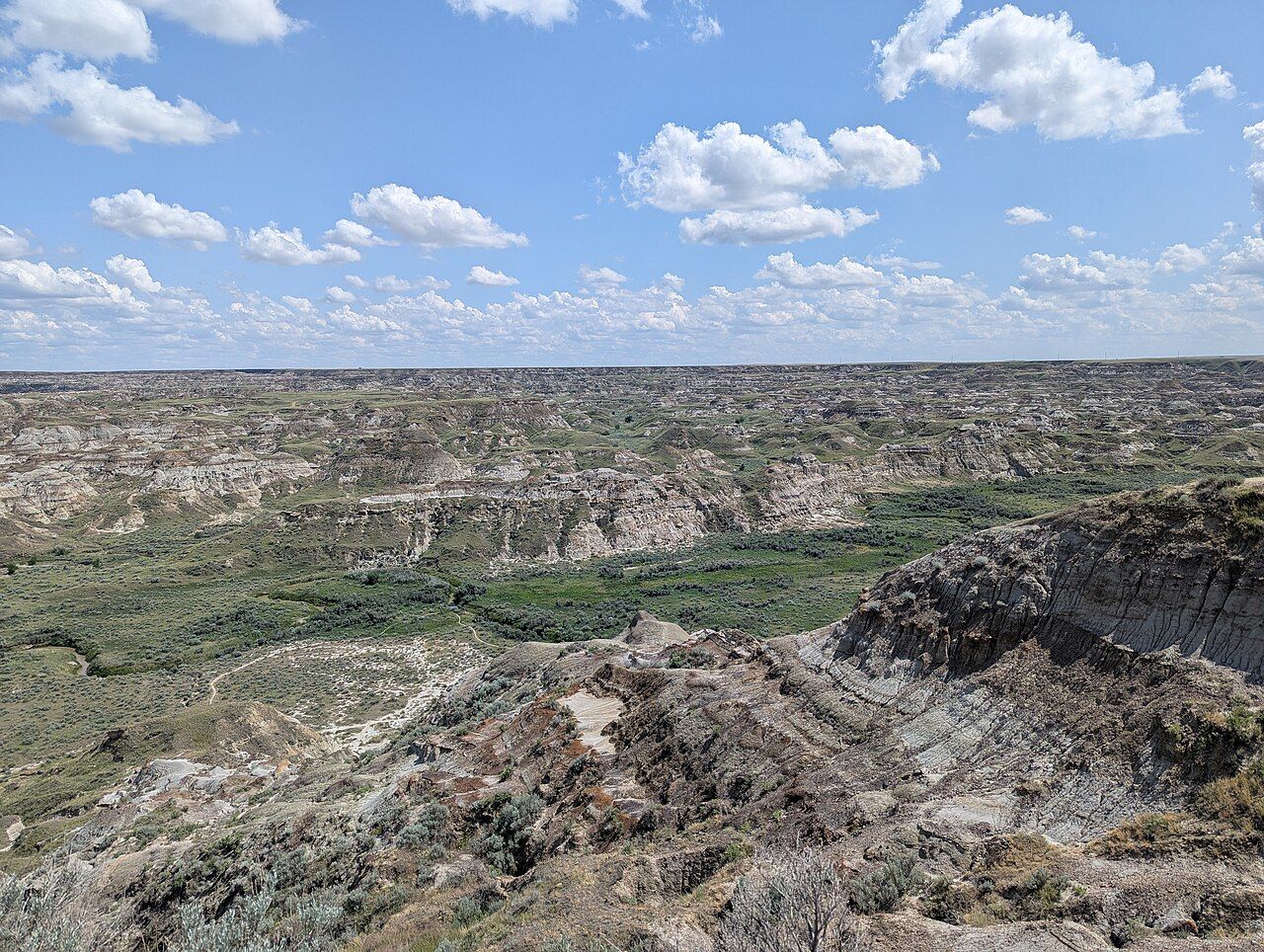
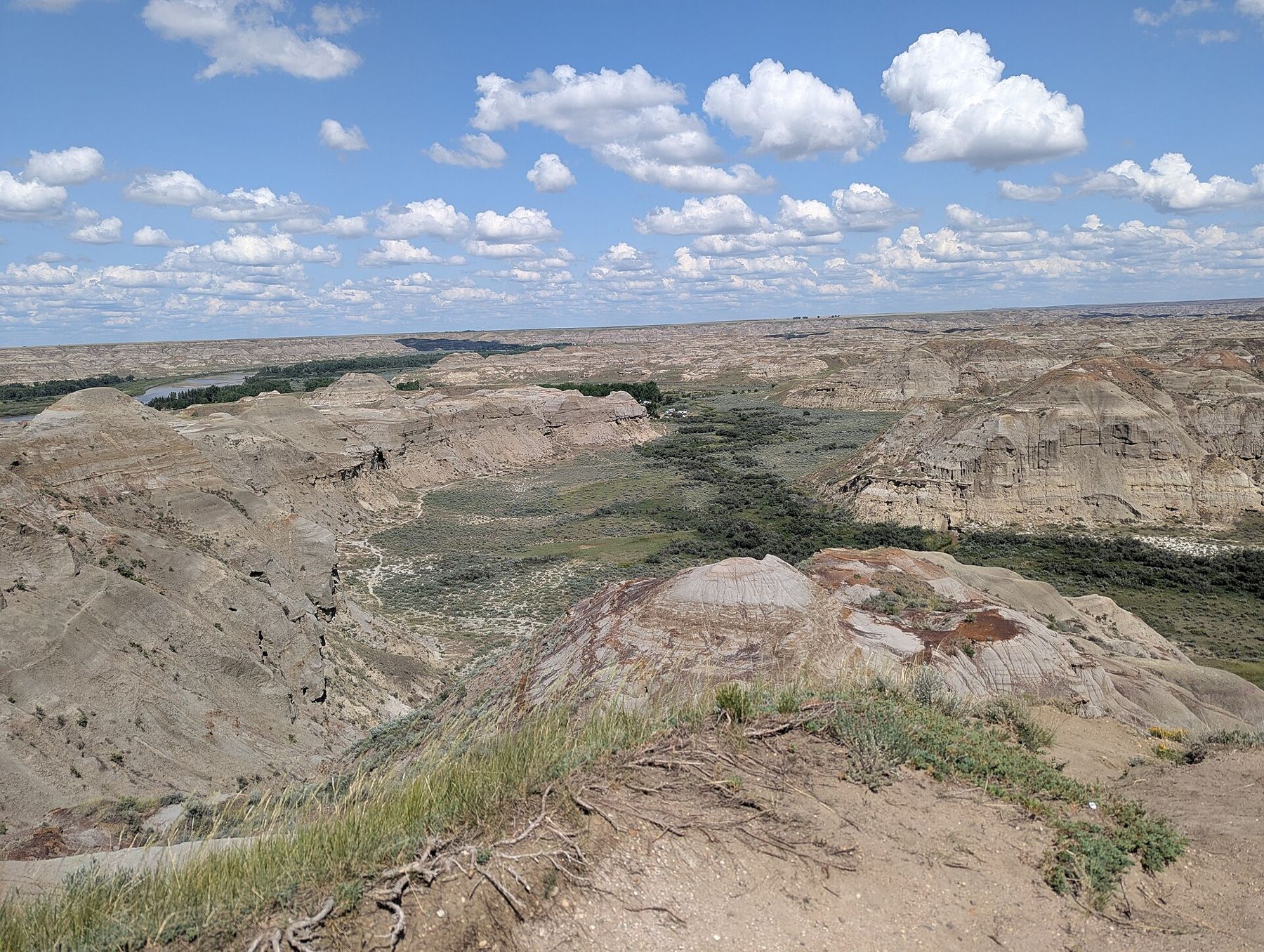
Dinosaur Provincial Park lies in the valley of the Red Deer River in southeastern Alberta, where flat farm and ranch country suddenly drops away into a maze of bare, striped badlands. Few places in the world have produced dinosaur fossils in such numbers. Skeletons collected here stand in museums across North America and beyond, and new finds come out of the ground in most field seasons.
The park was named a UNESCO World Heritage Site in 1979, for both its fossils and its landscape. Much of it is a protected natural preserve that you can enter only with a guide, which keeps the bonebeds safe while still letting visitors walk among them. With some planning, you can spend a couple of days here and see the badlands from every angle.
A coastal plain about 76 million years ago
The rocks exposed in the park belong mainly to the Dinosaur Park Formation, laid down roughly 76 million years ago in the Late Cretaceous. At the time this was low coastal country on the western shore of a shallow inland sea. Rivers wound across a warm, wet plain, and floods buried carcasses in channel sands and muddy backwaters.
The result is an extraordinary record. Dozens of dinosaur species have been identified from the park, among them the horned dinosaurs Centrosaurus and Styracosaurus, the crested duck-bills Corythosaurus and Lambeosaurus, armored ankylosaurs, and the tyrannosaur Gorgosaurus. Turtles, crocodile relatives, fish, amphibians and small mammals turn up alongside them, so the park gives a picture of a whole ecosystem rather than a few stars.
Paleontologists value the park not only for its numbers but for its range. Because fossils turn up through a thick stack of layers, researchers can compare animals from older and younger levels and watch how communities changed over a long span of time. Few places allow that kind of study for dinosaurs.
Some sites are bonebeds, where the remains of many animals of one kind lie together. Several Centrosaurus bonebeds are thought to record herds killed together, perhaps by floods. These layers are still being studied, and they hint at how some horned dinosaurs lived in groups.
The great dinosaur rush
In the early 1900s, teams of fossil hunters floated down the Red Deer River on flatboats, stopping to dig wherever bone showed in the banks. Barnum Brown led crews for the American Museum of Natural History in New York, while members of the Sternberg family worked for the Geological Survey of Canada. The rivalry, often called the Great Canadian Dinosaur Rush, sent skeletons to museums in Canada, the United States and beyond.
Those early crews worked with picks, shovels and burlap soaked in plaster, and they hauled heavy jackets out of the badlands by hand and with horses. Modern teams still use plaster jackets, though trucks and modern tools now ease the heavy lifting.
Many of the skeletons on show in the fossil halls in New York came from this valley. 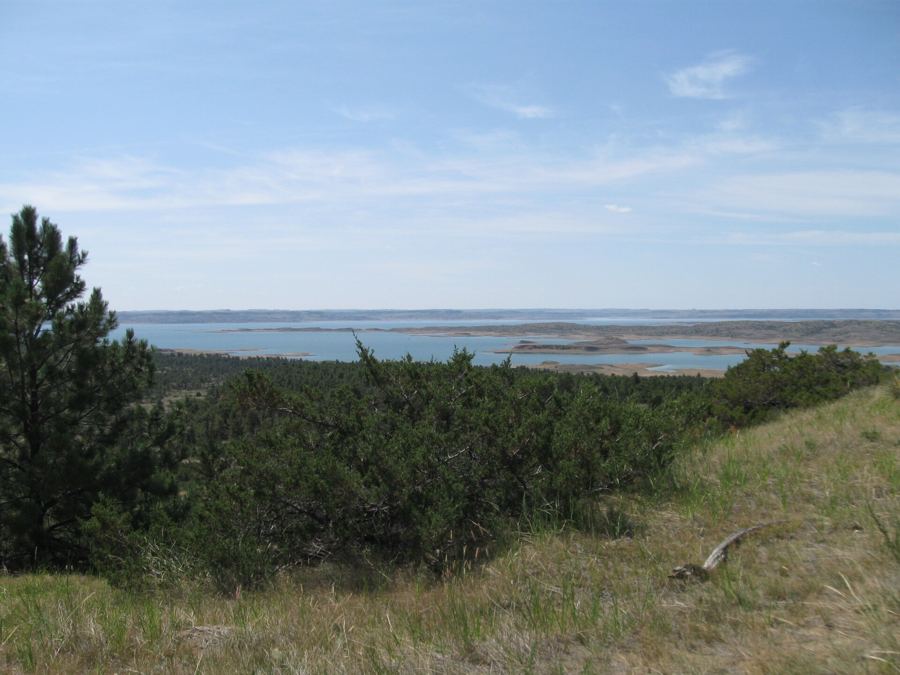 Another trek · Northern RockiesHell Creek, where Tyrannosaurus rex was first found Researchers have since relocated many of those early quarries from old notes and photographs. Today research in the park is closely tied to the Royal Tyrrell Museum in Drumheller, and fieldwork continues every summer.
Guided areas and public trails
The heart of the park, the natural preserve, is open only on guided tours and programs led by park staff. These range from bus tours through restricted badlands to hikes to fossil sites, and some programs let you take part in fieldwork under staff supervision. Places are limited and often fill in summer, so reserve ahead and check what is offered before you go.
Tours vary in length and difficulty, from easy bus trips to longer hikes over rough ground in the heat. Read the descriptions carefully and choose one that suits the youngest or least fit member of your group, since some programs have minimum ages.
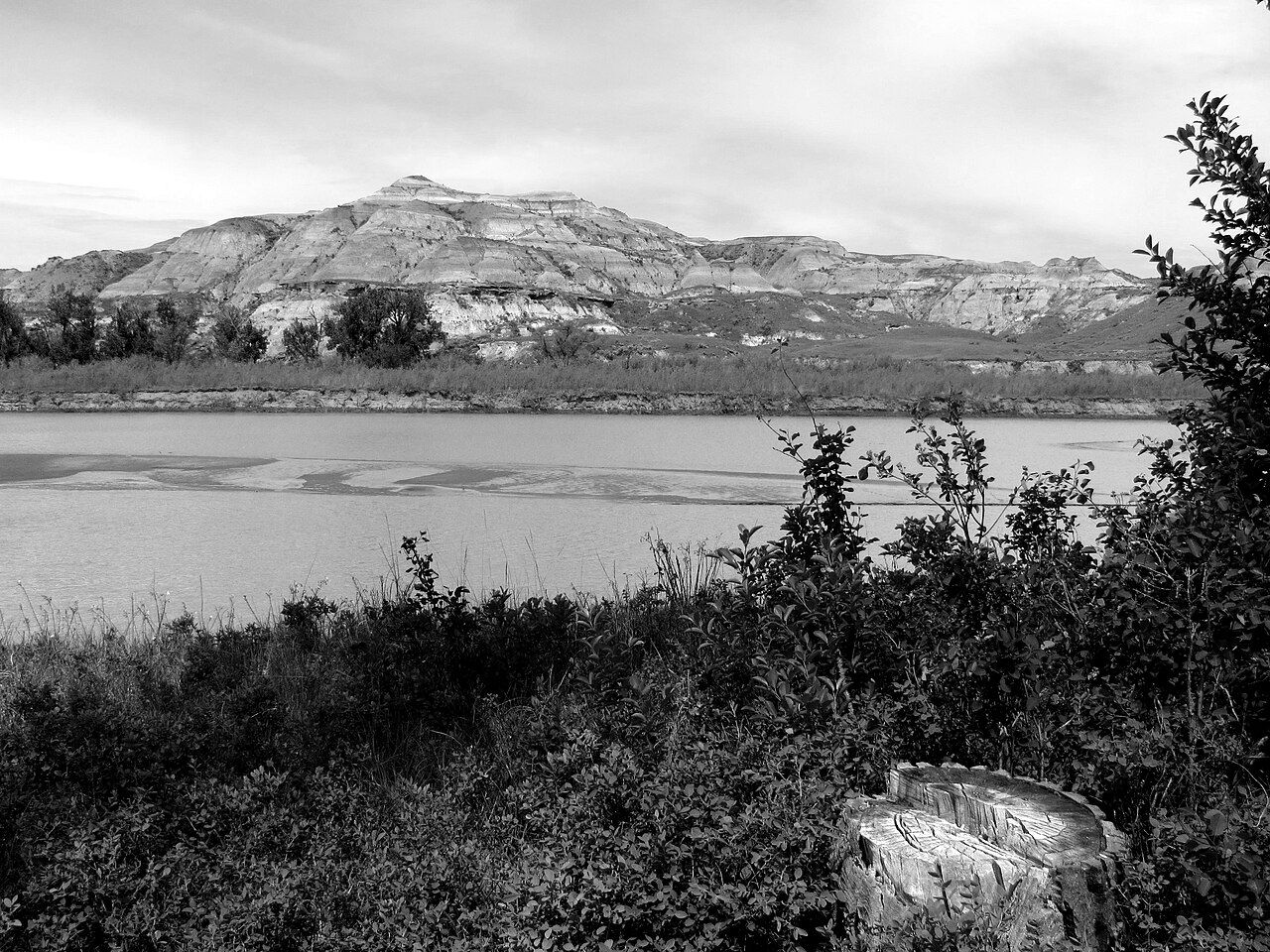
Outside the preserve, a public loop road and several short trails let you explore on your own. The Badlands Trail and the Coulee Viewpoint Trail wind among hoodoos and over ridges with views across the valley, while the Cottonwood Flats Trail follows the river through shady groves. Along the loop road, small shelters protect fossil bones left as they were found, with panels that explain what you are looking at.
Hoodoos, heat and rattlesnakes
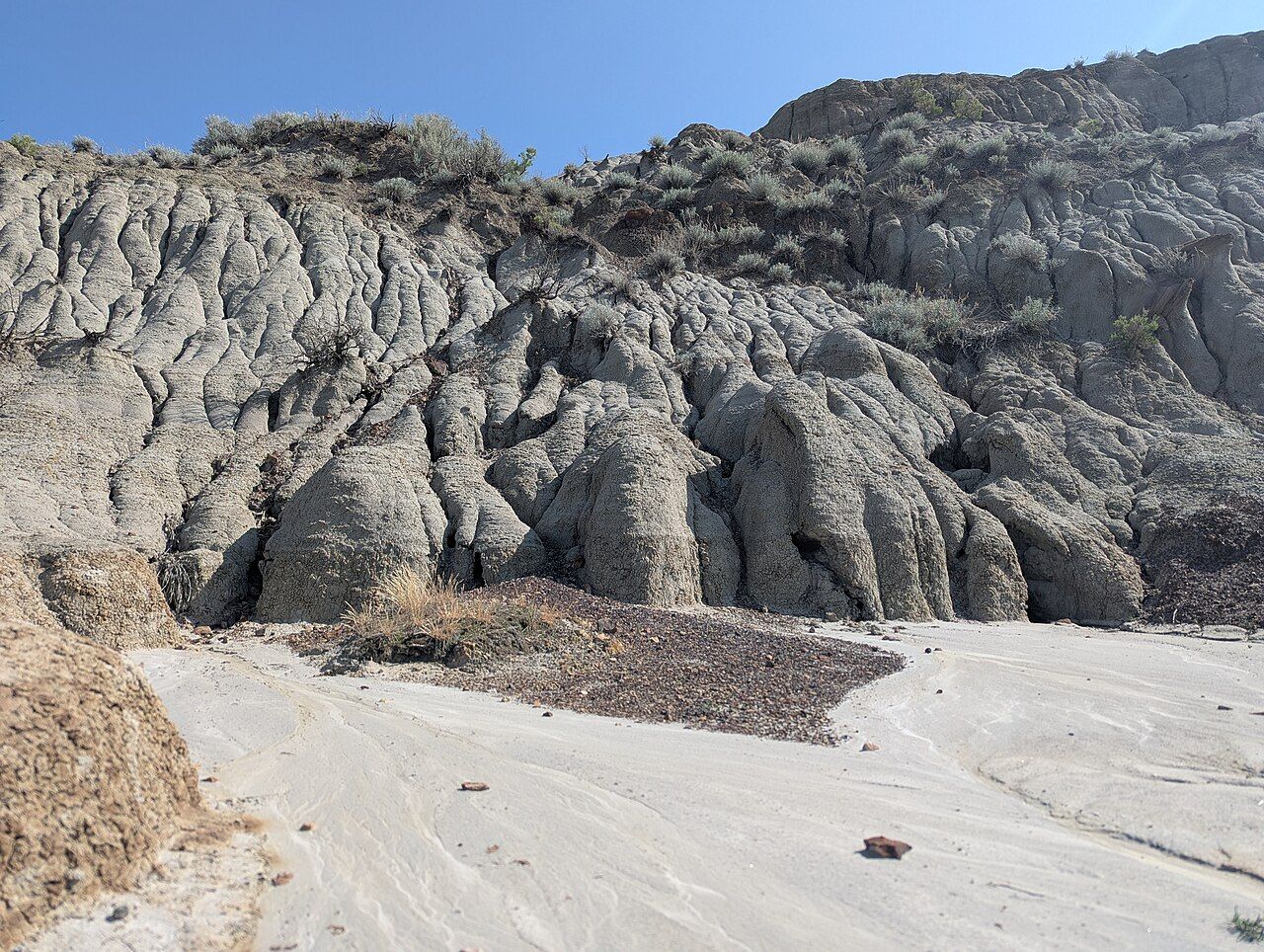
The badlands here are made of soft sandstone, siltstone and mudstone, cut by wind, rain and spring meltwater. Hoodoos form where a harder cap protects a softer column below. The ground changes constantly, which is why new fossils keep appearing, and why slopes can be crumbly and unstable underfoot. Stay on marked trails in the public areas.
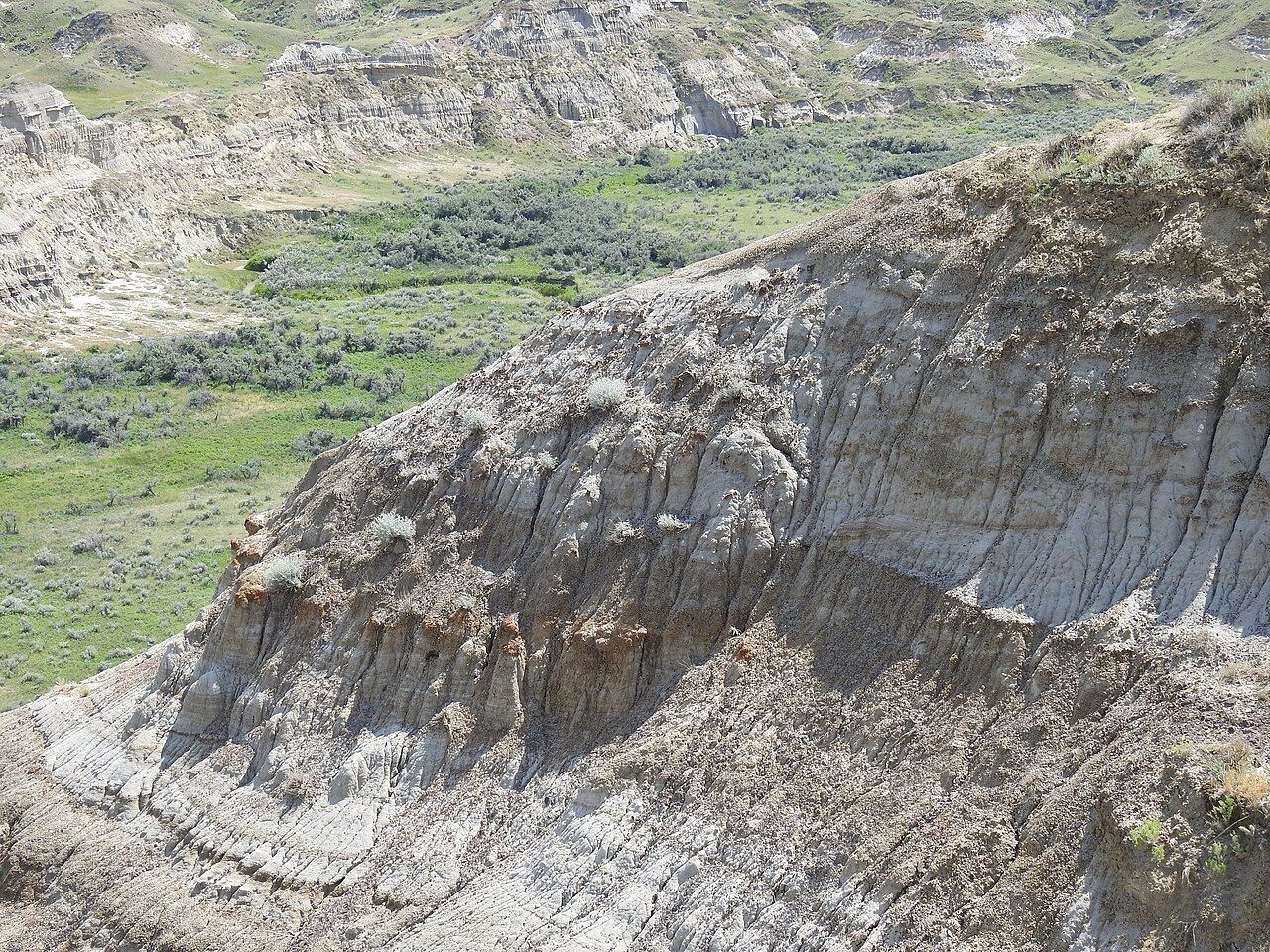
The ground changes constantly, which is why new fossils keep appearing, and why slopes can be crumbly and unstable underfoot.
Summer days in the valley can be very hot, hotter than on the prairie above, and there is little shade away from the river. Carry plenty of water, wear a hat and sun protection, and plan hikes for morning or evening. Prairie rattlesnakes live in the park. They are shy and usually give warning, so watch where you step and never put a hand on a ledge you cannot see. Cactus grows low among the rocks, another reason to look before you sit. Thunderstorms can turn the clay slick within minutes.
Camping and planning
The park lies northeast of the town of Brooks, a drive of a couple of hours or more southeast of Calgary, reached by paved roads and a final descent into the valley. A campground on the valley floor sits among cottonwood trees beside the river, with sites for tents and campers; reserve well ahead for summer. Brooks has fuel, groceries and other services.
Plan at least two days if you can: one for a guided tour into the preserve, and one for the public trails, the visitor center and an evening walk when the low sun sets the striped hills glowing. Stars are bright here on clear nights, far from city lights, and coyotes often call from the coulees after dark.
The visitor center near the campground has exhibits and information about tours. Check opening hours and seasons before you go, since most programs run from late spring to early autumn. Combine the park with a day or two in Drumheller, upstream to the northwest, and you will see the two great badland centers of the Red Deer River. If you are coming up from the south, Makoshika in eastern Montana gives a taste of similar badland country across the border.
The photographs on this trek were shared under open licences; their photographers are named in Who shot the bones.