
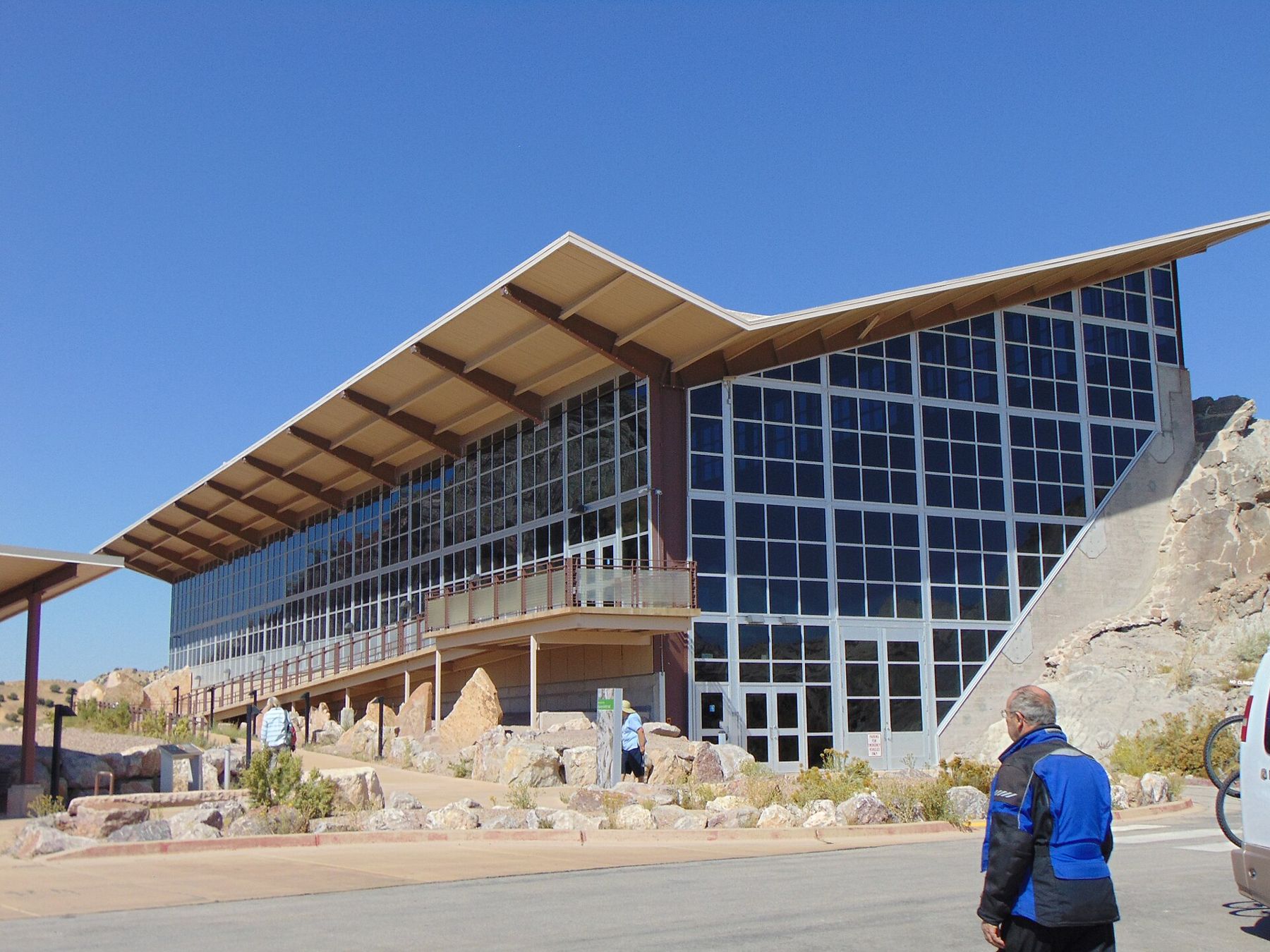
Dinosaur National Monument straddles the border of Utah and Colorado, and at its heart is a single slab of tilted sandstone holding about 1,500 dinosaur bones. A modern glass hall covers that rock face, so you can walk right up to a jumble of skulls, vertebrae, ribs and leg bones still lying where a river dropped them roughly 150 million years ago. Few places on Earth let you see dinosaur bones this way, embedded in the rock rather than mounted on steel.
The monument is far more than the quarry. It takes in deep river canyons on the Green and Yampa rivers, rock art left by people who lived here many centuries ago, and miles of empty desert country. But the bone wall is the reason most people come, and it deserves a slow, careful look.
The Wall of Bones
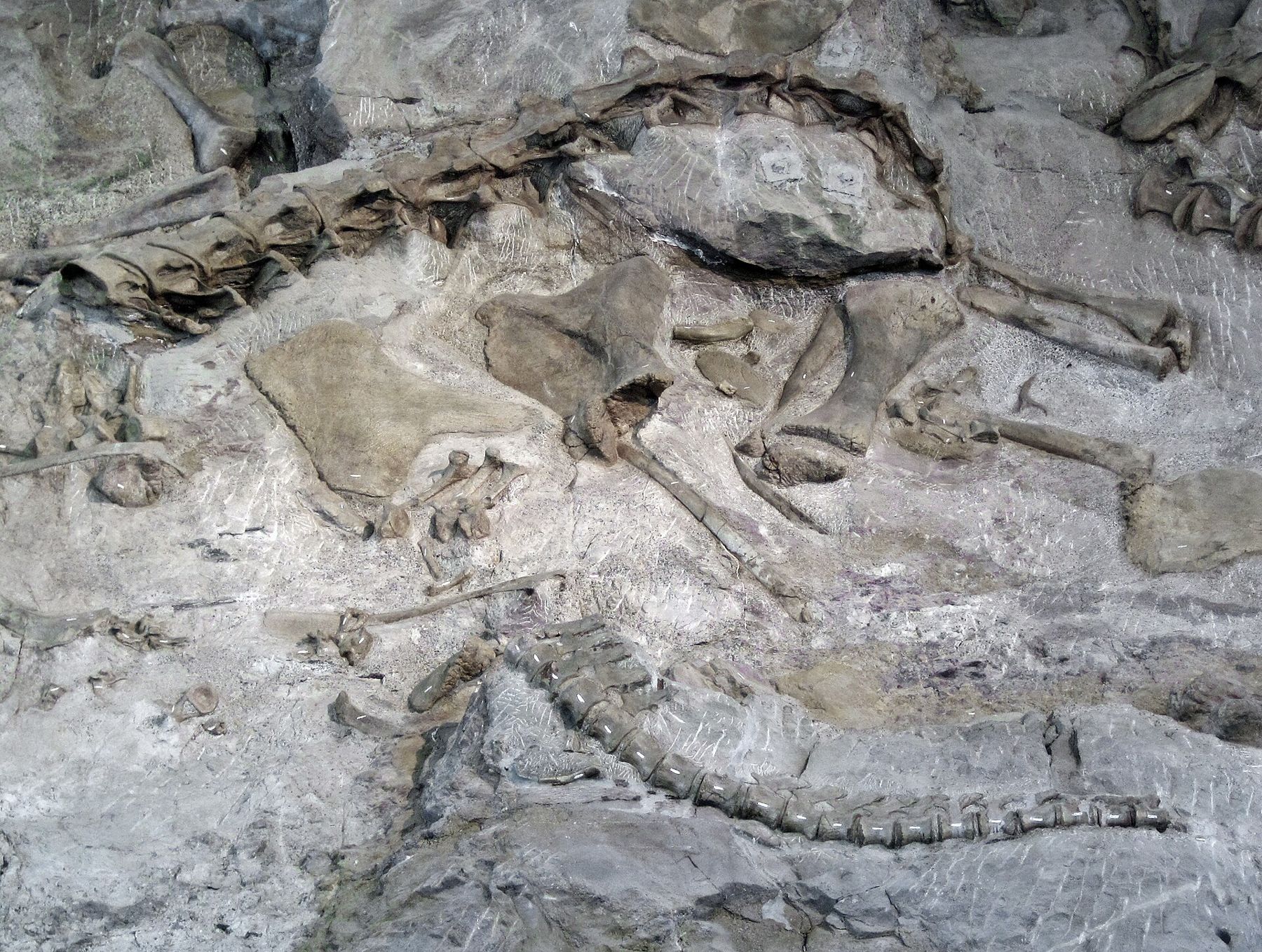
The Quarry Exhibit Hall sits north of the town of Jensen, Utah, a short distance above the Quarry Visitor Center. Inside, the long wall is the tilted bed of sandstone itself, cleaned off by technicians so that the bones stand out in relief. From an upper walkway you can take in the whole sweep; from the lower floor you get close enough to see the grain of the bone, and in places you may touch fossil bone where signs allow it.
Among the animals identified in the wall are the long-necked sauropods Apatosaurus, Diplodocus and Camarasaurus, the plated Stegosaurus and the predator Allosaurus. Bones from different animals lie tangled together. Researchers read the deposit as an old river channel where flowing water gathered and piled up remains, then buried them in sand.
Look for the way some bones still connect to their neighbors, a sign that the animal was buried before it fell apart, and for others lying alone, carried farther by the current before they came to rest.
In busy months a shuttle may carry visitors between the visitor center and the hall, while at quieter times you can drive up yourself. The arrangement changes, so check before you go.
Few places on Earth let you see dinosaur bones this way, embedded in the rock rather than mounted on steel.
Earl Douglass and the Morrison Formation
In 1909 Earl Douglass, a fossil hunter working for the Carnegie Museum in Pittsburgh, found a row of Apatosaurus tail vertebrae weathering out of this ridge. Excavations went on for years, and tons of bone traveled east to Pittsburgh and to other museums. In 1915 the quarry area was protected as a national monument, and much later the decision was made to leave part of the bone bed in place for the public to see.
Douglass lived near the quarry with his family for years, and early on he wrote that he hoped the government would uncover a large area, leave the bones in relief and house them for the public. That wish, set down more than a century ago, is the reason the wall exists today.
The rock is the Morrison Formation, a set of Late Jurassic river, floodplain and lake deposits that stretches across much of the American West. The formation takes its name from the town of Morrison near Denver, where Dinosaur Ridge shows Morrison bones in a road cut. The Morrison has produced many of the most familiar dinosaurs, which is why it fills so many cases in the great museum fossil halls.
Fossil Discovery Trail and the desert around it
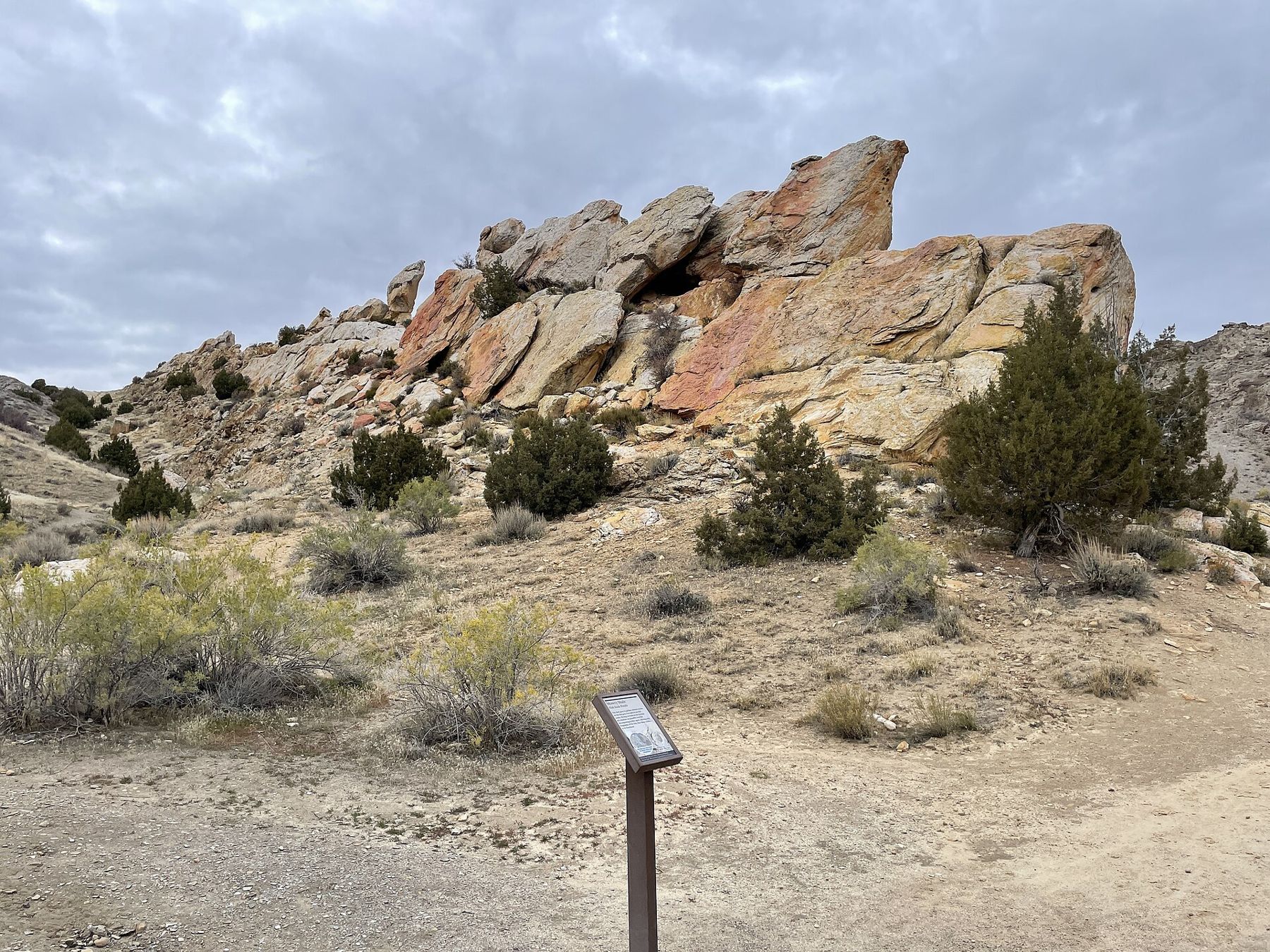
A short trail links the hall and the visitor center on foot, passing outcrops of the Morrison and other formations. Along the way you can see fossil bone and shells still in the rock, and learn how these layers were tilted up on edge as the land was folded. 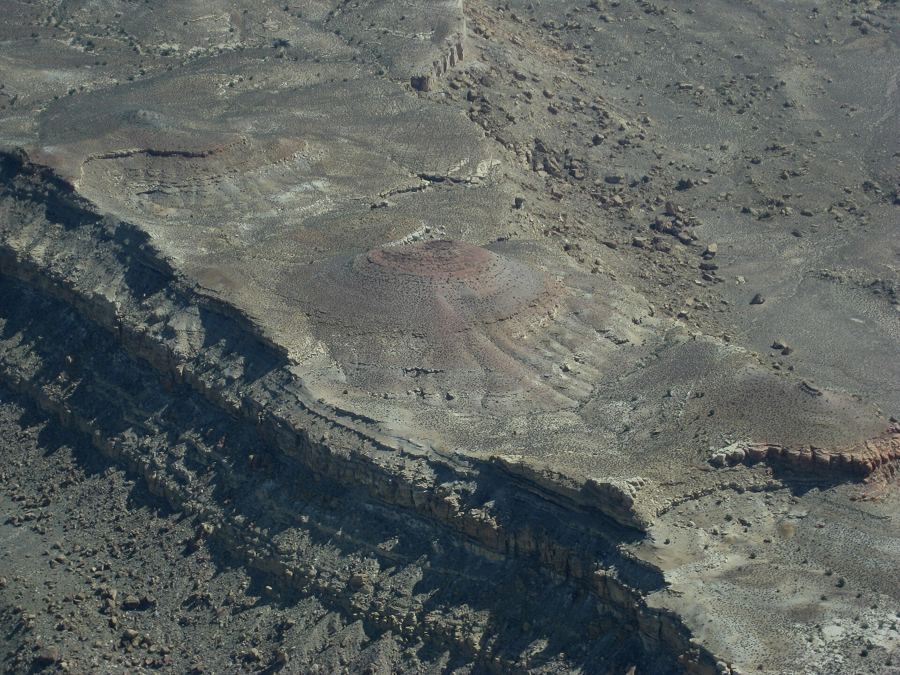 Another trek · SouthwestGrand Staircase-Escalante's new dinosaurs It is hot and exposed in summer, so go early and carry water.
Beyond the quarry, the Cub Creek road leads east past an old homestead and panels of petroglyphs pecked into the cliffs by people of the Fremont culture, who farmed and hunted in this region long before European settlers arrived. Large lizard figures and human-like shapes share the rock. Look but never touch, because oils from skin damage the images.
The Green River and the Colorado side
The Green River flows through the monument, cutting through Split Mountain close to the quarry and carving deep canyons farther north, where it meets the Yampa at Echo Park. River trips through these canyons need permits, and the monument has campgrounds near the water. The Split Mountain area, a few miles from the quarry, is a fine place to watch the river in evening light.
The canyons are home to wildlife you will not see at the quarry. Bighorn sheep move along the cliffs, birds of prey nest on the ledges, and the rivers hold native fish that have become rare elsewhere in the Colorado River system.
On the Colorado side, the Canyon Visitor Center near the town of Dinosaur marks the start of the Harpers Corner Road, a long paved drive to overlooks above the canyons. There are no dinosaur bones on display there, but the views over the Green and Yampa explain why the monument was enlarged in the 1930s to protect its canyons as well as its quarry. Plan a separate day if you want both sides, because the two areas are far apart by road.
Seeing it with children
The quarry hall works well for young visitors because the scale is obvious. A child can stand beside a sauropod thigh bone and see that it is longer than they are tall, then look along the wall and find a skull small enough to hold in two hands. Ask them to count the vertebrae in a neck or tail, or to find a bone that looks broken, and the wall becomes a puzzle rather than a backdrop.
The monument runs a Junior Ranger program, with activity booklets at the visitor centers, and rangers often give short talks in the busier months. Outside, the Fossil Discovery Trail is short enough for most families if you start early, and the petroglyph panels on the Cub Creek road add a different kind of history to the same day. Bring snacks and water, since services inside the monument are limited.
Planning your visit
The nearest larger town on the Utah side is Vernal, a short drive west of the quarry, with dinosaur themes along its main street and a state park museum devoted to the region's natural history. On the Colorado side the town of Dinosaur is small, so plan fuel and supplies. An entrance fee applies and national park passes are accepted; check current fees and opening hours before you go.
Spring and autumn bring comfortable walking weather. Summer is hot, with thunderstorms on many afternoons, and winter is cold, though the quarry hall stays open much of the year. Before you explore public land elsewhere in the region, read up on the rules for finding fossils.
The photographs on this trek were shared under open licences; their photographers are named in Who shot the bones.