
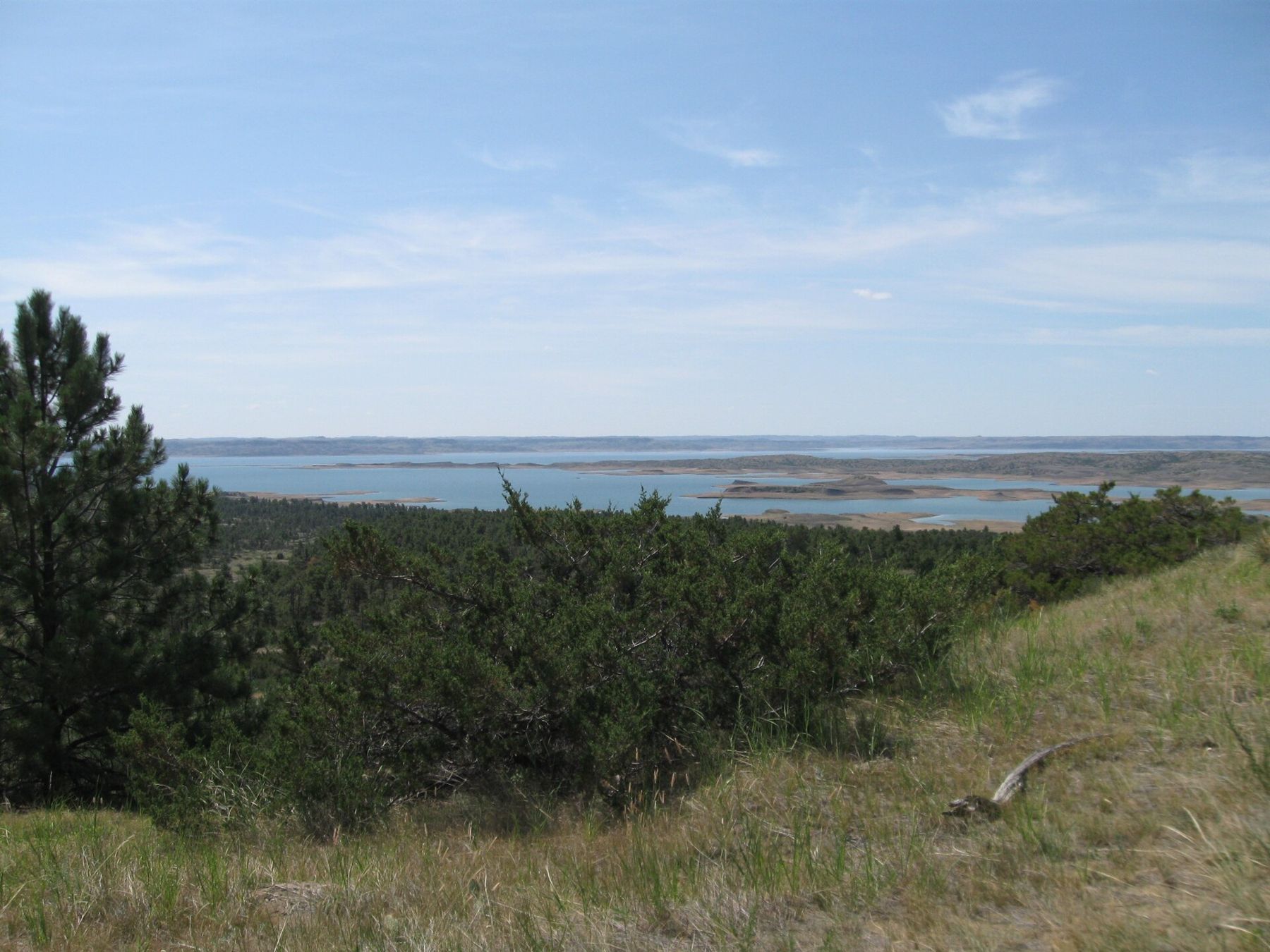
In 1902 a fossil hunter from New York named Barnum Brown searched the badlands near Jordan, in Garfield County, Montana, and found the bones of a huge meat-eating dinosaur. Three years later it was given a name that has never left the playground: Tyrannosaurus rex. The country he searched looks much the same today. Gray and tan slopes fall toward the Missouri River, now held back as Fort Peck Lake, and the layers in those slopes record the last few million years of the age of dinosaurs.
This is not a park with a gate and a ticket booth. Hell Creek is a working landscape of cattle ranches, public land and long gravel roads, and it rewards visitors who come prepared and patient. You come here to see where the story started, to stand at the edge of the Cretaceous, and to understand why so many famous skeletons in the great museum halls began their journey in this corner of Montana.
The rocks that made the name
The Hell Creek Formation takes its name from a creek that runs north from the Jordan area into the Missouri. Its sandstones and mudstones were laid down by rivers winding across a warm, low coastal plain, roughly 68 to 66 million years ago. Floods buried carcasses in sand bars and channel bottoms, which is why bones usually turn up as scattered pieces rather than whole skeletons.
The cast of characters is famous. Besides Tyrannosaurus rex, the formation has given up Triceratops, the duck-billed Edmontosaurus, the armored Ankylosaurus and the dome-headed Pachycephalosaurus, along with turtles, crocodile relatives, fish, lizards and small mammals. Triceratops is by far the most common big dinosaur here. T. rex is rare, which is part of why every new skeleton makes news.
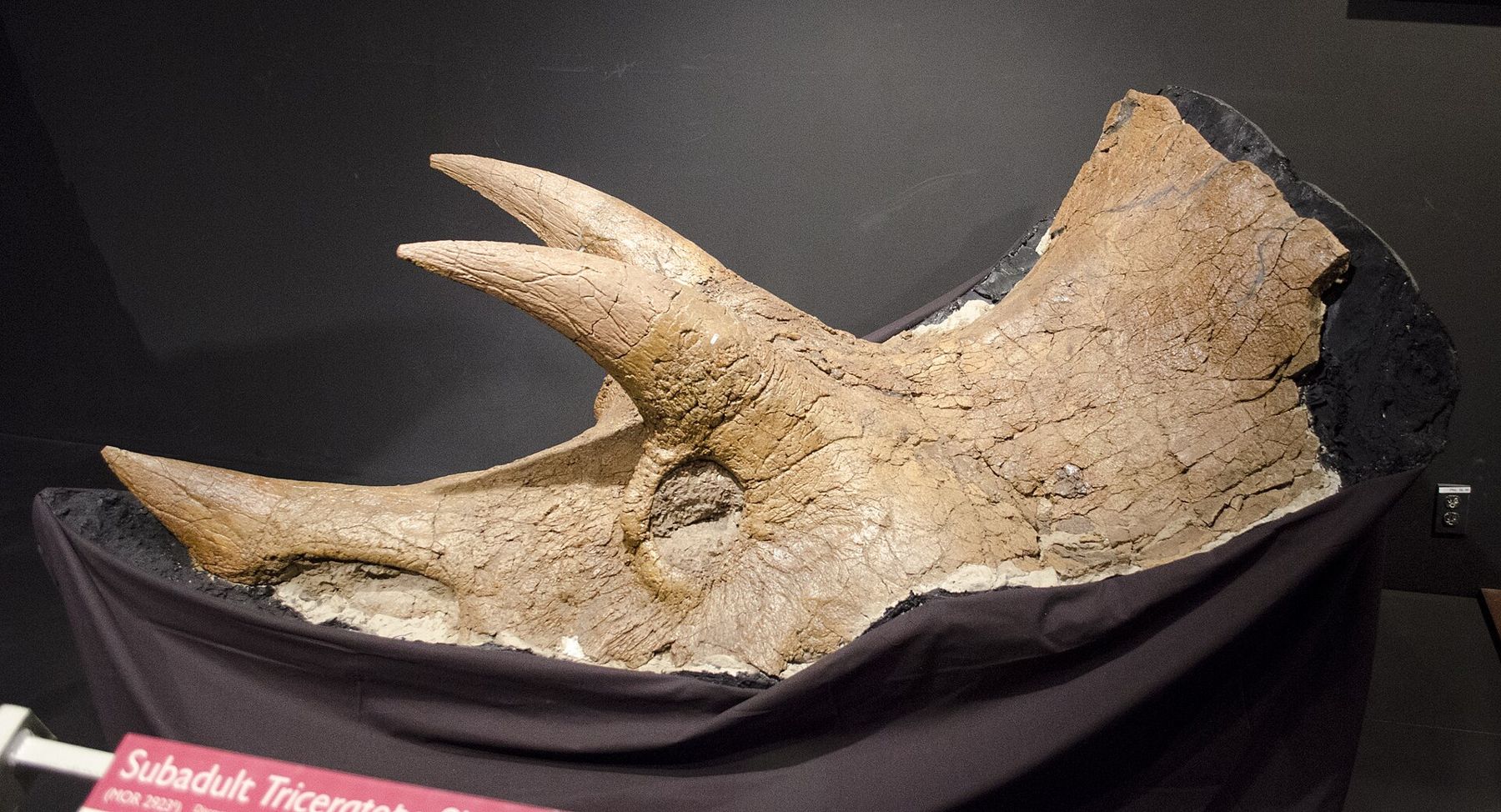
Below the Hell Creek lie older marine rocks, including the dark Bearpaw Shale, laid down when a shallow inland sea covered this ground. Above it sits the Fort Union Formation, the rock of the early age of mammals. If you want to see the animals themselves rather than the ground they came from, the Museum of the Rockies in Bozeman holds many Hell Creek finds.
Reading the end of the Cretaceous
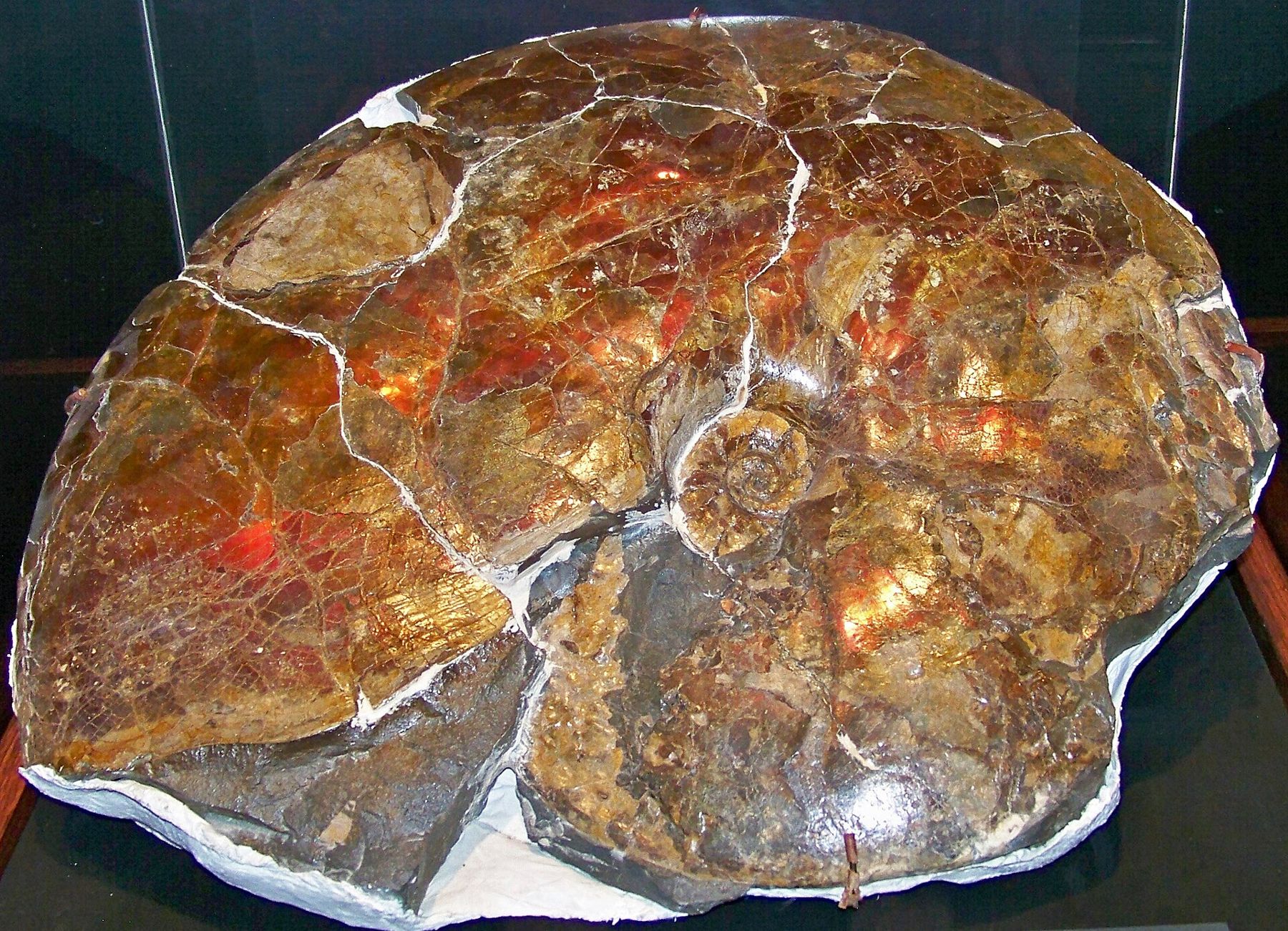
The contact between the Hell Creek and the Fort Union marks one of the great turning points in the history of life, about 66 million years ago. In places a thin clay layer sits at or near the contact, and in parts of this region it carries the unusual enrichment in the metal iridium that is linked to the asteroid impact that ended the age of non-bird dinosaurs. Below the line you find dinosaur bone; above it, none.
From a distance, the change often shows as color. Hell Creek slopes tend toward drab gray and tan with brownish sandstone ledges, while the Fort Union above is often banded with dark seams of lignite coal. Geologists have spent whole careers on these few meters of rock. You can see a similar contact at Makoshika State Park near Glendive, where it is easier to reach on marked trails.
Below the line you find dinosaur bone; above it, none.
Fort Peck Lake and the Missouri Breaks
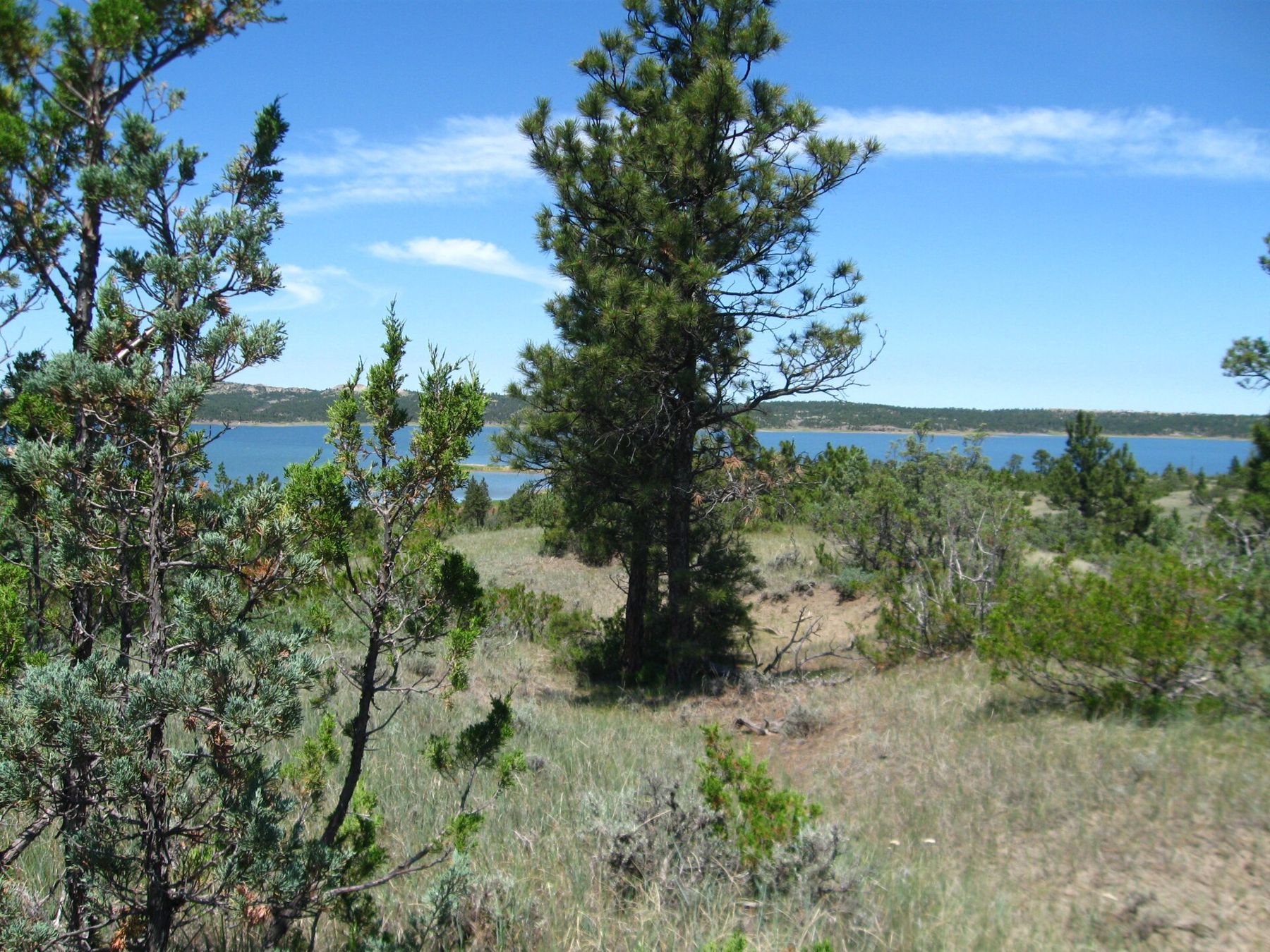
Fort Peck Lake is a reservoir on the Missouri River, held back by Fort Peck Dam, a vast earth dam built in the 1930s. The lake winds for well over a hundred miles through the badlands, and much of the land around it lies within the Charles M. Russell National Wildlife Refuge. That gives the shoreline a wild, unfenced feel: pine and juniper on the ridges, sagebrush flats, and steep coulees falling to the water.
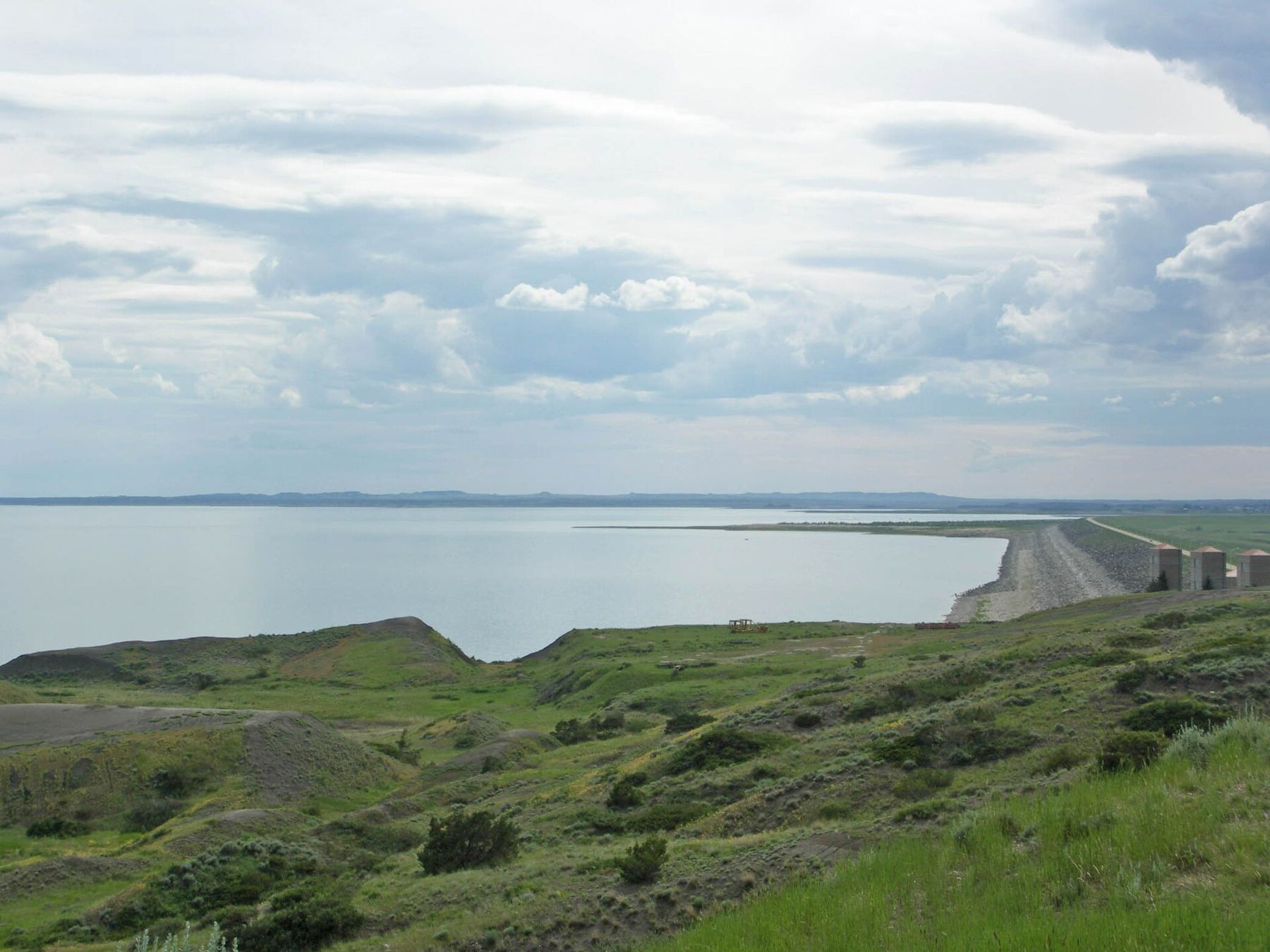
Near the dam, in the town of Fort Peck, an interpretive center tells the story of the dam and the region's fossils, and it makes a good first stop before you head into the back country. Hell Creek State Park, on an arm of the lake north of Jordan, gives you a base on the water with camping and a boat ramp. 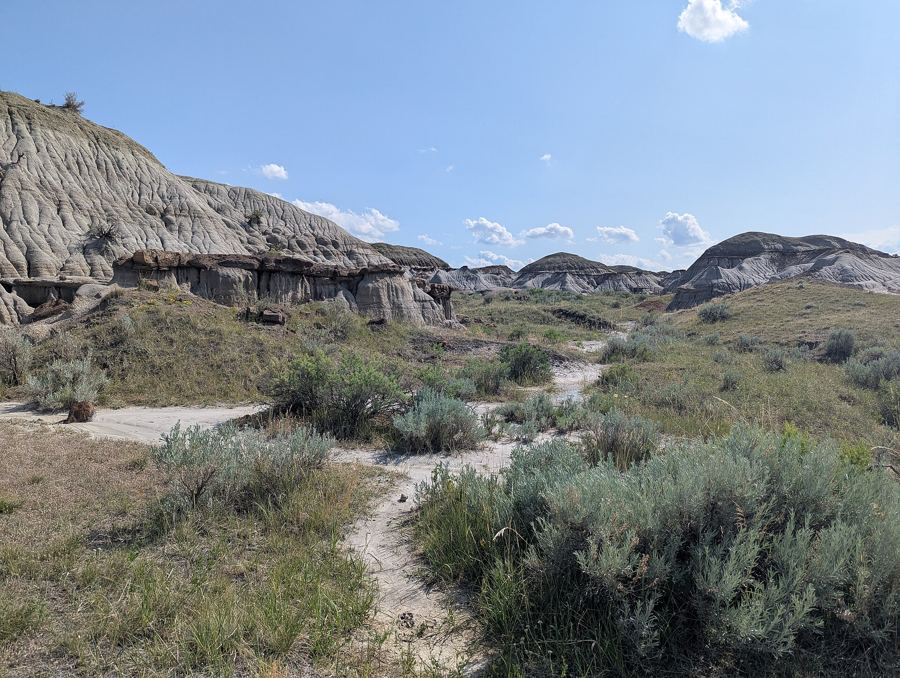 Another trek · AlbertaDinosaur Provincial Park, Alberta Check opening seasons before you go, because services here are thin outside summer.
Public land, private land and the law
The land map here is a patchwork, and it matters. Large parts are federal: the wildlife refuge and tracts managed by the Bureau of Land Management. Other sections belong to the state, and a great deal is private ranch land. On federal land, vertebrate fossils such as dinosaur bones and teeth are protected by law and may not be collected by visitors. State land has strict rules of its own. On private land the fossils belong to the landowner, and you need permission even to walk in.
Fences, gates and county roads do not always tell you whose ground you are on, so carry a land-ownership map and leave every gate as you find it. If you see bone weathering out of a slope, enjoy it, photograph it with something for scale, note where it is, and leave it in place. A fragment lifted out of its layer loses most of its scientific value, because the rock around it tells researchers how old it is and how it was buried. The rules for finding fossils are worth reading before any trip to dinosaur country.
Getting around Jordan and the breaks
Jordan is a small ranching town and the county seat of Garfield County, on Montana Highway 200 between the Musselshell River and the town of Circle. It is a long drive from anywhere: plan on several hours from Billings, the nearest large city. Fuel up whenever you can, carry spare water and food, and do not count on mobile phone coverage once you leave the highway.
The roads into the breaks are mostly gravel and clay. When dry they are dusty but passable. After rain the clay, known locally as gumbo, turns to a grease that can strand even four-wheel-drive vehicles until it dries. Watch the sky, and if storms build, get back to pavement early. Summer brings heat and sudden thunderstorms; spring and autumn are cooler but can bring snow.
The best way to see Hell Creek country is slowly. Drive the paved road to the lake, walk the ridges above the water at dawn, watch low light pick out the bands in the slopes, and visit the interpretive centers and museums that display what came out of these hills. If you are hooked, look into the field programs that some museums run for the public, where you work alongside researchers who hold the proper permits.
The photographs on this trek were shared under open licences; their photographers are named in Who shot the bones.