
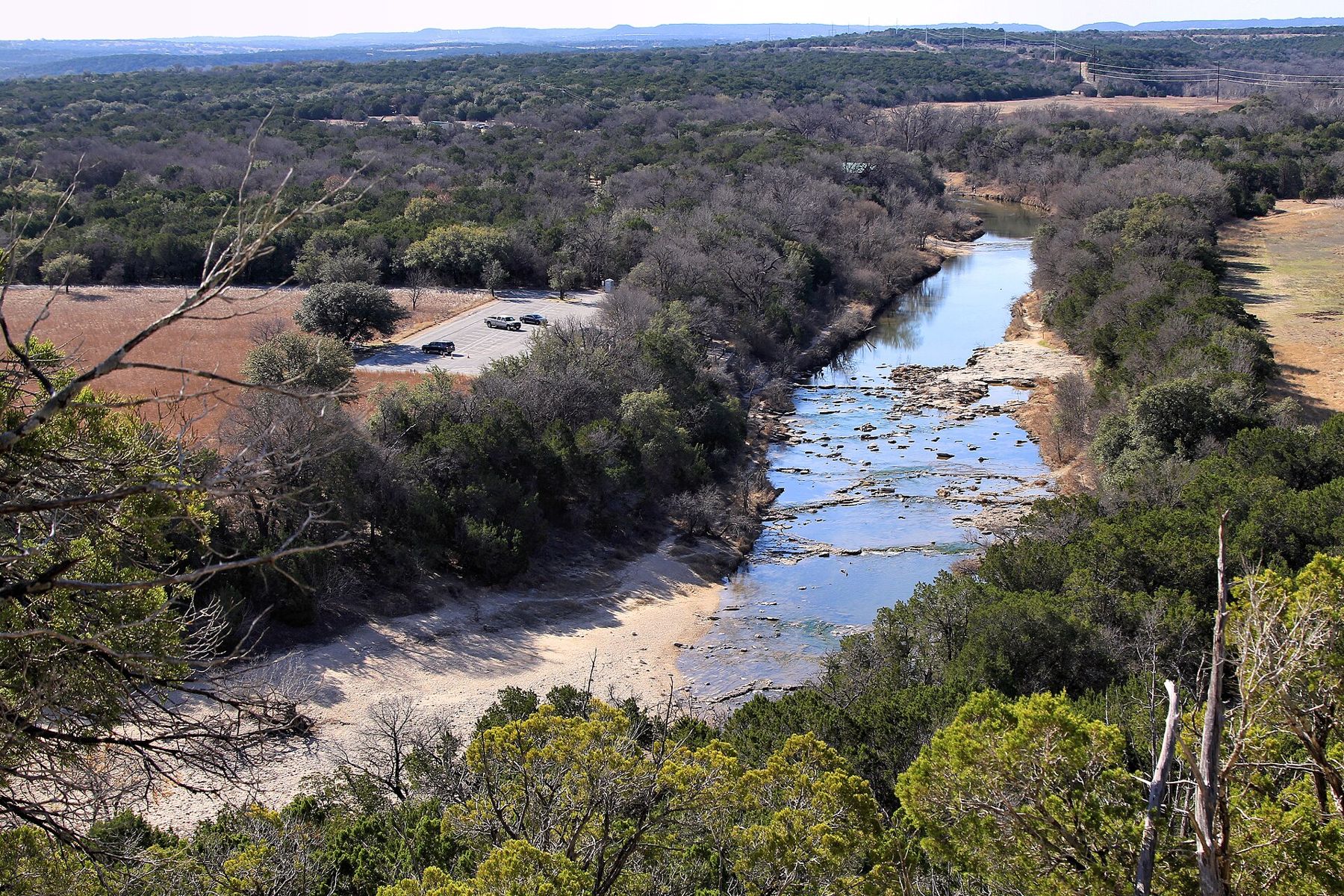
On the bed of the Paluxy River in north-central Texas, you can stand in the footprints of dinosaurs. The tracks lie in limestone laid down along a coastline in the Early Cretaceous, about 113 million years ago, and the river scours them clean. Dinosaur Valley State Park, just outside the town of Glen Rose, protects some of the best-preserved dinosaur trackways in the world.
This is a place to get your feet wet. When the water is low, the tracks appear on the riverbed, and you can wade or step across rocks to reach them. It makes a visit feel like fieldwork, even though all you are doing is looking very carefully.
Sauropods and theropods in the riverbed
Two main kinds of tracks show up in the park. The first are large, rounded prints of sauropods, the long-necked plant-eaters, made by animals walking on all fours, with smaller front prints and broad hind prints. The second are three-toed tracks of theropods, the meat-eaters, often with sharp claw marks at the tips of the toes.
The trackmakers cannot be named for certain, since footprints rarely come with bones attached. The sauropod tracks are often linked to animals like Sauroposeidon, and the large theropod prints to a predator like Acrocanthosaurus, both known from Texas rocks of about the same age. In places, theropod tracks follow the same path as sauropod tracks, which has fed a long debate over whether a predator was trailing its prey.
Look at the shape of each print before you move to the next. A sauropod hind print is broad and roughly oval, sometimes with a raised rim of mud pushed up around it. A theropod print is longer than it is wide, with three slim toes splayed forward. Pace out your own stride beside a trackway and you start to sense the size and speed of the animal that made it.
Low water and how to see the tracks
Whether you see tracks depends on the river. After heavy rain the Paluxy can run high and muddy, hiding everything. In dry spells the water drops and clears, and the prints show sharply, sometimes holding shallow water that outlines each toe. Algae and silt can blur them, so the best viewing usually comes after a dry period, when the river is low and clear.
The main track sites are marked, with the most popular one easy to reach from a parking area, and other sites up and down the river for those willing to walk and wade. Wear shoes you can get wet, watch for slick rock, and stay out of the river when it is running high. The park shares updates on viewing conditions, so check before you go.
Roland T. Bird and the trackway in New York
In 1938 a fossil hunter named Roland T. Bird came to the Paluxy for the American Museum of Natural History. With a local work crew, he excavated a long section of trackway from the riverbed, showing sauropod prints with theropod tracks alongside. The slabs were cut into blocks and shipped away.
Part of that trackway went to New York, where it was installed beneath a sauropod skeleton, and it is still part of the story in the fourth-floor fossil halls. Another section went to a museum in Austin. 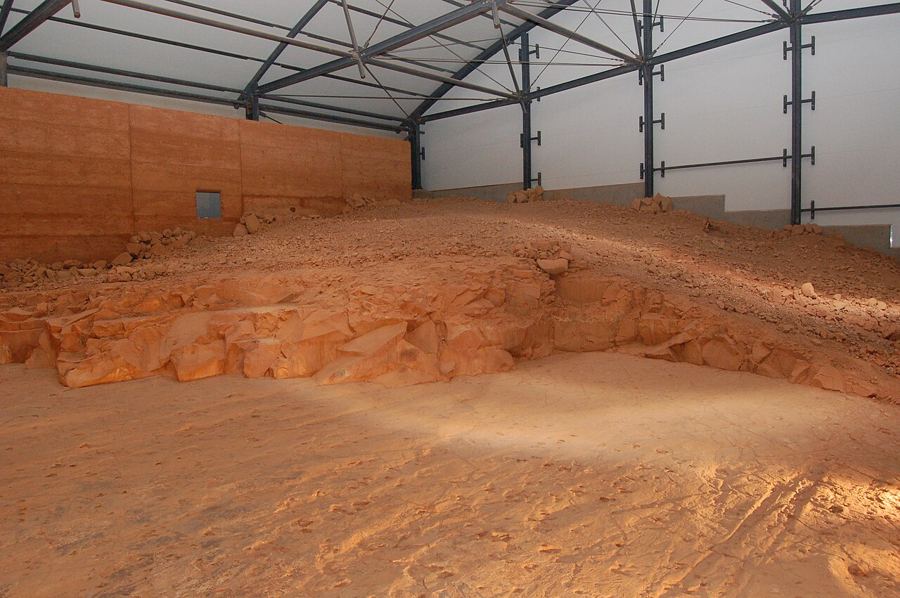 Another trek · AbroadLark Quarry and the dinosaur stampede Bird's work drew wide attention to the Paluxy tracks, and the area became a state park decades later.
The park above the river
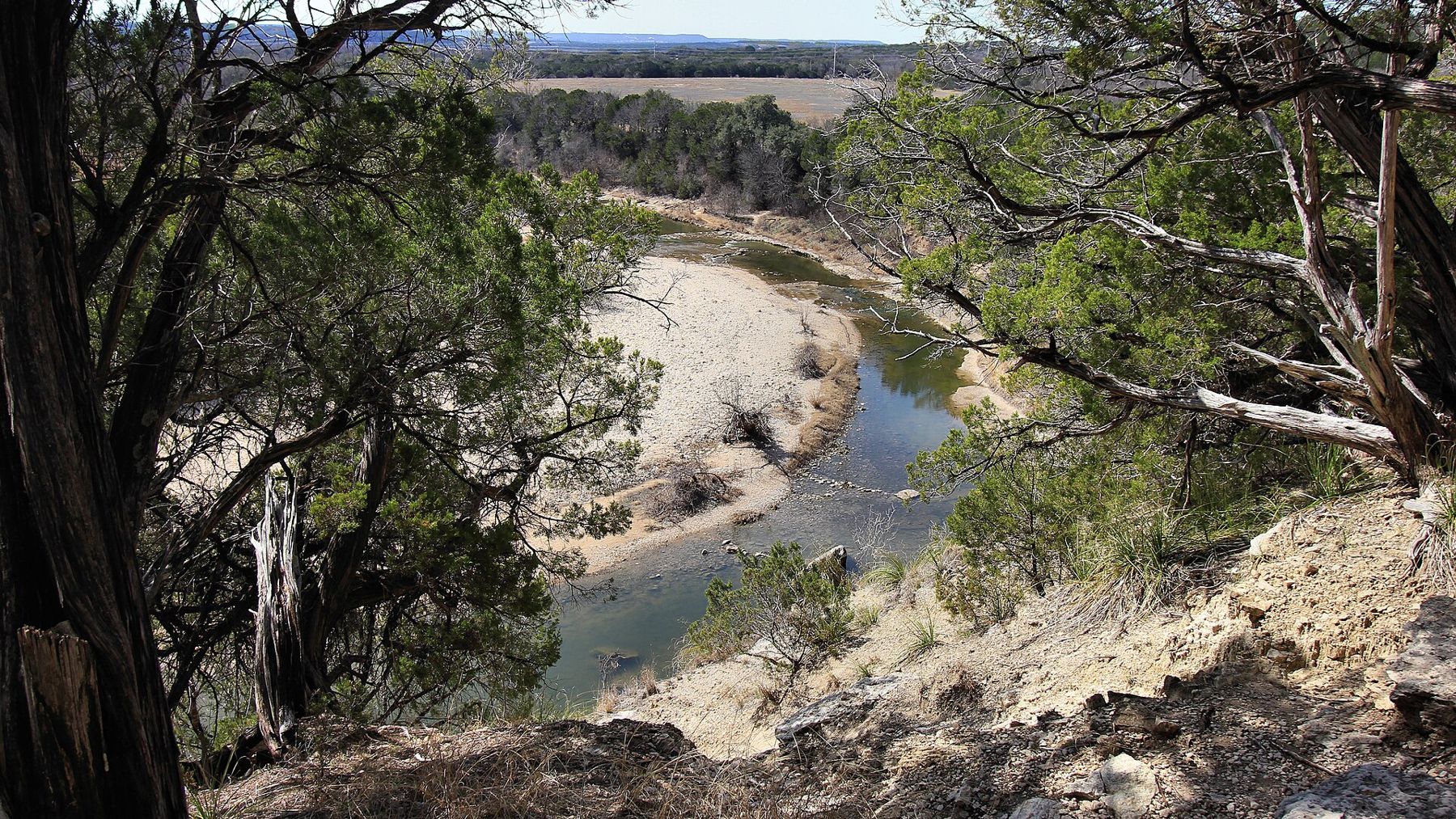
The park is not only about tracks. Trails climb through juniper and oak onto bluffs above the river, with wide views of the valley, and there are campsites, picnic areas and places to swim when conditions allow. Near the headquarters stand two large dinosaur models, a sauropod and a Tyrannosaurus rex, built for the 1964 New York World's Fair and later given a home here. They are not accurate by modern standards, but they make a cheerful photo stop.
Wildlife is part of a visit. Deer come down to the river at dawn and dusk, and the juniper and oak woodland shelters many songbirds, including the golden-cheeked warbler, an endangered species that nests only in central Texas.
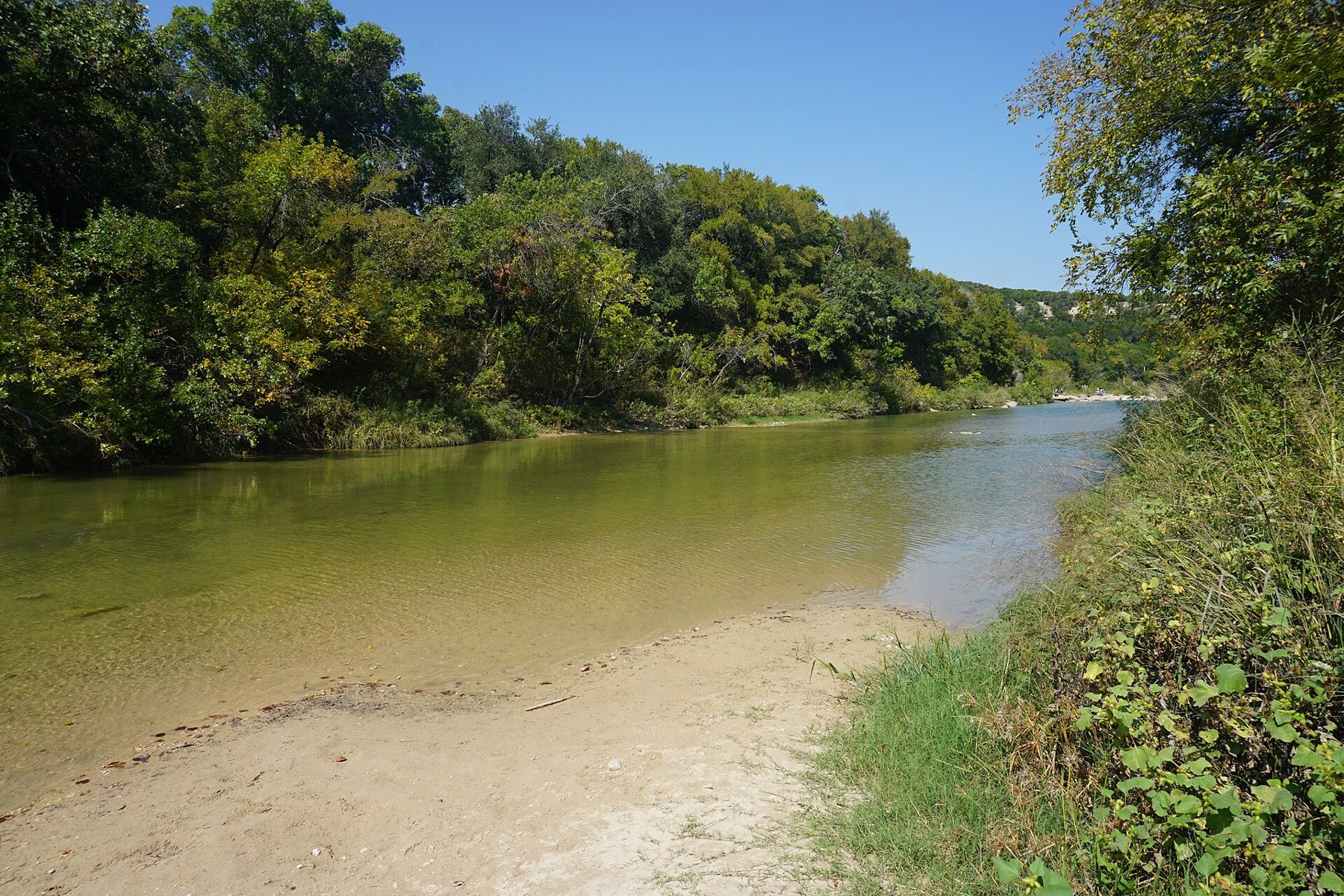
Summers here are hot, often very hot, and the bare riverbed rock throws heat back at you. Spring and autumn are the most comfortable seasons, with wildflowers on the bluffs in spring. Expect crowds on spring weekends and holidays. Arrive early, since the park may limit entry when it fills.
Getting there and pairing it
Glen Rose lies southwest of the Dallas and Fort Worth area, reached by highway through rolling ranch country, and the park sits a few miles west of town. An entry fee applies; check current fees, and whether reserving a day pass in advance is recommended, before you go. Bring a change of clothes for children, who rarely stay dry for long.
If tracks are your favorite kind of fossil, the track site at Dinosaur Ridge near Denver shows a tilted slab of footprints from a slightly younger shoreline. Before visiting any fossil site, read up on the rules for finding fossils, because the rules for touching and collecting change from place to place.
A good day here is unhurried. Check conditions in the morning, walk to the nearest track site, then follow the river on foot to one or two more. Each site looks different as the light moves, and returning to a print in late afternoon, when shadows deepen its edges, can show you details you missed at noon.
The photographs on this trek were shared under open licences; their photographers are named in Who shot the bones.