
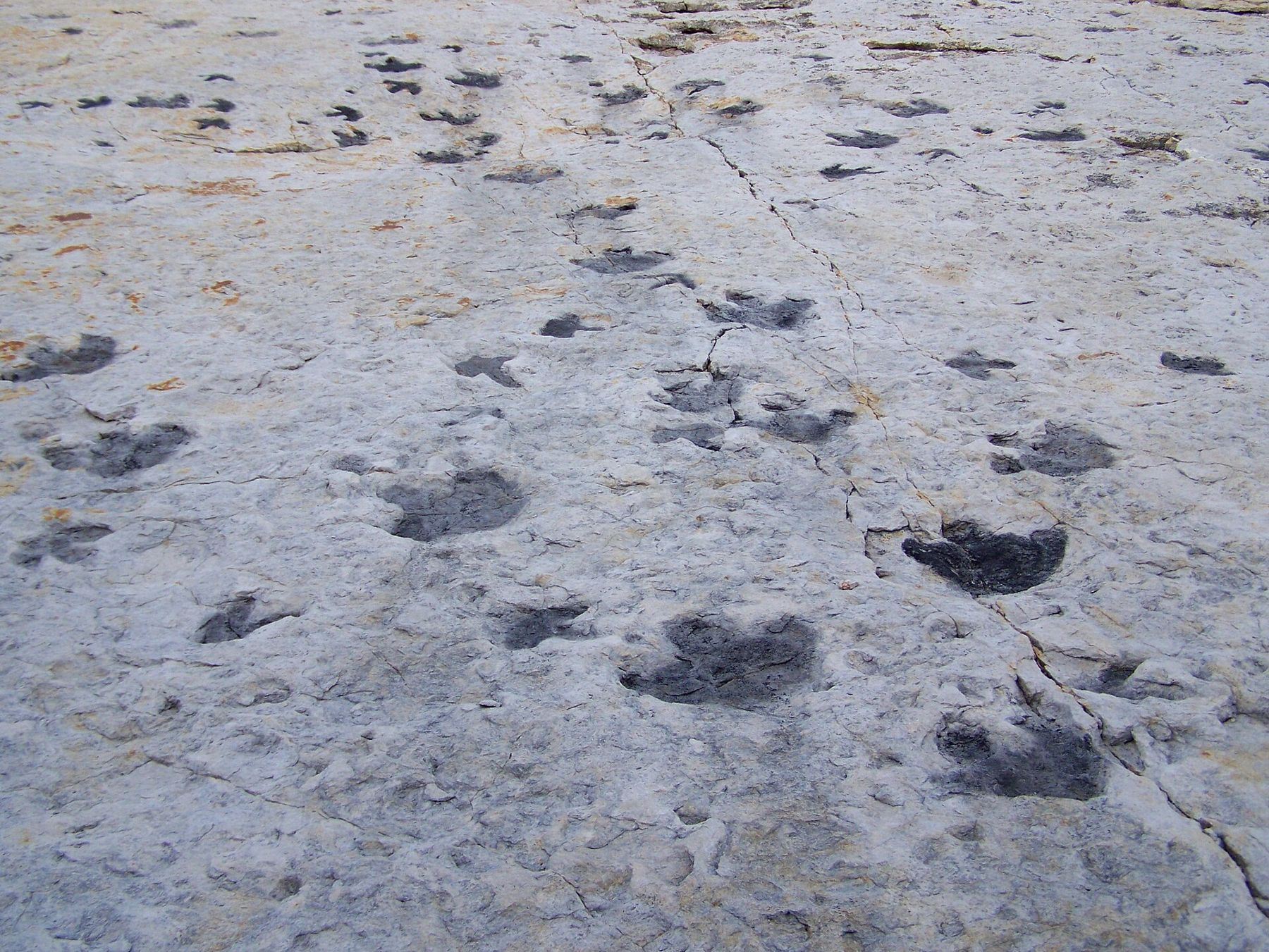
Just west of Denver, the plains end against a long, sharp ridge of tilted sandstone known as a hogback. On its eastern face, dinosaur footprints stand out on a steep slab of rock. On its western side, dinosaur bones show in a road cut. This is Dinosaur Ridge, near the town of Morrison, and it is one of the most important places in the early history of American dinosaur science.
You can walk the whole thing in a morning. It makes an easy, rewarding outing from the city, especially with children, and it pairs naturally with Red Rocks Park next door.
Arthur Lakes and the bones of 1877
In 1877 Arthur Lakes, a teacher and keen amateur geologist, found huge fossil bones in the rocks near Morrison. He sent word and samples east to the Yale paleontologist Othniel Charles Marsh, and the finds helped set off the scramble for western dinosaurs often called the Bone Wars. Among the animals Marsh named from the Morrison quarries that year was Stegosaurus, one of the most recognizable dinosaurs ever found.
The rock that held those bones gave its name to the Morrison Formation. The same Late Jurassic formation, about 150 million years old, later yielded the great wall of bones at Dinosaur National Monument and many famous skeletons across the West.
The track site
The tracks are younger than the bones. They sit in sandstone of the Dakota Group, laid down along the shore of an inland sea in the Early Cretaceous, roughly 100 million years ago. When the ridge was tilted up as the Rocky Mountains rose, the old shoreline was turned almost on edge, and road builders cutting through in the 1930s exposed a rock surface covered with footprints.
Most of the prints are three-toed tracks of plant-eating ornithopods, relatives of Iguanodon, with tracks of meat-eating theropods among them. Some trackways show animals walking in the same direction. Signs help you sort them out, and in low morning or evening light the prints stand out sharply. Many visitors find the tracks more moving than bones, because each one is a moment in the life of a living animal.
Look closely at the rock around the prints and you will find other signs of the old shoreline. Ripple marks show where shallow water moved sand back and forth, and in places the surface is marked by burrows and other traces left by small creatures. Together they let you picture a muddy beach or tidal flat, with dinosaurs walking along it and the sea not far away.
Bones in the road cut
On the west side, the road cut through the Morrison exposes dinosaur bone in the rock face, marked so you can find it. Look for dark brown patches with a spongy texture in the paler sandstone; these are cross-sections through bone. Nearby signs explain how a river channel buried the remains and how minerals carried by groundwater slowly turned bone to stone.
Between the bones and the tracks, the ridge gives a walking lesson in geology. Older Jurassic rock lies on one side, younger Cretaceous rock on the other, with the layers tilted to show tens of millions of years in a few hundred steps. 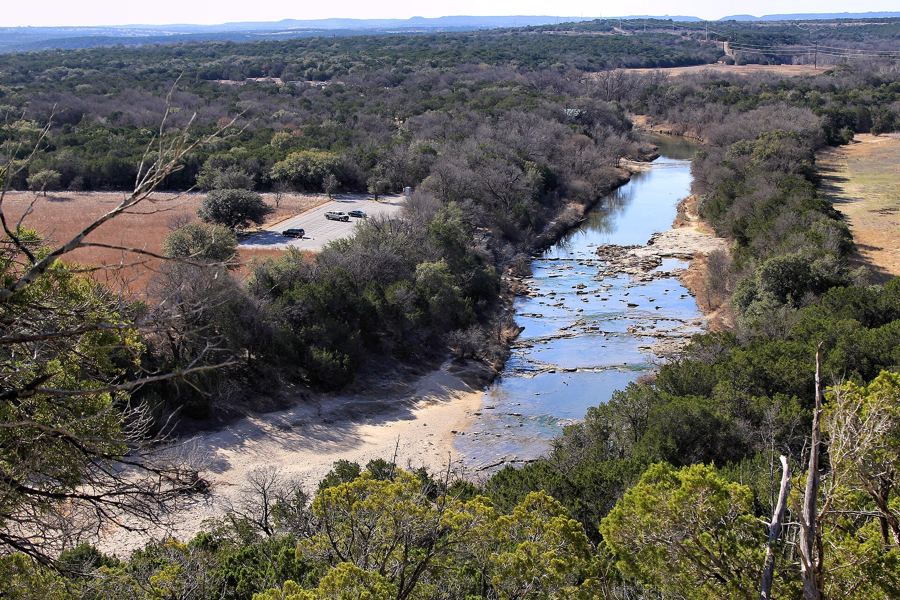 Another trek · SouthwestThe tracks in the Paluxy River at Dinosaur Valley Take time at the top to look both ways: west to the mountains that pushed these layers up, east to the plains that once lay under the sea.
Walking the ridge
The main route follows Alameda Parkway over the ridge, a paved road walk of a mile or two each way depending on where you start and finish. Private car traffic over the ridge has been restricted for years, leaving the road to walkers, cyclists and visitor shuttles; check current access before you go. A visitor center near the base has exhibits and information about guided programs.
The road is exposed, with little shade, and the sun at this altitude is strong. Bring water and hats, and wear shoes with some grip for the short side trails. In summer, afternoon storms can bring lightning to the ridge, so aim to walk in the morning. Trails along the hogback give views east over Denver and the plains.
Red Rocks next door
On the far side of the ridge rise the great red sandstone fins of Red Rocks Park, a Denver mountain park. The rock there belongs to the much older Fountain Formation, laid down from eroding mountains long before the first dinosaurs. The park is famous for its outdoor amphitheater, set among the rocks, and it has trails and viewpoints open to the public when no events are running.
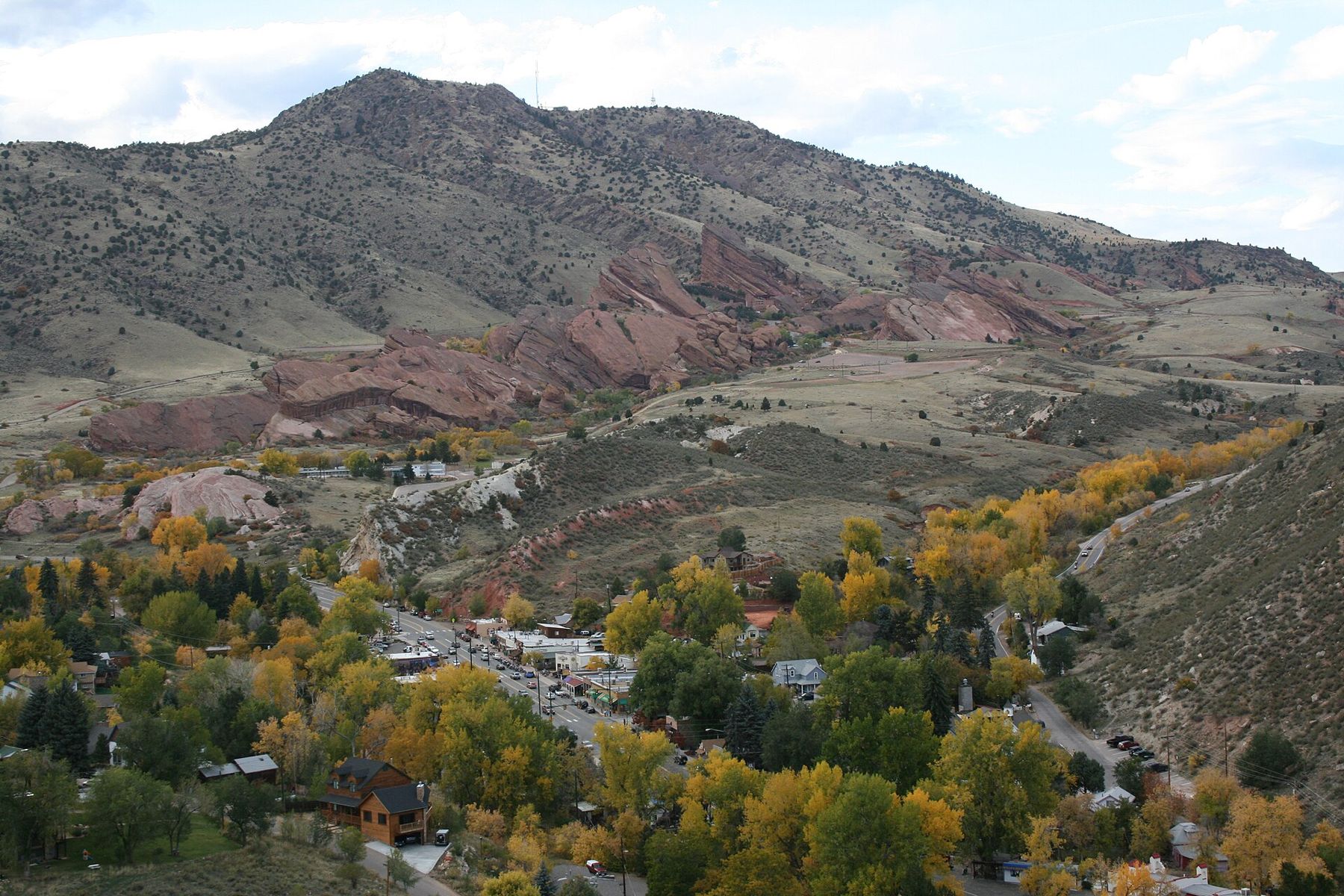
The town of Morrison sits in a narrow valley at the mouth of Bear Creek Canyon. It is small and walkable, and a pleasant place to stop after a morning on the ridge.
Fitting it into a trip
Schools and families use the ridge as an outdoor classroom, and on busy days you may find guides at the main stops explaining what you are seeing. If you prefer quiet, come on a weekday morning, when the light is best for the tracks and the road is calm.
Dinosaur Ridge is close enough to Denver for a half-day outing, and it makes a good warm-up for a longer drive into dinosaur country. Track lovers can go on to see sauropod and theropod prints in a Texas riverbed, while bone hunters can head west across the mountains toward the Utah border. Wherever you go next, read up on the rules for finding fossils before you walk on public land, because what you may touch and take changes from place to place.
The photographs on this trek were shared under open licences; their photographers are named in Who shot the bones.