
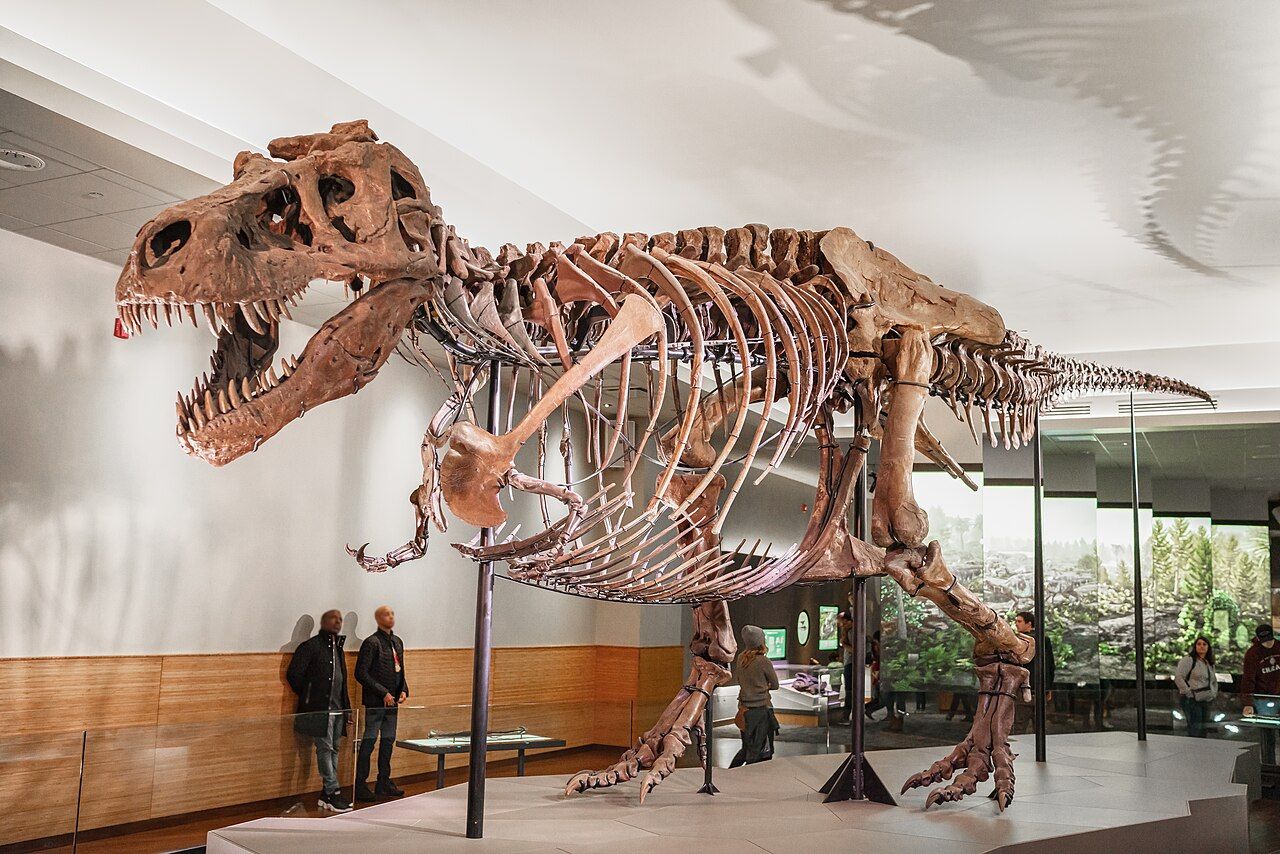
Few fossils have a name that people know without being told what it is. Sue is one. The skeleton at the Field Museum of Natural History in Chicago is among the most complete Tyrannosaurus rex skeletons ever found, and it is also the most argued-over. The story of how it reached Chicago is part science, part court case, and it says a great deal about who owns the past.
The 1990 find
In August 1990, a team of commercial fossil collectors was working in western South Dakota, in rocks of the Hell Creek Formation, the same layer that crops out in the badlands of eastern Montana. One member of the team, Sue Hendrickson, walked to a sandstone bluff and spotted bones weathering out of the rock. They turned out to belong to a huge tyrannosaur. The team named the skeleton after her.
The animal lived about 67 million years ago, near the end of the Cretaceous. It was buried quickly, which kept most of the bones together. Even small, fragile pieces survived, including the tiny bones of the arms and many of the belly ribs.
The court case and the 1997 auction
The bluff lay on land belonging to a Lakota rancher, Maurice Williams, within the Cheyenne River Indian Reservation. The land was held in trust by the federal government, and that detail became the heart of a dispute. The collectors said they had paid for the right to remove the fossil. The rancher said he had not agreed to sell it. In 1992 federal agents seized the skeleton, and it sat in storage while the courts decided.
The courts ruled that the fossil was part of the land and belonged to the rancher, held in trust for him by the government. In October 1997 it was sold at public auction in New York. The Field Museum, with the help of corporate backers, bought it for more than eight million dollars, at that time the highest price ever paid for a fossil. The museum unveiled the mounted skeleton in 2000.
The case still shapes fossil collecting in the United States. It is one reason collectors are careful about land boundaries, and why the rules in finding fossils without breaking the rules matter so much.
What makes Sue special
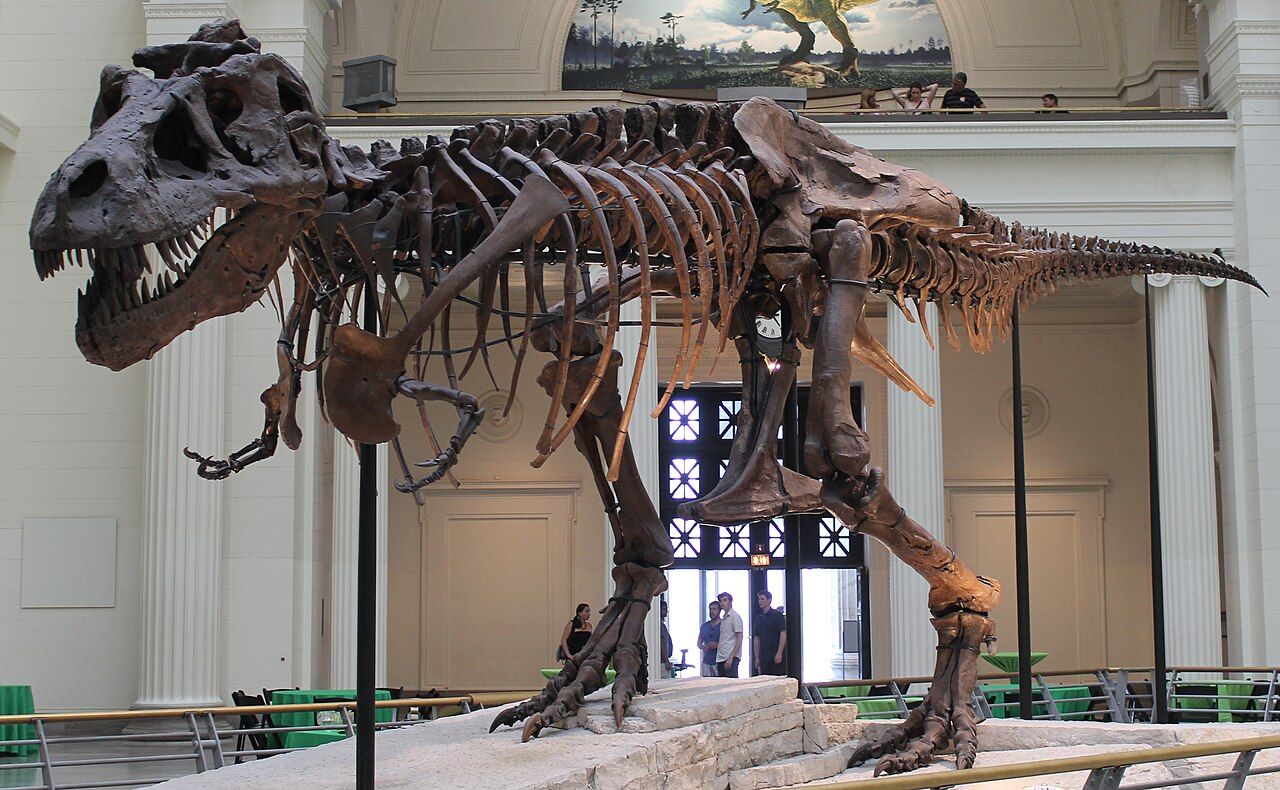
Size is part of it. Sue is about 40 feet long, among the largest T. rex skeletons known. Completeness is the rest. Scientists can study injuries and disease on the bones: healed breaks, signs of infection in the jaw, and wear that suggests a long, hard life. Sue was probably around thirty years old at death, old for a tyrannosaur.
Look for the real skull, which is displayed on its own nearby. It is too heavy to sit on the mounted skeleton, so the mount carries a cast. Seeing the actual skull at eye level, with its cracks and teeth, is one of the best moments in any fossil museum. Nobody knows whether Sue was male or female; the name is for the person who found it.
The Griffin Halls of Evolving Planet
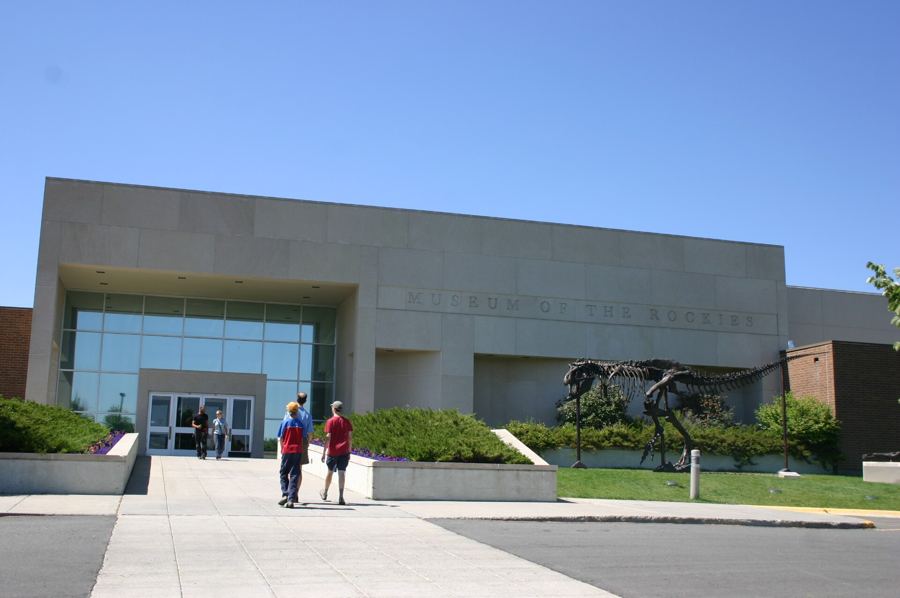 Another trek · Northern RockiesMuseum of the Rockies in Bozeman
For almost two decades Sue stood in the museum's grand entrance hall. In 2018 the skeleton moved upstairs into its own room inside the Griffin Halls of Evolving Planet, the museum's walk through the history of life. The move gave scientists a chance to update the mount, adding the belly ribs and adjusting the pose to match current research.
Evolving Planet itself runs from the earliest life to the ice ages. The dinosaur galleries are the longest section, with skeletons arranged roughly by family. The hall is laid out as a path, so it suits a steady walk. Give younger children a goal, such as finding a dinosaur with armour, one with a crest and one that ate meat.
In Sue's old place in the entrance hall now stands a cast of a titanosaur, Patagotitan, a long-necked giant from Argentina. Its head rises toward the balcony and its tail reaches across the floor. Stand under the neck for scale, then remember that Sue, which looks enormous upstairs, would barely reach its hips.
Planning a visit
The Field Museum stands on the Museum Campus along Lake Michigan, south of downtown Chicago, next to the city's aquarium and planetarium. Buses run along the lakefront, and the walk from the Roosevelt transit stop takes around fifteen minutes. Parking is available nearby at a cost.
- Tickets: general admission and special exhibitions are priced separately, and some free days are offered to local residents. Check what your ticket covers before you go.
- Time: allow half a day if you plan to see Sue, Evolving Planet and the entrance hall properly.
- Crowds: weekday mornings are quietest, and the Sue room is busiest at midday.
Beyond Chicago
Sue makes a fine match with the other great tyrannosaurs. The Nation's T. rex in the Smithsonian's Deep Time hall also came from Montana rock of the same age, and the first T. rex skeletons ever found stand in the fossil halls in New York. Seeing two or three of these skeletons over a year turns a famous name into an animal with a real body and a life story.
Then go to the rocks. The country Sue came from is open, dry and quiet, with long views and very few people. Standing in it, you understand how a single person walking along a bluff could change a museum, and how much luck lies behind every skeleton on display.
The photographs on this trek were shared under open licences; their photographers are named in Who shot the bones.