
The Jurassic Coast runs for about 95 miles along the south of England, from Exmouth in East Devon to Studland Bay in Dorset. In 2001 it became England's first natural World Heritage Site, and the reason is in the cliffs. Walk from west to east and the rocks get younger, from the red desert sandstones of the Triassic, through the grey Jurassic shales full of ammonites, to the white chalk of the Cretaceous. Roughly 185 million years of Earth history are laid out along one coastline.
The western end around Lyme Regis and Charmouth is the classic fossil-hunting ground. Here the soft cliffs slump and slide every winter, dropping fossils onto the beach, where the sea washes them clean. Anyone with patience and a careful eye has a real chance of finding an ammonite or a belemnite on a single falling tide.
Lyme Regis and Mary Anning
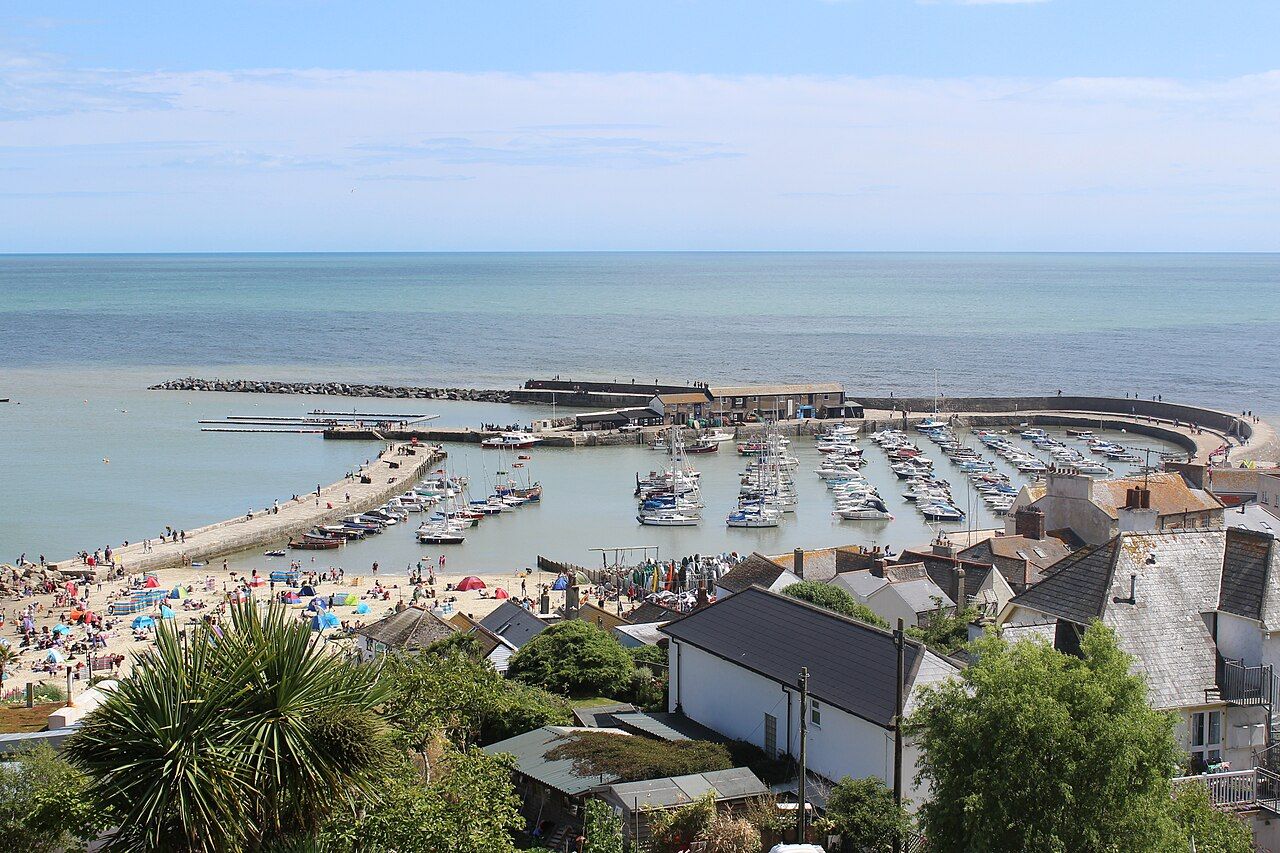
Lyme Regis is a small harbour town with steep streets and a curving stone breakwater called the Cobb. In the early nineteenth century it was home to Mary Anning, born in 1799 into a poor family that sold fossils to visitors. When she was about twelve, her brother Joseph found the skull of a strange marine reptile, and Mary later found the rest of the skeleton. It was among the first ichthyosaurs to come to the attention of scientists in London.
Over the following decades she found the first complete plesiosaur skeleton and the first British pterosaur, and she became an expert on the rocks and fossils of the coast. Scientists visited her shop, bought her finds and asked her opinion. Yet as a woman, and a working-class one, she could not join the scientific societies of her day, and her name was often left off the papers that described her discoveries. She died in 1847.

Her reputation has grown steadily since. The town museum stands on the site of her family home, and a bronze statue of her was unveiled in Lyme Regis in 2022. Look for the ammonite lamps on the seafront, too: the town wears its fossils proudly.
Anyone with patience and a careful eye has a real chance of finding an ammonite or a belemnite on a single falling tide.
Fossil hunting at Charmouth
A short walk east along the beach, or a short drive, brings you to Charmouth, the friendliest place on the coast to start. The beach is wide, the car park is close and the Charmouth Heritage Coast Centre sits right above the sand, with displays, advice and regular guided fossil walks. Staff there can identify what you find and tell you how the tides are running.
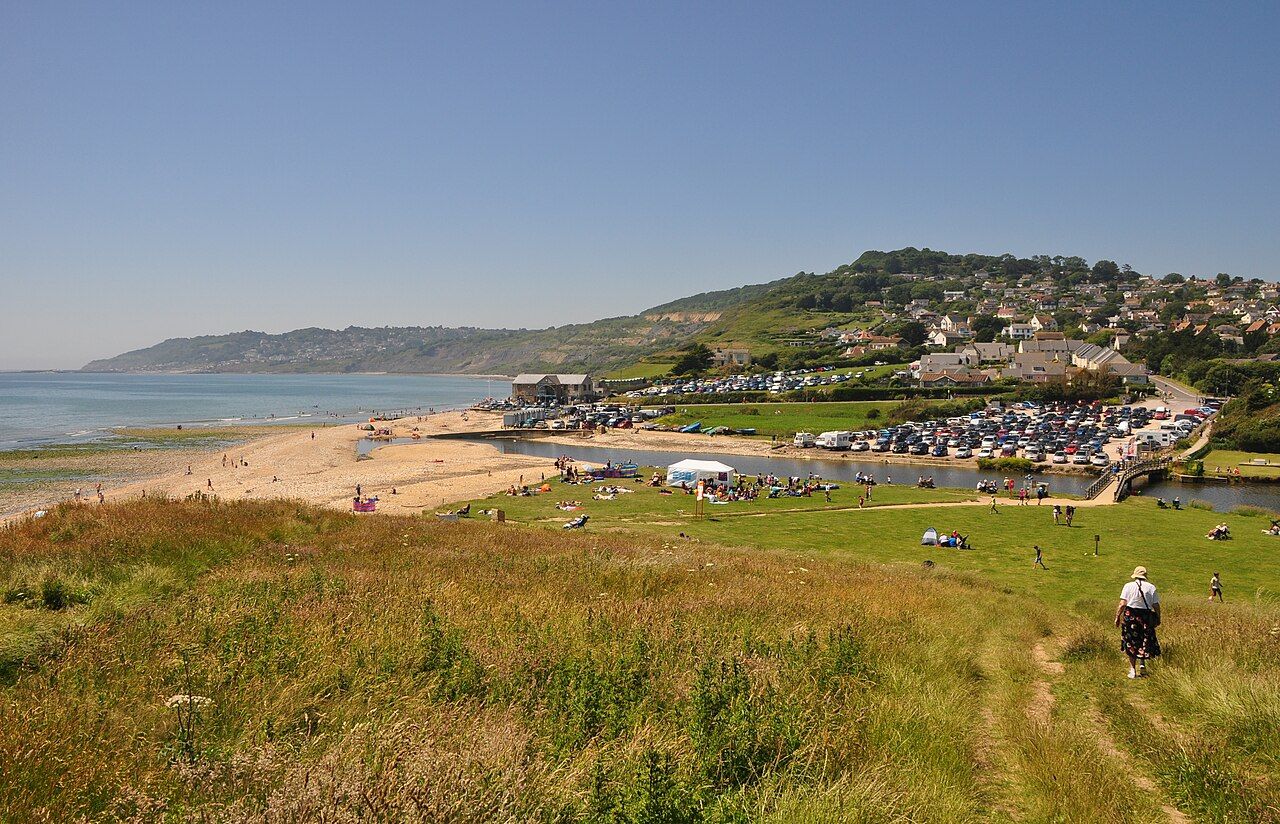
The fossils here come from grey mudstones about 195 million years old, laid down in a warm, shallow sea. The most common finds are ammonites, often preserved in shiny fool's gold, and bullet-shaped belemnites. Lucky hunters find fish scales, crinoid stems and the odd vertebra of a marine reptile.
Ammonites were relatives of squid and octopus that lived inside coiled, chambered shells. Belemnites were squid-like animals too, and the bullet you find is the hard internal guard at the back of the body. Both are useful to geologists because different species lived at different times, so a single ammonite can date the rock it came from.
- Where to look: along the line of shingle and small stones near the waterline, and in the shallow pools as the tide goes out, never at the base of the cliff.
- When: on a falling tide, ideally a day or two after winter storms have stirred the beach.
- How: slowly. Crouch, scan, move a step, scan again. Children often find more than adults.
 Another trek · AlbertaDinosaur Provincial Park, Alberta
The collecting code
The stretch between Lyme Regis and Charmouth has a voluntary fossil collecting code, agreed between landowners, scientists and collectors. In general terms it asks you to collect only from loose material on the beach, never to dig into or hammer the cliffs, to take only what you need, and to record any find of real scientific importance with the heritage centre so it can be studied. Other parts of the coast have their own rules, and some stretches are protected for wildlife or geology, so check locally. The wider picture of UK and US rules is in finding fossils without breaking the rules.
The code works because fossils on this coast are constantly being destroyed by the sea. A fossil left on the beach will be ground to pieces within a few tides. Picking it up saves it, as long as important specimens reach scientists.
Cliff falls and tides
The same forces that bring fossils down make this coast dangerous. The cliffs between Lyme and Charmouth are some of the most active landslides in Britain, and they move without warning, especially after rain. Mudflows at the base can be soft and deep enough to trap a person.
- Check the tide times before you set out, and start walking back well before low water turns.
- Stay off the mudflows and keep a good distance from the foot of the cliffs.
- Do not climb the cliffs to reach a fossil, however close it looks.
- Wear boots with grip: the ledges are slippery with weed.
Getting there and around
The nearest main-line station to Lyme Regis is Axminster, on the line between London and Exeter, with buses running down to the coast. A coastal bus route links many of the towns along the shore, which makes one-way walks on the coast path easy: walk out, ride back. Driving is simpler for reaching the eastern end around Lulworth, but parking in the small towns fills quickly on summer days.
The shoulder months of spring and autumn suit it best. The beaches are quieter, the light is softer and the cliffs have had a winter of storms to release new fossils. Winter hunting can be excellent too, as long as you watch the weather and the tides closely. Summer brings crowds, warm water and long evenings, but fewer new finds, because many people have already combed the beach.
Stay a few days if you can. A first morning on the beach often finds nothing at all. By the second or third tide, your eyes adjust to the grey stones and the ammonites start to appear.
East to Durdle Door
Farther east, the coast changes character. Around Lulworth, hard limestone and soft clays sit side by side, and the sea has carved a famous natural arch, Durdle Door, and the round bay of Lulworth Cove. These are places for looking rather than collecting. The coast path climbs steeply between them, and the views explain in a single glance how the rocks have been tilted and worn.
Durdle Door is busy in summer, so come early or late. Then, if you want more dinosaurs than ammonites, take a ferry across to the Isle of Wight, where the cliffs are younger and dinosaur footprints appear at low tide.
Whatever you find, the coast rewards slow walking. Sit on the shingle at Charmouth, look along the grey cliffs toward Lyme, and you are looking at a sea floor that last saw daylight nearly 200 million years ago.
The photographs on this trek were shared under open licences; their photographers are named in Who shot the bones.