
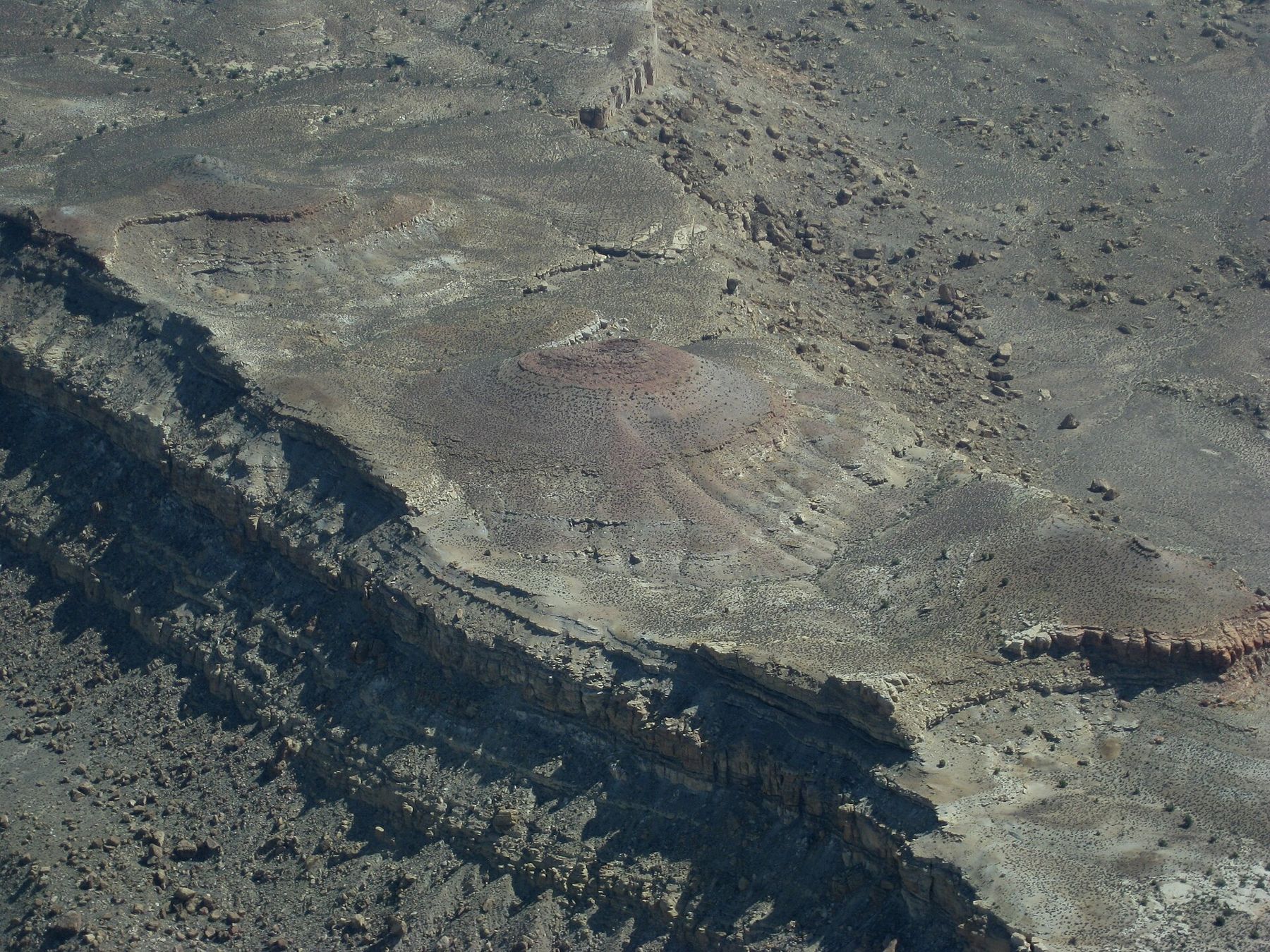
In southern Utah, between Bryce Canyon and Lake Powell, lies a vast, rugged stretch of public land: Grand Staircase-Escalante National Monument. Created in 1996 and managed by the Bureau of Land Management, it covers plateaus, canyons and cliffs so remote that some corners see few visitors in a year. Since the monument was created, paleontologists working on the Kaiparowits Plateau have found dinosaurs nobody had seen before, among them a run of horned dinosaurs with extraordinary skulls.
This is not a place with skeletons by the roadside. It is a working field area, hard to reach and harder to cross, and the best way for most travelers to meet its dinosaurs is through the visitor centers, museums and the landscape itself.
The Kaiparowits Plateau
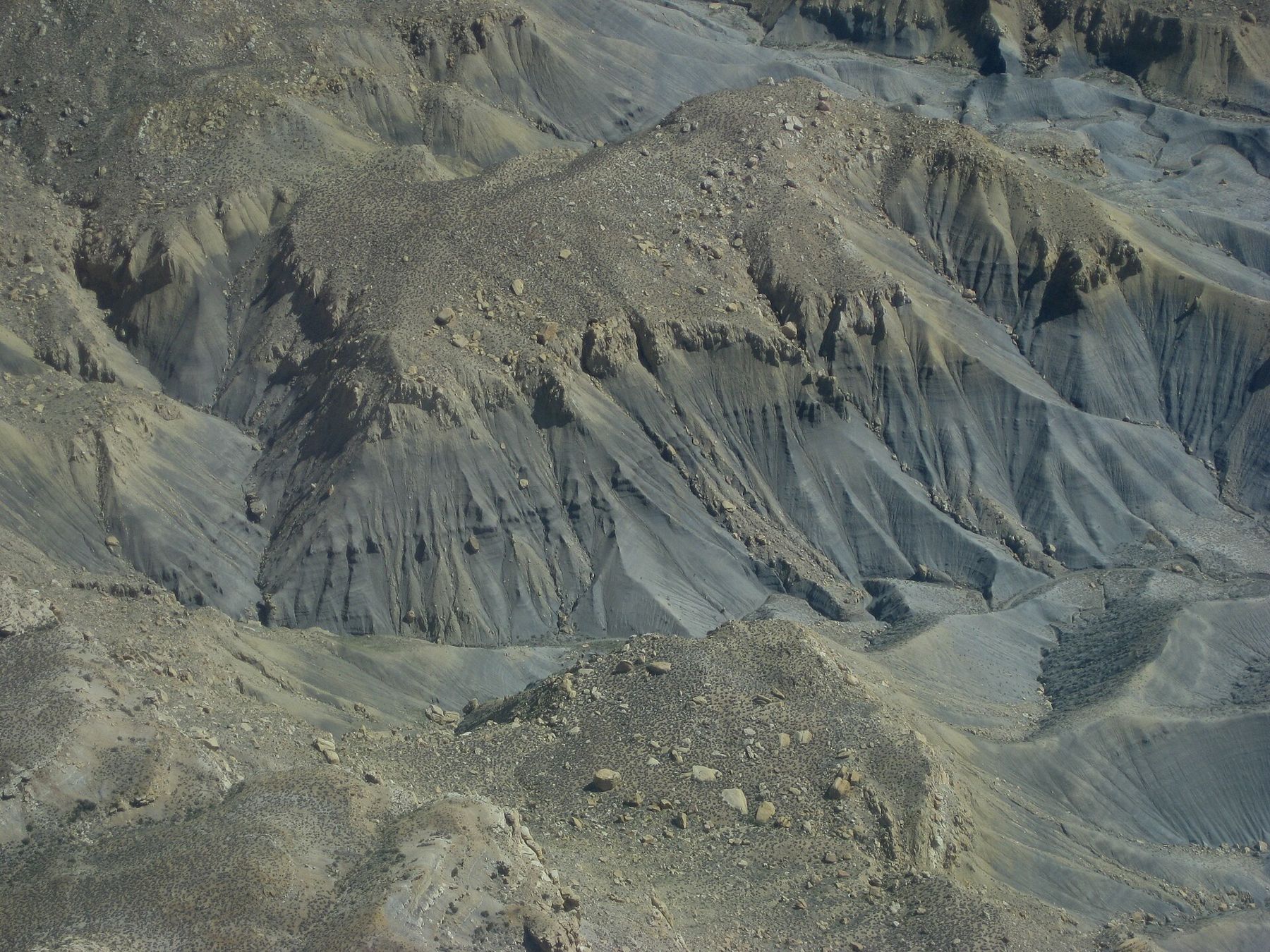
The Kaiparowits Plateau rises in the heart of the monument, a high, dry block of land cut by deep washes. Its gray and tan slopes belong largely to the Kaiparowits Formation, laid down by rivers and swamps on a coastal plain in the Late Cretaceous, roughly 76 to 74 million years ago. A shallow inland sea lay to the east, and the region was warm and wet, nothing like the desert of today.
Erosion here is fast, and bones keep weathering out of the slopes. Field crews from museums and universities have worked the plateau season after season since the late 1990s, and their finds have changed how scientists see dinosaur life along the western shore of that sea.
The Kaiparowits rocks preserve much more than big bones. Researchers have found skin impressions, eggshell, plant remains and the fossils of small animals such as lizards, frogs and fish, so the formation offers a broad view of a single ancient ecosystem.
Horned dinosaurs and other new species
The most famous discoveries are horned dinosaurs. Utahceratops and Kosmoceratops, both described in 2010, came from Kaiparowits rock. Kosmoceratops carried a remarkable frill with a row of hooked spikes curling forward along its top edge, one of the most ornate heads of any known dinosaur. Nasutoceratops, named a few years later, had long, curving brow horns and a large nose.
Older rocks of the Wahweap Formation, lower in the sequence, gave up the horned dinosaur Diabloceratops. Tyrannosaurs have come out of the monument too, including Teratophoneus and the older Lythronax, along with duck-bills, armored dinosaurs, crocodile relatives, turtles and early mammals. To many researchers, these finds suggest that dinosaurs in the south of the continent differed from their relatives farther north, in places such as Dinosaur Provincial Park in Alberta.
Where to see the fossils
Many of the specimens are held at the Natural History Museum of Utah in Salt Lake City, where several are on display, and in other research collections. Within the region, the monument's visitor centers in Kanab, Big Water, Cannonville and Escalante each tell part of the story. The Big Water center is the one to choose for dinosaurs, with fossils, casts and artwork devoted to paleontology. 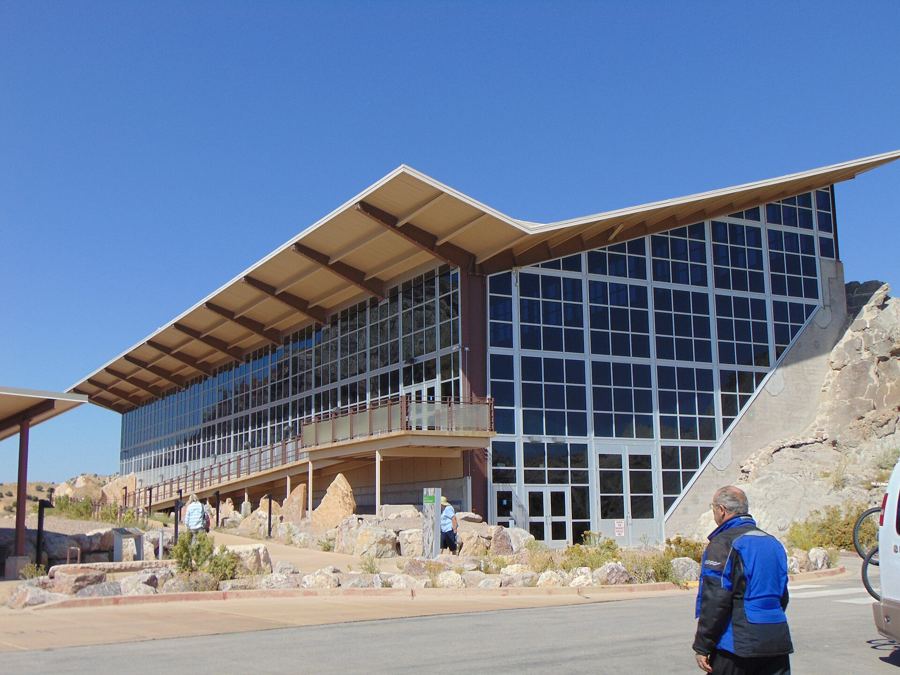 Another trek · Northern RockiesThe Wall of Bones at Dinosaur National Monument
Opening days and hours vary through the year, and some centers close in winter, so check before you go. Ask staff about current road conditions at the same time; they know the backcountry better than any map.
Visiting the museum in Salt Lake City before or after your trip makes sense of what you see in the field. Its dinosaur galleries set many of the monument's discoveries side by side, so you can compare the horns and frills of the new species with your own eyes.
Remote roads and real risk
The monument's unpaved roads, such as Cottonwood Canyon Road, Hole-in-the-Rock Road and Smoky Mountain Road, cross long empty miles. Many are graded dirt that turns to impassable mud after rain, and flash floods can sweep through washes and narrow canyons with little warning, even from storms out of sight. Summer heat is severe, and winter can bring snow to higher roads.
Travel with a full tank, a spare tire, plenty of water and food, and a paper map, because mobile signal is absent across most of the monument. Tell someone your route and expected return. High-clearance vehicles are needed on many roads, and some need four-wheel drive. If in doubt, turn back.
The same rules apply to walking. Washes that look dry can carry floodwater from distant storms, and the gray clay of the plateau is slick when wet and crumbly when dry. Never camp in a wash, carry more water than you think you need, and keep your plans modest on a first visit.
Kanab and the paved routes
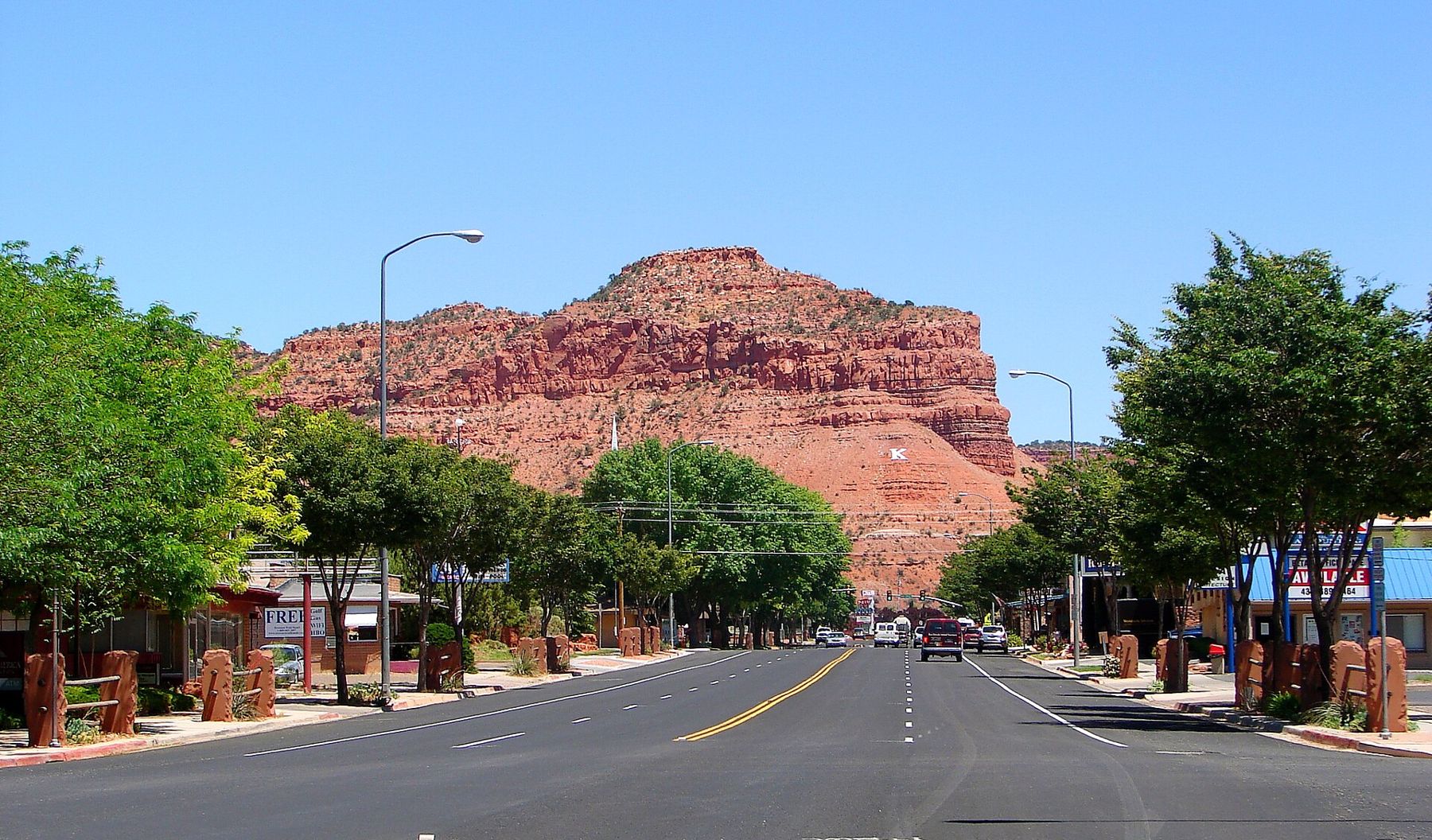
Kanab, on US Highway 89 near the Arizona border, is the main gateway on the monument's southwest side. The town sits beneath red cliffs that form part of the Grand Staircase, the great series of cliff bands that climbs north in steps toward Bryce Canyon. It has fuel, groceries, lodging and a monument visitor center.
From Kanab, US 89 heads east toward Big Water and Lake Powell along the southern edge of the monument. Utah Highway 12 crosses the north side between Bryce Canyon and the town of Boulder, one of the finest scenic drives in the West, with Escalante along the way. Both paved routes give wide views over country where new dinosaurs are still being found.
If you are driving on through the Southwest, Petrified Forest in Arizona shows far older Triassic rock and its stone logs. Before you walk on any public land, read up on the rules for finding fossils: the monument's dinosaurs are safe only because visitors leave them where they lie.
The photographs on this trek were shared under open licences; their photographers are named in Who shot the bones.